
Choosing the right food is one of the key factors in your pet’s health and longevity. This guide examines four main feeding options: dry, wet, natural, and mixed. For each format, we detail the pros and cons, situations in which it’s suitable, and possible risks.
You’ll find practical tips on selecting food based on your pet’s age, activity level, and health status, formulas for calculating daily food and water requirements, as well as advice on storage and feeding organization. Special attention is given to specific categories — puppies, kittens, sterilized pets, seniors, and animals with chronic conditions.
The article includes step-by-step instructions for a safe transition to a new diet, a breakdown of common feeding myths, a final decision-making flowchart, and a large comparison table for clarity.
This material will be useful for both first-time and experienced owners, helping you make informed decisions about your pet’s diet and spot warning signs that require a veterinary visit in time.
You’ll find practical tips on selecting food based on your pet’s age, activity level, and health status, formulas for calculating daily food and water requirements, as well as advice on storage and feeding organization. Special attention is given to specific categories — puppies, kittens, sterilized pets, seniors, and animals with chronic conditions.
The article includes step-by-step instructions for a safe transition to a new diet, a breakdown of common feeding myths, a final decision-making flowchart, and a large comparison table for clarity.
This material will be useful for both first-time and experienced owners, helping you make informed decisions about your pet’s diet and spot warning signs that require a veterinary visit in time.
Contents:
1.Dry Food
2.Wet Food
3.Natural Food
4.Mixed Feeding
5.How Much to Eat and Drink? Quick Calculations
6.Special Situations
7.Budget and Logistics
8.Transitioning to a New Diet
9.Common Feeding Myths
10.Final Selection Flowchart
11.When to See a Vet Immediately
2.Wet Food
3.Natural Food
4.Mixed Feeding
5.How Much to Eat and Drink? Quick Calculations
6.Special Situations
7.Budget and Logistics
8.Transitioning to a New Diet
9.Common Feeding Myths
10.Final Selection Flowchart
11.When to See a Vet Immediately
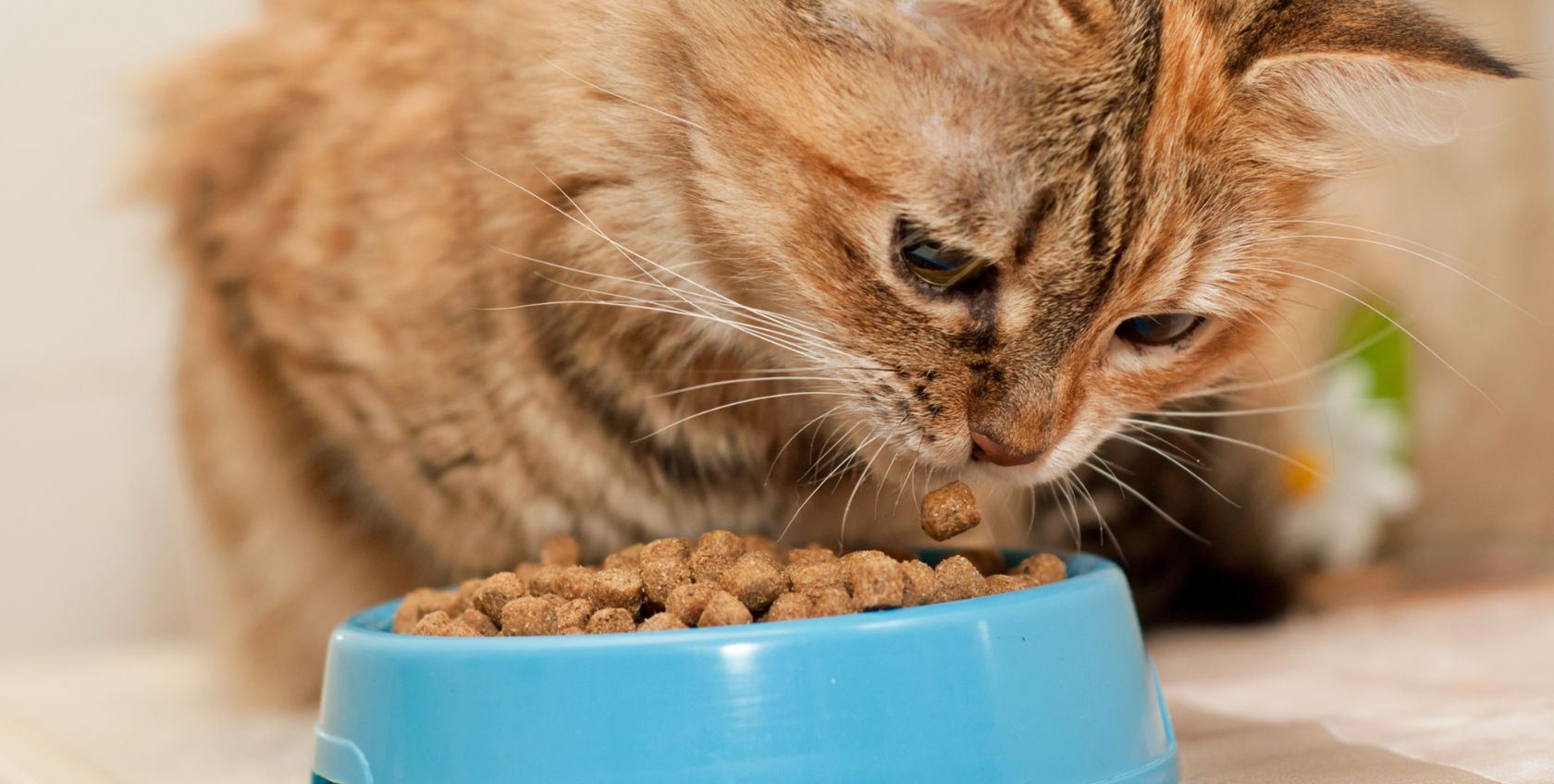
1. Dry Food: Convenient, But With Some Nuances
Dry food is the most common feeding option for dogs and cats. It comes in the form of kibble and is designed to fully meet the animal’s nutritional needs. However, it’s important to understand that “dry” does not mean “universal.”
Advantages of Dry Food
- Convenience – easy to store, doesn’t require refrigeration, can be portioned out for the whole day or used in automatic feeders.
- Cost-effectiveness – generally more economical than wet food when comparing calories and shelf life.
- Consistent composition – each portion contains the same nutrients if you choose a quality brand.
- Hygiene – doesn’t dirty the bowl or hands, leaves no strong odor.
Disadvantages and Limitations
- Low moisture content – only 6–10% water, so your pet must drink plenty. This is especially critical for cats, which naturally drink little.
- Risk of overeating – if food is freely available, some animals may eat more than they need.
- Sensitive digestion – some pets may experience bloating, soft stools, or allergies to certain ingredients in dry diets.
How to Choose a Good Dry Food
- Select according to age and condition: puppy/kitten, adult, senior, sterilized, active, or low-activity.
- Read the ingredients: the first should be meat or fish, not “vegetable protein” or “corn meal.”
- Look for a complete diet label – the AAFCO or FEDIAF standard indicates the food is balanced and suitable for long-term feeding.
- Check protein and fat levels: requirements differ for dogs and cats but must match the species and lifestyle.
- Start small: buy a small bag first to see how your pet reacts to the taste and formula.
Important to Remember
- Your pet should always have access to fresh, clean water — not just “on special occasions,” but constantly.
- Store food in a sealed package or container, away from moisture and direct sunlight.
- Avoid mixing different dry foods in one bowl unnecessarily — it makes it harder to monitor your pet’s reaction to each product.
2. Wet Food: Tasty and Hydration-Friendly
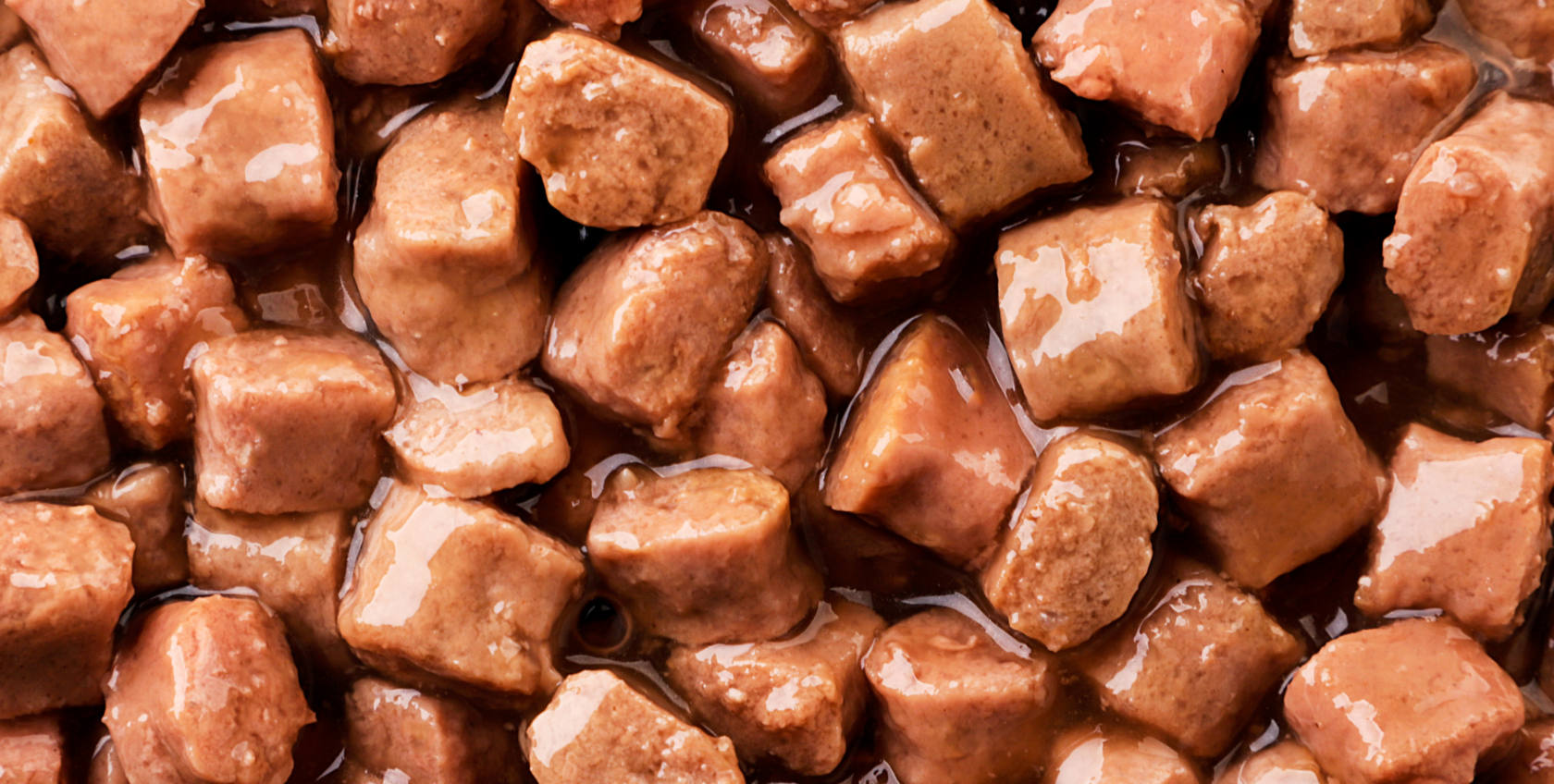
Wet food comes in pouches, cans, or trays with ready-to-eat meals containing 60–80% water. This format is closer to the natural moisture content of meat and helps maintain proper hydration, especially in cats that often drink too little.
Advantages of Wet Food
- High moisture content – supports pets that drink little and helps reduce the risk of dehydration.
- Appealing taste and aroma – often preferred by pets over dry food.
- Soft texture – ideal for pets with dental or gum issues, or for seniors.
- Variety of recipes – easy to find a flavor and composition your pet likes.
Disadvantages and Limitations
- More expensive than dry food – daily feeding costs are higher per calorie.
- Short shelf life after opening – requires refrigeration and must be consumed within 1–2 days.
- Doesn’t help clean teeth – unlike dry kibble, it doesn’t provide mechanical cleaning of plaque (regular dental care is still needed).
How to Choose Good Wet Food
- Check if it’s a complete diet – look for AAFCO or FEDIAF certification. Without it, the product may be a “complementary” food and unsuitable for daily feeding.
- Examine the ingredients – meat, fish, or organ meats should be at the top of the list, without excess grains or soy.
- Choose according to your pet’s needs – age, sterilization status, activity level, and health conditions.
- Pay attention to consistency and smell – quality food shouldn’t have a sour or rancid odor, and sauces shouldn’t be overly thickened with starch.
Important to Remember
- Store unopened pouches and cans at room temperature; refrigerate opened portions for no more than 48 hours.
- Warming to room temperature can enhance aroma and make the food more appealing.
- Never feed wet food from bloated or damaged packaging — this may indicate spoilage.
3. Natural Diet: Home-Prepared Meals Under Control
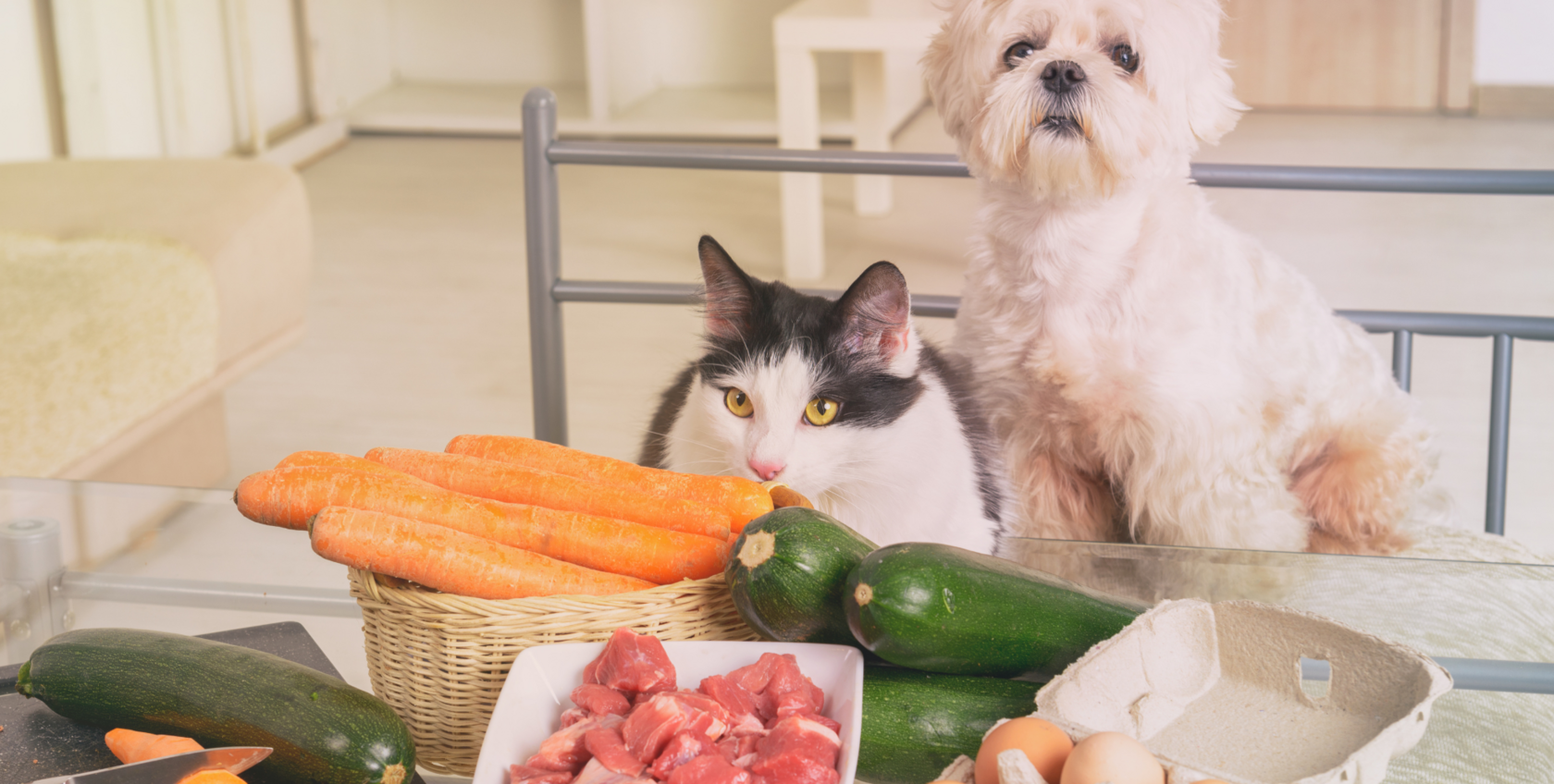
A “natural diet” usually means a home-prepared menu made from meat, fish, vegetables, and other ingredients. It can be cooked, baked, or raw (BARF, RAW). This approach may seem the most “natural,” but it requires precise calculations — otherwise, there’s a high risk of nutrient deficiencies or imbalances. “Natural” ≠ “Balanced.” The main risks include deficiencies (calcium, phosphorus, taurine in cats, iodine, vitamins A/D/E, omega-3 fatty acids, etc.) and imbalances in protein/fat/carbohydrate ratios.
Advantages of a Natural Diet
- Control over ingredients – you know exactly what’s in your pet’s food.
- Freshness – prepared right before feeding or stored for a short time.
- Flexibility – can adapt to taste preferences and allergies.
- No industrial processing – free from artificial flavors, colorants, and preservatives.
Disadvantages and Limitations
- Risk of imbalance – without proper calculation and supplements, deficiencies in calcium, taurine (for cats), vitamins A, D, E, iodine, and omega-3 are common.
- Time-consuming – requires planning, shopping, and regular preparation.
- Infection risk – raw meat may contain parasites and bacteria (dangerous for both the pet and household members).
- Complexity with health issues – for pets with chronic conditions, a vet nutritionist should design the diet.
How to Create a Proper Natural Diet
- Consult a professional – a veterinary nutritionist can tailor the protein, fat, carbohydrate, and supplement ratios to your pet.
- Include vitamin-mineral supplements – without them, a natural diet is almost always incomplete.
- Vary protein sources – meat, fish (boneless), organ meats, eggs (if tolerated).
- Balance calcium and phosphorus – when feeding boneless meat, add calcium separately.
- Follow food safety rules – thorough freezing or cooking of meat, clean cutting boards and knives.
Important to Remember
- Table scraps, seasonings, fried or smoked foods are not suitable for pets.
- Dangerous foods for dogs and cats include onions, garlic, grapes, chocolate, xylitol, and tubular bones.
- Raw bones can splinter and damage teeth or the digestive tract.
- When changing diets, monitor your pet’s condition and do regular check-ups.
Summary on Natural Feeding
It’s safe if designed by a veterinary nutritionist and followed precisely. “Feeding whatever is in the pot” almost always leads to imbalance.
4. Mixed Feeding: The Best of Both Worlds with the Right Approach
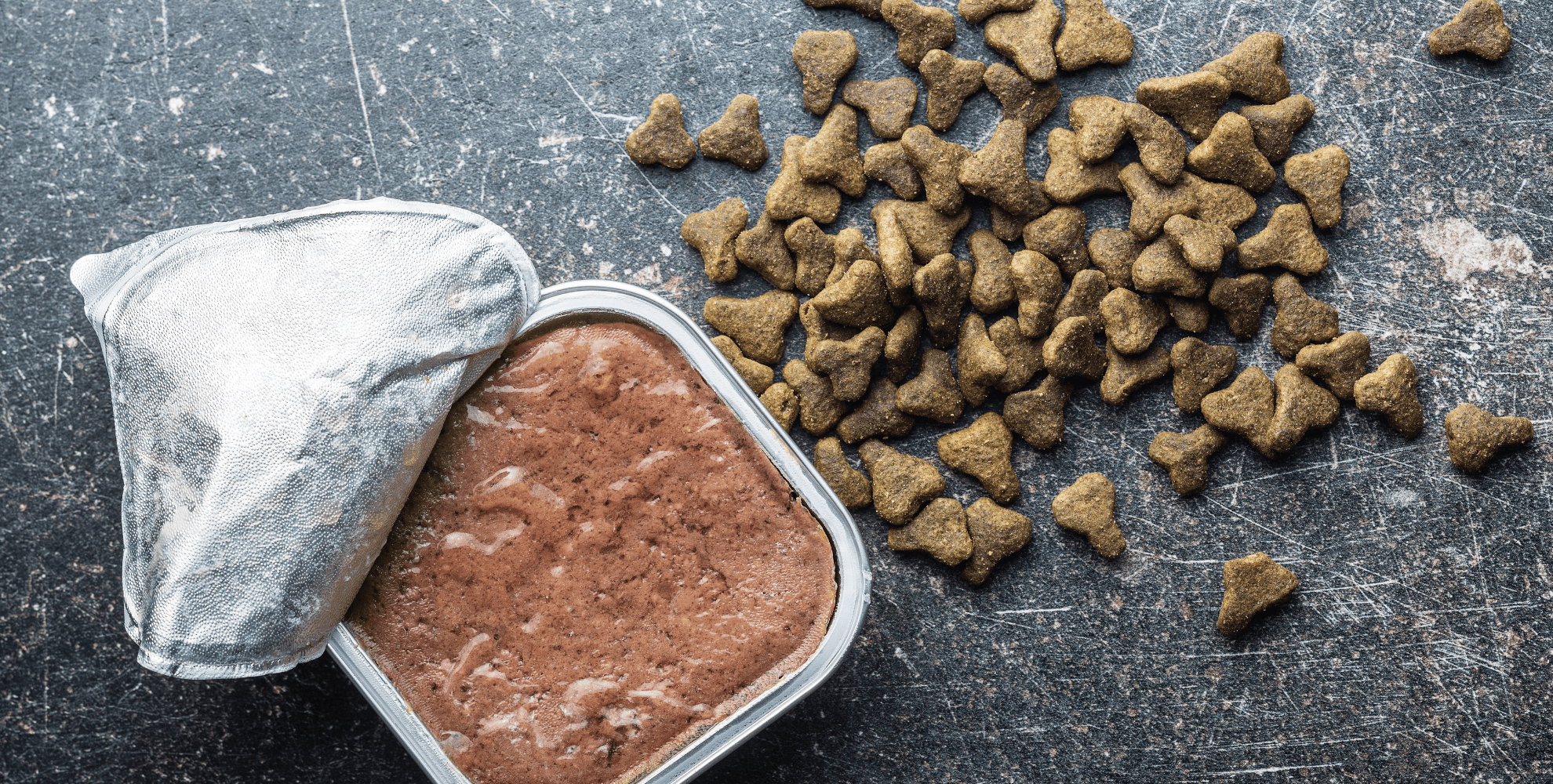
Mixed feeding means your pet’s diet includes both dry and wet food. Many owners choose this option to combine the convenience of dry kibble with the hydration benefits and variety of wet food.
Advantages of Mixed Feeding
- Balance of convenience and hydration – dry food is easy to store and portion, wet food helps maintain fluid balance.
- Variety of flavors and textures – makes meals more appealing, especially for picky eaters.
- Dietary flexibility – you can adjust the ratio of dry to wet depending on the season, health status, or appetite.
- Benefits for teeth and digestion – dry food offers light mechanical cleaning of teeth, while wet food is gentle on the digestive system.
Disadvantages and Limitations
- Harder to control calories – wrong proportions can lead to overfeeding.
- Different storage requirements – dry food keeps at room temperature, wet food needs refrigeration after opening.
- Not suitable for all therapeutic diets – for some health conditions, combining formats must be approved by a vet.
How to Mix Correctly
- Decide on the base – choose whether dry food (usually 60–70% of calories) or wet food will be the main source.
- Keep within calorie limits – calculate total calories from both types to avoid overfeeding.
- Separate feedings – offer dry and wet food at different mealtimes rather than mixing in one bowl (easier to monitor digestion).
- Monitor hydration – even with wet food, fresh water should always be available.
- Use strategically – for example, leave dry food in a puzzle feeder during the day and offer wet food in the morning and evening.
Important to Remember
- Change food types gradually to avoid digestive upset.
- For pets on a therapeutic diet, mix only with vet approval.
- For overweight animals, wet food can help with satiety, but overall calorie control is still key.
5. How Much to Eat and Drink? Quick Calculations
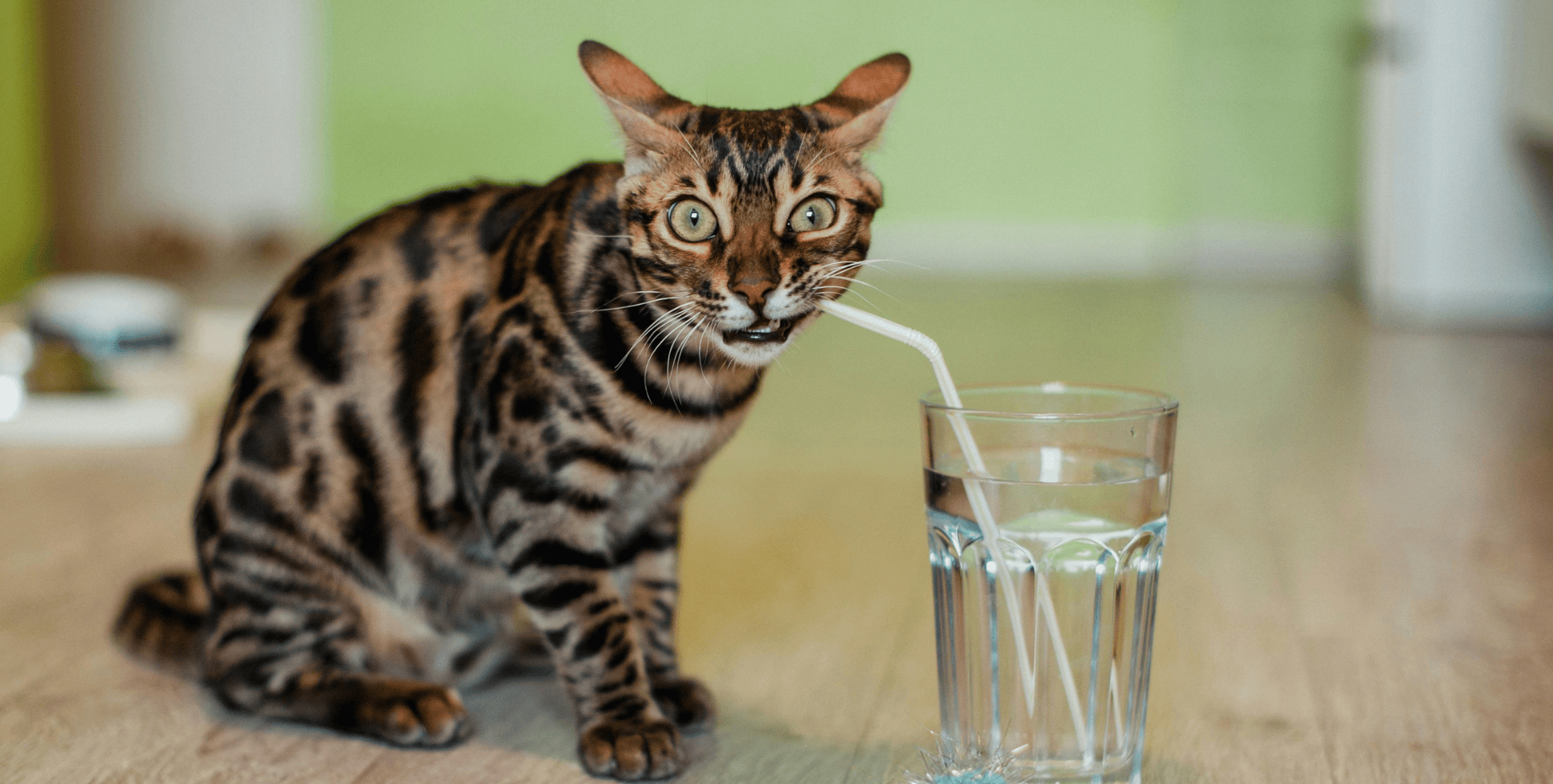
The right amount of food and water is essential for your pet’s health. Both underfeeding and overfeeding (or under- and overhydration) can be harmful: one can lead to malnutrition, the other to obesity and organ strain.
How Much to Eat? Calculating Calories
To determine how much food is needed, first calculate the daily energy requirement.
1.Basic formula (RER – Resting Energy Requirement):
RER = 70 × (body weight in kg)⁰·⁷⁵
This is the number of calories an animal needs to maintain basic bodily functions at rest.
RER = 70 × (body weight in kg)⁰·⁷⁵
This is the number of calories an animal needs to maintain basic bodily functions at rest.
2.Activity factor (DER – Daily Energy Requirement):
- Kitten/puppy: × 2.0–3.0
- Adult, low-activity (neutered/spayed): × 1.2–1.4
- Active animal: × 1.6–2.0
- Weight loss: × 0.8–1.0 (only under vet supervision)
Example:
Cat, 4 kg, spayed, indoor life:
RER ≈ 70 × 4⁰·⁷⁵ ≈ 198 kcal
DER = 198 × 1.3 ≈ 260 kcal/day
Compare this with the caloric value on the food packaging to calculate the exact portion weight.
How Much to Drink?
Water needs depend on body weight, type of food, and activity level.
- Dogs: approx. 50–60 ml per 1 kg body weight/day
- Cats: approx. 50–70 ml per 1 kg body weight/day (some from food)
Example:
Dog, 10 kg, on dry food – about 500–600 ml water/day
Cat, 4 kg, on wet food – about 200–250 ml/day (part from food)
Important to Remember
- On a dry food diet, water requirements increase.
- Fresh, clean water should always be available.
- A sudden increase or decrease in water consumption is a reason to see a vet.
- For cats and small dogs, having multiple bowls or a water fountain can encourage drinking.
6. Special Situations: When Feeding Requires a Special Approach

Different categories of pets have significantly different nutritional needs and feeding routines. It’s important to consider the animal’s age, health status, and physiological characteristics.
Puppies and Kittens
- Key points: rapid growth, organ and immune system development.
- What to feed: only growth formulas (labeled puppy/kitten or growth), with higher protein, energy, calcium, and phosphorus content.
- How to feed: frequent meals — puppies up to 4 months: 4–5 times/day; kittens up to 6 months: 3–4 times/day.
- Monitor: weight, activity, bone and tooth development.
Neutered and Spayed Pets
- Key points: after surgery, metabolism slows, and appetite often increases.
- What to feed: special neutered/spayed formulas with reduced calories and controlled minerals (especially for cats).
- How to feed: stick strictly to the recommended amount, no table scraps.
- Monitor: weight and water intake (to prevent obesity and urinary tract issues).
Senior Pets
- Key points: reduced activity, possible chronic illnesses.
- What to feed: senior diets — moderate protein, lower phosphorus and sodium, supplements for joints and heart health.
- How to feed: smaller, more frequent meals with easily digestible food.
- Monitor: weight, teeth, blood and urine tests.
Pets with Chronic Illnesses
- Key points: nutrition becomes part of the treatment.
- What to feed: only veterinary-prescribed therapeutic diets (kidney, liver, GI issues, allergies, obesity).
- How to feed: strictly according to the vet’s plan, no mixing with regular food.
- Monitor: regular vet check-ups and lab tests.
Pets with Allergies or Sensitive Digestion
Key points: eliminate foods causing reactions.
What to feed: elimination or hypoallergenic diets (often hydrolyzed protein or limited-ingredient formulas).
How to feed: no sudden diet changes, strictly avoid trigger foods.
Monitor: skin condition, stool quality, overall health.
What to feed: elimination or hypoallergenic diets (often hydrolyzed protein or limited-ingredient formulas).
How to feed: no sudden diet changes, strictly avoid trigger foods.
Monitor: skin condition, stool quality, overall health.
7. Budget and Logistics: How to Feed Smart Without Extra Costs

Choosing food is not only about caring for your pet’s health but also about convenience and finances. Even the healthiest diet can be hard to maintain if it doesn’t fit your budget or is inconvenient to store.
How to Calculate the Cost of Feeding
- Calculate the cost per day, not per kilogram.
- Take the daily portion in grams and multiply by the price per gram.
- Example: A 4 kg cat needs 50 g of dry food per day. If 1 kg costs 5,000 drams, the daily feeding cost = 50 × 5 = 250 drams.
- Consider caloric density — a more expensive food may be needed in smaller portions, making it no more costly than a budget option.
- Keep a reserve — always have at least a week’s worth of food on hand.
Packaging and Storage
- Buy dry food in 1.5–3 kg bags — they stay fresh longer after opening.
- Store opened bags in a tightly sealed container, in a cool, dry place away from sunlight.
- Wet food is more convenient in 70–100 g pouches to use in one feeding. Keep opened cans in the fridge for no more than 48 hours.
- Don’t mix new and old batches in the same container — it makes shelf-life control difficult.
Purchasing and Logistics
- Check the production date — fresher food retains nutrients and flavor better.
- Buy from trusted pet stores or official distributors to avoid counterfeits.
- When ordering online, consider delivery time, especially for wet food in hot weather.
- Plan purchases in advance, particularly for therapeutic or rare diets that may be out of stock.
How to Save Without Sacrificing Quality
- Watch for promotions and discounts, but don’t sacrifice quality for price.
- Buy larger packages only if you’re sure they’ll be used before the expiration date.
- Use loyalty programs and cashback offers from large pet stores.
- For wet food, you can alternate premium and more affordable options, provided the composition is equally high-quality.
8. Transitioning to a New Diet: Without Stress for the Body

A sudden change of food can lead to digestive upset, loss of appetite, or flare-ups of chronic problems. To avoid this, the transition should be gradual and controlled.
Why You Shouldn’t Switch Food Abruptly
- Your pet’s digestive system and gut microflora adapt to a specific food composition.
- A sudden change can cause diarrhea, vomiting, gas, or refusal to eat.
- Pets with allergies or sensitive digestion have a higher risk of complications.
Step-by-Step Transition Plan
(7–10 days, up to 14 days for sensitive digestion)
- Days 1–2: 75% old food, 25% new food
- Days 3–4: 50% old, 50% new
- Days 5–6: 25% old, 75% new
- Day 7+: 100% new food
If at any stage your pet develops loose stool, vomiting, severe itching, or refuses to eat — go back to the previous step and transition more slowly.
Additional Tips
- For therapeutic diets, consult your vet — in some cases, the change may be faster for medical reasons.
- Monitor your pet’s reaction: stool quality, appetite, activity, skin, and coat condition.
- Ensure access to fresh water at all times, especially when switching to dry food.
- Avoid introducing several new products at once — it will be harder to identify the cause if a reaction occurs.
9. Common Feeding Myths

There’s a lot of advice about feeding dogs and cats that sounds convincing but isn’t backed by science. Let’s look at some of the most common misconceptions.
Myth 1: “Bones clean teeth.”
Truth: Bones — especially tubular ones — can splinter, damage teeth, and injure the digestive tract. For dental care, use safe treats, toys, or brushing with a pet toothbrush.
Truth: Bones — especially tubular ones — can splinter, damage teeth, and injure the digestive tract. For dental care, use safe treats, toys, or brushing with a pet toothbrush.
Myth 2: “Milk is good for cats.”
Truth: Most adult cats can’t digest lactose. The result — diarrhea, gas, and discomfort. If you want to treat your cat, use special lactose-free dairy products made for pets.
Truth: Most adult cats can’t digest lactose. The result — diarrhea, gas, and discomfort. If you want to treat your cat, use special lactose-free dairy products made for pets.
Myth 3: “Dry food damages the kidneys.”
Truth: Dry food itself does not cause kidney disease in healthy pets. Problems usually come from insufficient water intake. With enough hydration and the right formula, dry food is safe.
Truth: Dry food itself does not cause kidney disease in healthy pets. Problems usually come from insufficient water intake. With enough hydration and the right formula, dry food is safe.
Myth 4: “Home-cooked food is always better than commercial food.”
Truth: Without careful formulation and supplements, homemade diets are often unbalanced, leading to nutrient deficiencies or excesses that can cause illness over time.
Truth: Without careful formulation and supplements, homemade diets are often unbalanced, leading to nutrient deficiencies or excesses that can cause illness over time.
Myth 5: “You can mix any foods and diets.”
Truth: Not all combinations are safe. Therapeutic diets shouldn’t be mixed with regular food, as it reduces their effectiveness. When mixing dry and wet food, calorie intake must be controlled.
Truth: Not all combinations are safe. Therapeutic diets shouldn’t be mixed with regular food, as it reduces their effectiveness. When mixing dry and wet food, calorie intake must be controlled.
Myth 6: “If a pet asks for more, it means it’s hungry.”
Truth: Many pets eat out of habit or for pleasure, not hunger. Frequent “extra portions” can quickly lead to obesity.
Truth: Many pets eat out of habit or for pleasure, not hunger. Frequent “extra portions” can quickly lead to obesity.
10. How to Choose a Feeding Type: Step-by-Step Guide
Identify Your Pet’s Needs
- Age: puppy/kitten, adult, senior.
- Physiology: neutered/spayed, active or calm.
- Health: any chronic diseases or allergies.
- Feeding habits: drinks enough water or not, picky eater or not.
- Owner’s resources: budget, storage convenience, time for preparation.
Choose the Main Feeding Format
Check Food Quality
- First ingredients should be meat or fish, not grains.
- Look for AAFCO or FEDIAF label (complete diet).
- Matches pet’s age, condition, and health needs.
- Fresh production date.
Calculate the Portion
- Determine daily caloric needs (RER × activity factor).
- Convert calories to grams using package data.
- For mixed feeding, sum calories from all sources.
Introduce New Food Gradually
- 7–10 days with gradual increase of new food share.
- Watch stool quality, appetite, activity, skin, and coat.
Reevaluate
- After 4–6 weeks, check weight, energy, appearance, and health.
- Adjust portion or feeding type with your vet if necessary.
11. When to See a Vet Immediately
Even with proper feeding, pets can develop conditions that require urgent veterinary care. The sooner you seek help, the higher the chances of successful treatment.
Call or go to the clinic immediately if your pet has:
- Sudden loss of appetite — refusal to eat for more than a day in an adult, or for more than 8–12 hours in a kitten/puppy.
- Excessive thirst or, conversely, no interest in water — especially with changes in behavior.
- Repeated vomiting or diarrhea lasting more than 24 hours, especially with blood.
- Difficulty or painful urination — in male cats, this may signal dangerous urinary blockage.
- Bloated abdomen in a dog, accompanied by restlessness and retching — possible gastric torsion.
- Severe itching, swelling, hives — possible allergic reaction or anaphylaxis.
- Lethargy, apathy, refusal to move without clear reason.
- Rapid weight loss over a short period.
- Blood in urine or stool, black tar-like stool.
- Shortness of breath, rapid or labored breathing.
Why you shouldn’t delay
Many dangerous conditions progress quickly. What may seem like a “minor issue” in the morning can become life-threatening by evening. Even if the problem turns out to be harmless, a veterinary check-up will give you peace of mind and help rule out serious illnesses.