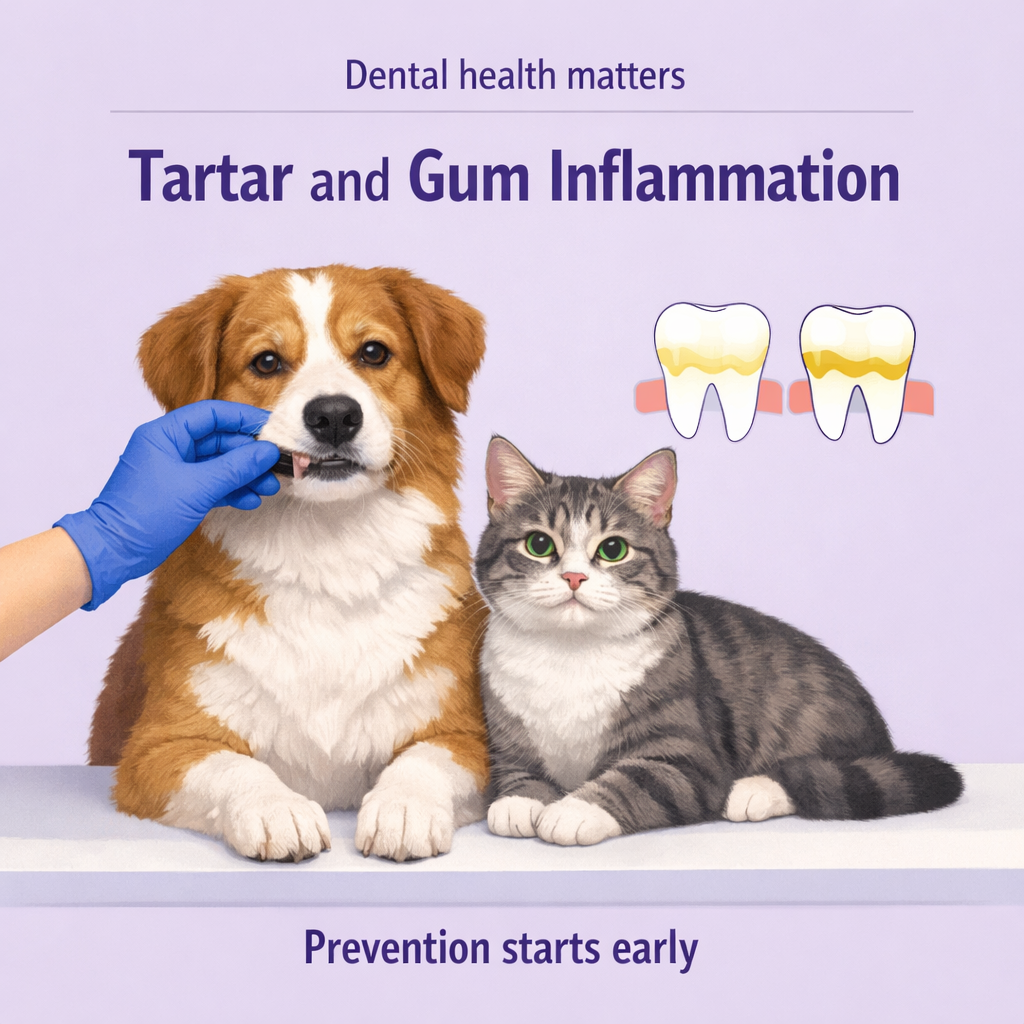
Dental problems in dogs and cats are not about having a "nice smile." They are about constant pain, bad breath, reduced appetite, and inflammation that can last for months.
Based on our clinical practice, around 65–70% of dogs and cats over the age of three come to appointments with noticeable tartar buildup. In every second case, there are signs of gingivitis, even when the visit is scheduled for something routine, such as vaccination.
What Is Tartar and Why Does It Form
It all starts with soft plaque. Plaque forms from food residues, bacteria, and saliva within just a few hours after eating. If plaque is not removed, it gradually mineralizes and turns into tartar. Canines and molars are usually affected first.
The main risk factors are very common and everyday:
soft food with little chewing load
lack of regular dental care at home
age over 3–4 years
chronic medical conditions
Signs You Should Not Ignore
Persistent bad breath usually means that inflammation is present in the mouth and plaque and tartar are actively accumulating.
Other common signs include:
yellow-brown deposits on the teeth
redness and swelling of the gums
bleeding during eating or oral examination
the pet eats more slowly or chews on one side
refusal of dry food
A Case From Our Recent Practice
An eight-year-old female poodle named Lola was brought to our clinic. Her teeth had never been examined by a veterinarian. The owners explained it simply: "Her breath smells sometimes," "It’s her age," "She still eats."
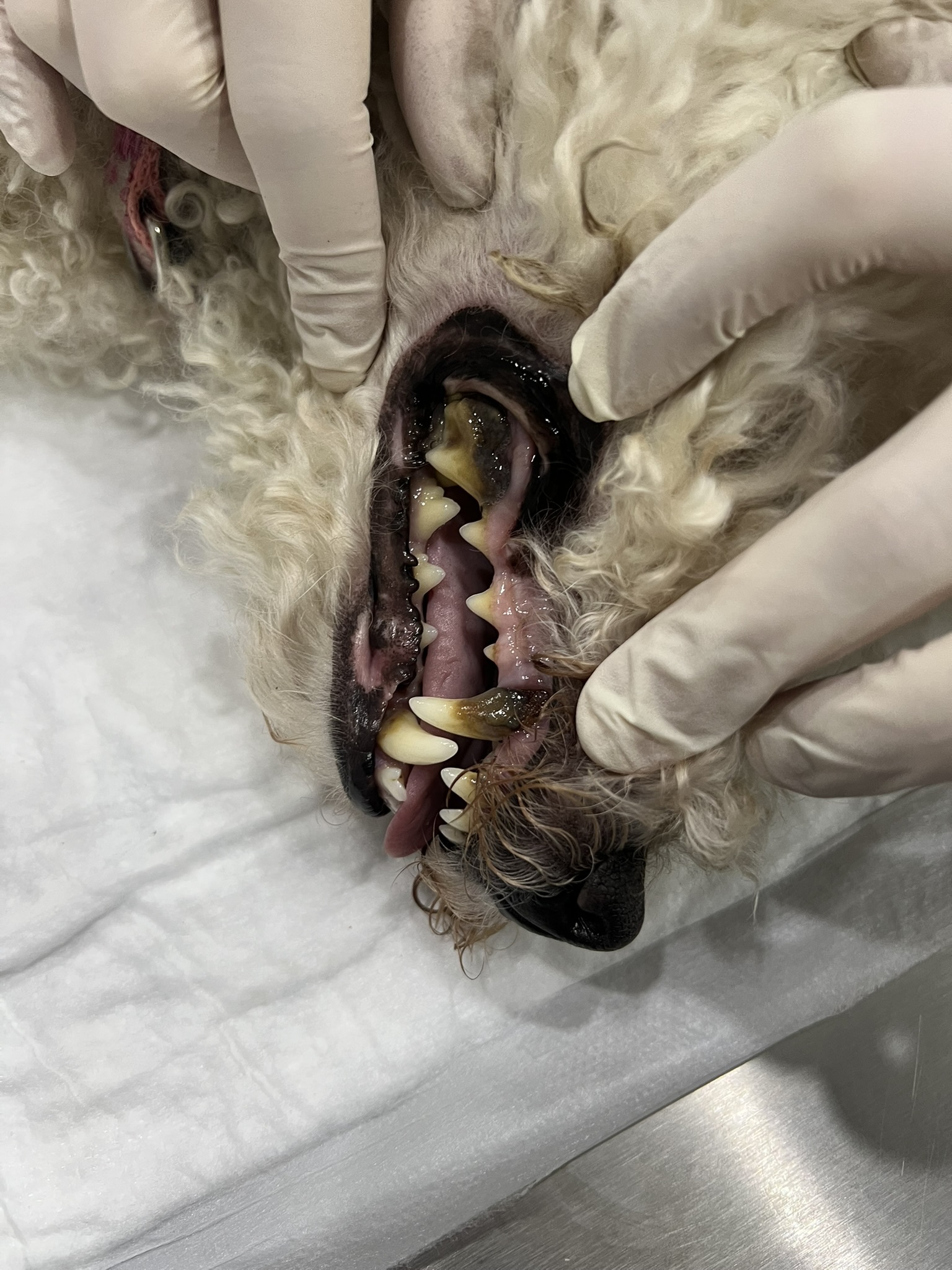
Over the previous six months, the situation changed noticeably. Lola lost weight, started picking at her food, walked away from the bowl more often, played less, and generally looked tired.
During the examination, the cause became clear very quickly: significant tartar buildup and inflamed gums. When there is constant pain in the mouth, animals begin to eat cautiously, choose softer food, chew on one side, or simply endure the discomfort and eat less. This affects body weight, mood, and overall activity, creating the impression that the pet has suddenly "aged."
Before dental cleaning, we followed the standard protocol: blood tests, ultrasound examination, and assessment of sedation safety. We then performed ultrasonic dental cleaning and treated areas where tartar had extended below the gum line.
After some time, the owners reported that Lola had returned to her usual routine. She eats normally again, is gaining weight, is more active on walks, and shows interest in play. In many such cases, what is attributed to age turns out to be a treatable dental problem.
Why Tartar Is Dangerous
Tartar and inflamed gums are a constant source of bacteria. In chronic cases, bacteria can enter the bloodstream. In older animals, this often coincides with worsening kidney and liver parameters, and in pets with heart disease, it increases the overall strain on the body.
In senior animals, pronounced dental problems often go hand in hand with a general decline in well-being: reduced activity, picky appetite, and irritability when the head or muzzle is touched.
Another Case: Richie, 9 Years Old
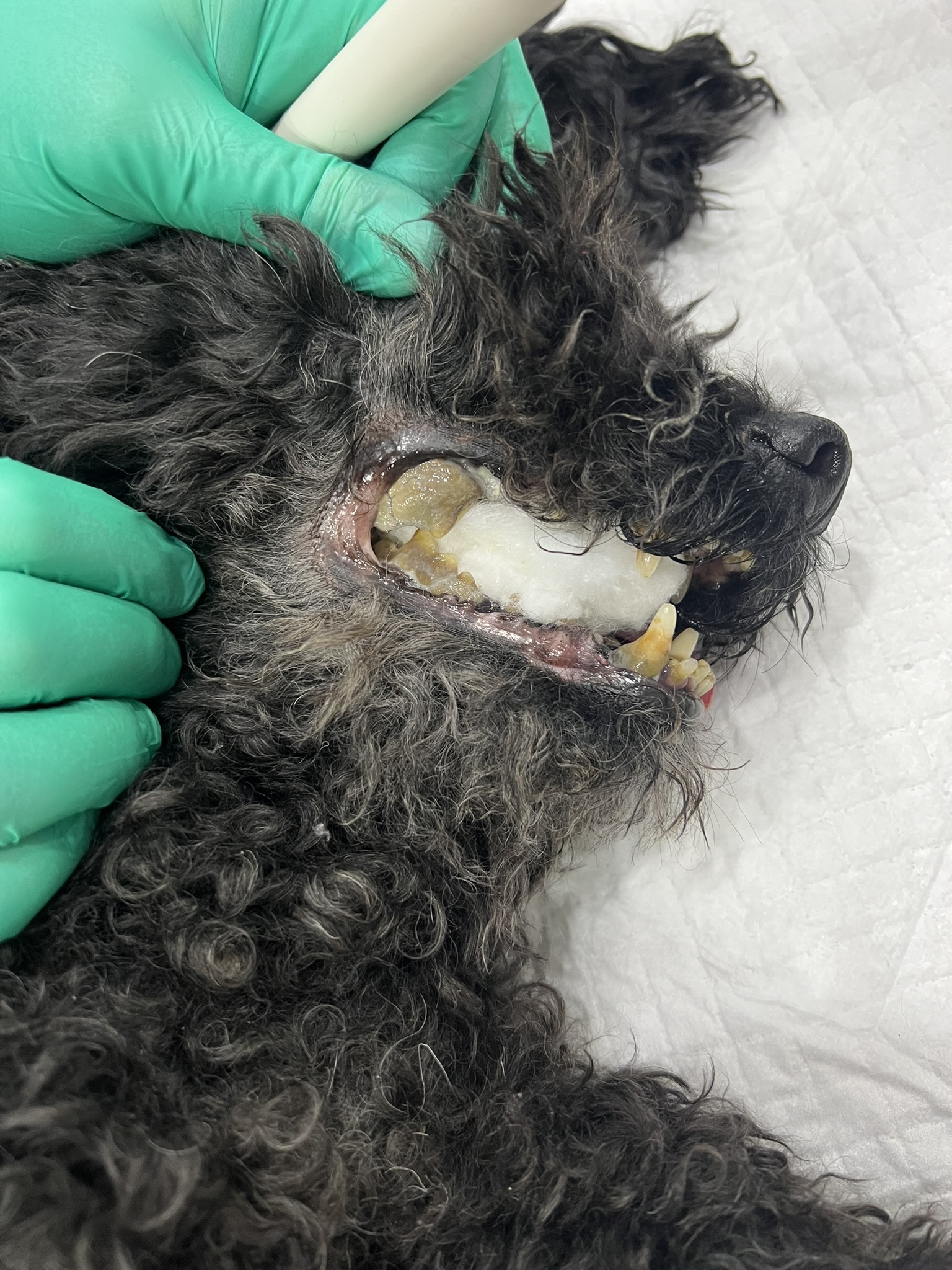
Richie had never been seen by a veterinarian before the age of nine. At some point, his body could no longer compensate for the problem. He was brought to our clinic in serious condition: purulent discharge from the eyes and nose, a strong foul odor from the mouth, and constant pain. Pain led to irritability and aggression, which is not uncommon when an animal is suffering.
We admitted Richie for ultrasonic dental cleaning. During the procedure, it became clear that the issue was not limited to tartar alone. We identified consequences that could have been prevented with earlier care: an oronasal fistula, a pathological connection between the oral cavity and the nasal passages. In addition, several teeth were so severely destroyed that they could not be preserved, and eight teeth had to be extracted.
An oronasal fistula is a serious condition. It leads to chronic inflammation, increased risk of complications, and long-term stress on the body. This is not a situation where cleaning solves everything. It is an example of how ignoring dental health for years significantly raises the cost of treatment.
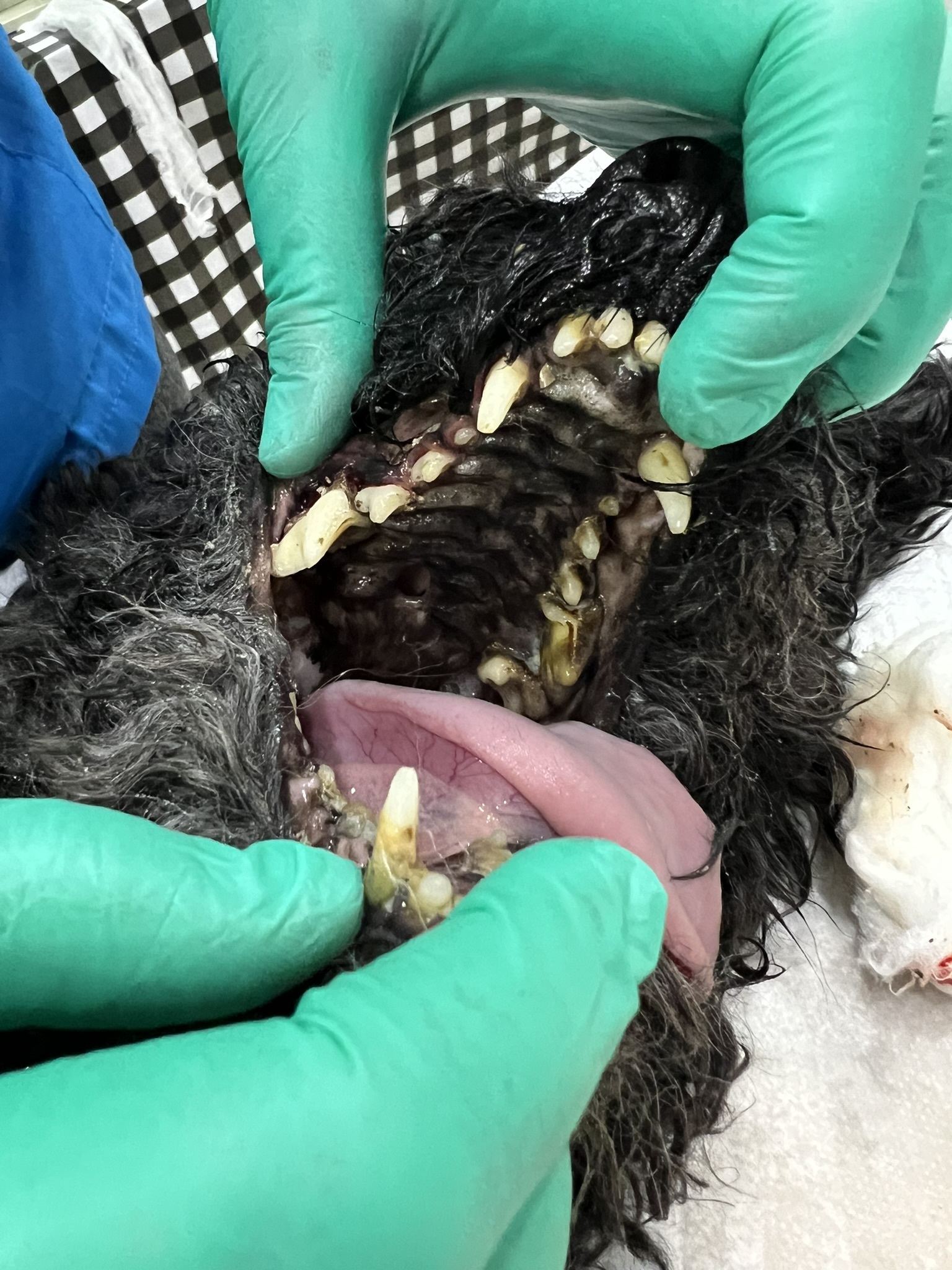
After treatment, Richie’s condition improved noticeably. Pain decreased, tension subsided, aggression reduced, and his overall well-being improved. However, due to the diagnosis, he now requires lifelong management: soft food, a strict diet, and regular follow-up to keep the condition stable.
We share such cases not for drama, but to clearly show the difference between prevention and treating long-term consequences.
What You Can Do at Home
Home prevention is effective when it becomes part of a routine.
Practical options include:
brushing teeth with veterinary toothpaste 2–3 times a week
special dental chews and toys
high-quality dry food, if there are no contraindications
regular inspection of the mouth at home
Dental wipes and gels can slightly slow plaque formation. However, if tartar is already dense and dark, it cannot be removed at home.
When Professional Dental Cleaning Is Needed
If tartar is clearly visible, home care will no longer be effective.
Ultrasonic dental cleaning is recommended if:
there is dense tartar buildup
the gums are inflamed or bleeding
persistent bad breath is present
the animal shows signs of pain while chewing
Dental cleaning is performed under sedation. This allows for thorough cleaning of all tooth surfaces, including below the gum line, and ensures the animal’s safety and comfort during the procedure.
Based on our clinical observations, noticeable reduction in gum redness and bleeding is usually seen within one to two weeks after cleaning. Many owners also report that their pets eat more confidently and tolerate oral examinations better.
How Often Teeth Should Be Checked
Ideally, the oral cavity should be examined at every routine veterinary visit, but at least once a year.
For small-breed dogs and cats over five years of age, checks should be more frequent. Dental problems tend to develop faster in these patients.
What Is Important to Remember
If bad breath persists for weeks, plaque is visible, or the gums bleed, an examination is necessary. Over time, tartar becomes harder, and inflammation progresses deeper, increasing the risk of tooth loss and chronic pain.
If you are unsure, it is better to show your pet to a veterinarian. An oral examination takes only a few minutes and can save years of quality life.
During the appointment, we assess the level of plaque, the condition of the gums, and recommend a clear plan: where home care and monitoring are sufficient and where professional cleaning and gum treatment are required. The scope of procedures, risks, and costs are discussed in advance.
After dental problems are addressed, behavior often changes. Pets stop protecting their mouths, become more active, and eat better. This is especially noticeable in animals that have lived with chronic gum inflammation for a long time.
If you want a clear understanding of your pet’s dental health rather than guessing based on photos or odor, schedule an oral examination at Shunn u Katun Veterinary Clinic. We will examine the teeth and gums, assess plaque levels, and, if necessary, perform a pre-anesthetic check-up (blood tests and ultrasound when indicated). You will leave the appointment with a clear plan, timelines, risks, and costs explained in advance.