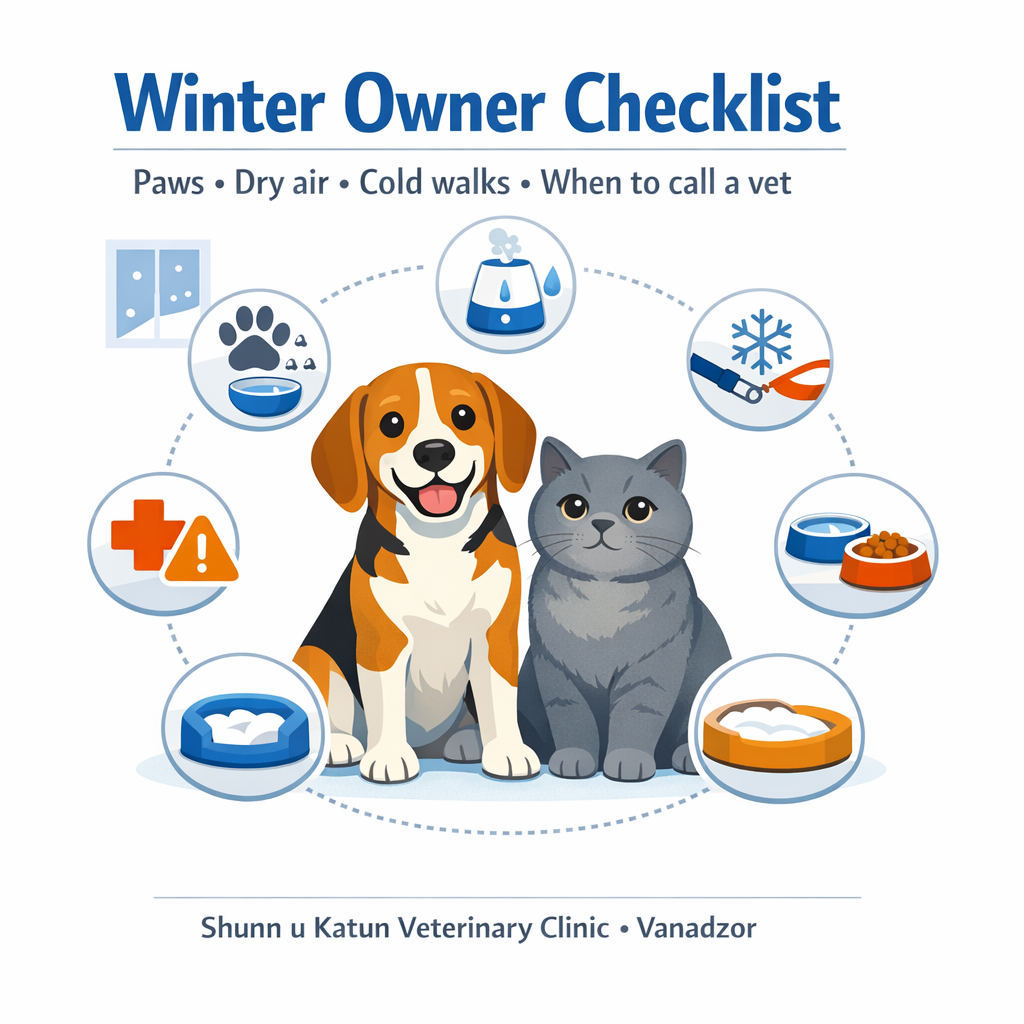
Winter in Vanadzor looks romantic right up until 11:10 pm, when you are trying to convince your dog to stop licking their paws, while your cat is auditioning for the role of the itchiest creature in the apartment. Outside there is salt and de-icing chemicals, indoors the radiators dry out the air, and walks are either wet or icy. As a result, the skin suffers - and with it, the sleep of the whole family.
To avoid turning this into an emergency clinic visit, keep this checklist as your winter protocol. It is short, but it covers the most common seasonal problems.
What we most often see in winter
According to our internal records for the winter months (December-February), about every fourth visit is related in one way or another to seasonal factors. Most commonly, these are irritation of paw pads and the spaces between the toes after contact with ice and de-icing chemicals, itching and dry skin caused by dry indoor air, “unusual” lethargy after walks in freezing weather or after a pet gets wet, as well as gastrointestinal issues after dogs lick salt or chemical residues.
The good news is that almost all of this can be resolved quickly if caught early. The bad news is that winter does not wait until you have free time.
1. Paws after walks: three minutes that save weeks of treatment
In winter, paws take a double hit. On one side there is ice, micro-cuts and snow clumps between the toes. On the other, salt, de-icers and all that automotive chemistry.
After every walk, rinse off dirt and salt with warm (not hot) water. If washing right away is inconvenient, wipe the paws with a damp wipe without alcohol or fragrances, then make sure to dry them thoroughly. Do not forget to check between the toes - snow clumps, small stones and pieces of ice often hide there. Outside, dogs tolerate it, but at home they start licking intensely.
If your pet consistently reacts to de-icing chemicals (licking paws, limping, holding paws up), it is better to use protection before going outside. The most effective options are booties, if your pet tolerates them, or a thin layer of paw wax or protective balm. Whenever possible, choose shorter walks along “clean” routes instead of roadsides where chemicals are heavily used.
Bonya, a three-year-old Beagle. Very active, usually stoppable only by the word “cheese”. Her owner brought her in after several evenings in a row: Bonya came home and started “washing” her paws as if she were being paid for speed. She slept poorly at night and began limping during the day.
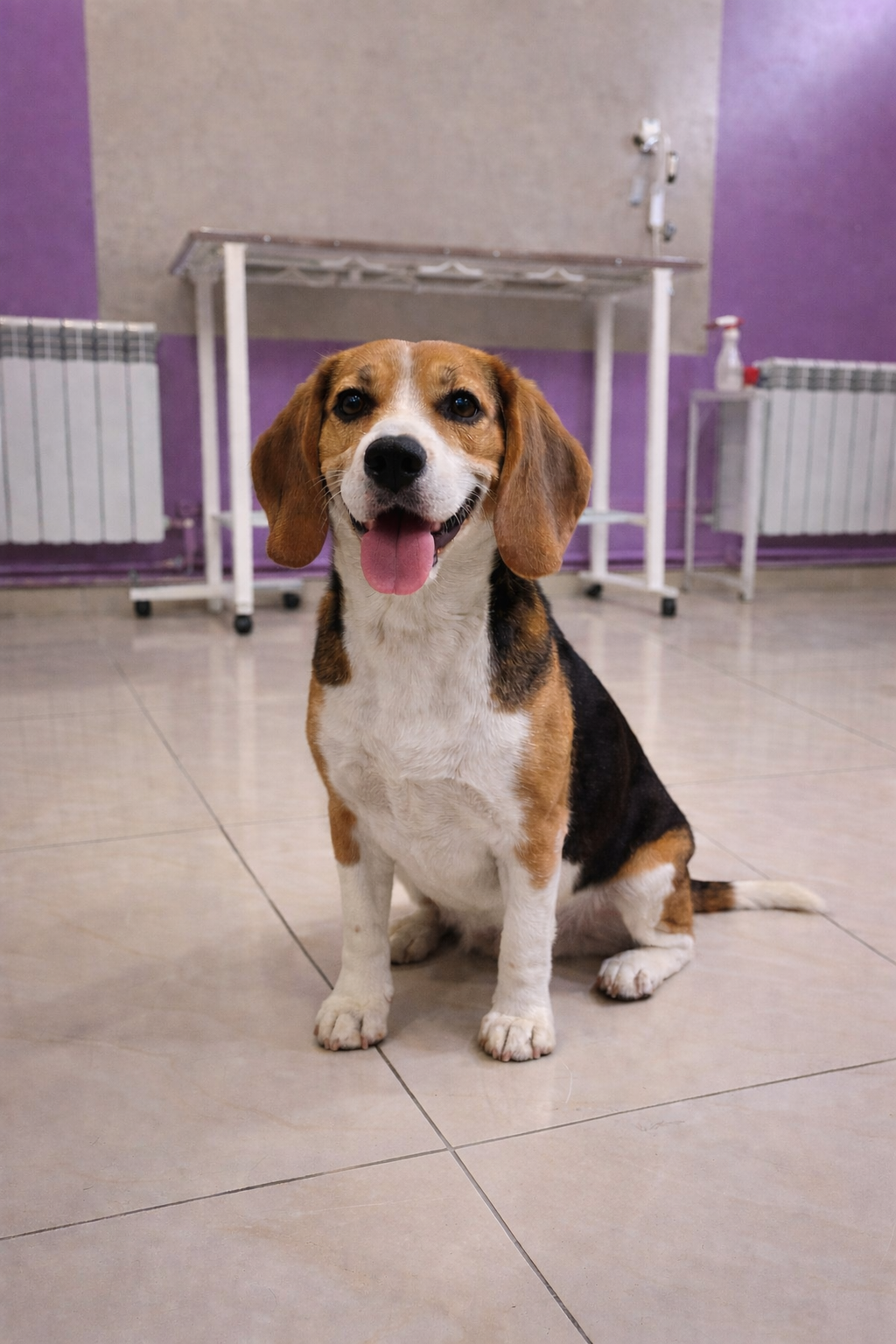
On examination, there was redness between the toes and small cracks on the paw pads. The cause turned out to be simple: walks along a road that had been heavily treated with de-icing chemicals the day before. We treated the skin, prescribed home care and asked the owner to change the walking route for a week. After that, everything was resolved with simple steps: washing paws, drying them and applying a protective balm before walks. Within a few days, Bonya was back to her normal self.
2. Dry indoor air: when itching seems minor, until it is not
In winter, heating systems dry the air so much that animal skin starts behaving like an overdried leather glove: it becomes irritated, flaky and sometimes cracked. In dogs, paws and areas with thin skin are affected most often. In cats, this usually appears as generalized itching, dandruff and over-grooming “down to bald spots”.
If you have a humidifier, it is one of the most underrated winter helpers. It is enough to place it in the room where your pet sleeps. Fresh water should always be available - in winter many pets drink less, even though their need for water does not disappear.
One more important point: frequent “squeaky clean” baths in winter almost always make things worse. Washing paws and the belly after walks is fine. Full baths without a real need are better kept to a minimum.
3. Walks in cold weather: how to know when it is time to go home
There are dogs that are ready to philosophize in a snowdrift, and there are those who, after five minutes, clearly say with their eyes: “I get it, let’s go home.” Everyone has a different limit. Age, weight, coat type, chronic conditions (especially joint problems) and even whether the pet got wet all play a role.
If you notice shivering, paw lifting, attempts to hide, sudden slowing down or your dog pulling toward home, these are not whims - they are normal signals that it is time to head back. Wet fur in freezing temperatures increases the risk of hypothermia several times over, so in winter it is better to have shorter but more frequent walks.
4. Water and nutrition in winter: no extremes
In winter, we often see two opposite strategies. The first is “let them eat more, it’s cold”. The second is “they move less, so I will reduce the food”. Both can miss the mark.
Focus on appetite, activity level and body weight. If weight is increasing while walks are getting shorter, portions should be adjusted. If your pet drinks little, a second water bowl, a wider bowl (often more comfortable for cats) or adding a small amount of water to wet food can help.
For senior pets or those with chronic kidney, heart or joint conditions, it is best to discuss a winter routine in advance. In these cases, prevention truly saves nerves.
5. A safe place to sleep
Sometimes in winter we end up treating not “the cold”, but the consequences of incorrect home comfort.
A bed should not be placed in a draft or directly on a cold floor. Do not position sleeping areas right next to heaters, fireplaces or space heaters - burns in pets happen more often than many people expect.
One more winter reminder: stray cats often seek warmth under car hoods. Before starting your car, tapping on the hood can genuinely save lives.
6. When to see a vet instead of “let’s wait and see”
There are situations where waiting is a bad investment.
See a veterinarian if cracks on the paws are bleeding, if there are sores, pronounced redness between the toes or lameness lasting more than a day. If itching is severe and your pet is scratching or licking the skin to the point of wounds, if there are weeping areas, an unpleasant odor or patchy hair loss.
Do not delay if after a walk your pet becomes markedly lethargic, shivers, has cold ears and paws or responds poorly to you. The same applies to vomiting, diarrhea or refusal to eat, especially if there is a chance the animal ingested salt or de-icing chemicals.
And separately: any suspicion of antifreeze or other automotive chemicals. The rule here is simple - do not wait. This is an emergency.
One-minute mini checklist
When you come home, quickly check:
- paws are washed or wiped and dried
- there is fresh water and your pet drinks as usual
- indoor air is not excessively dry
- the walk length and route were appropriate for your pet
If any answer is “no”, it is a small adjustment that can make a big difference in winter.
If you are unsure, it is better to write or call. We will quickly advise whether an examination is needed or if home care is sufficient.
Shunn u Katun Veterinary Clinic, Vanadzor, Tumanyan Street 7 (opposite the “Milagro” restaurant).
Working hours: Tuesday-Saturday, 11:00-19:00.
Phone: +374 55 895-495