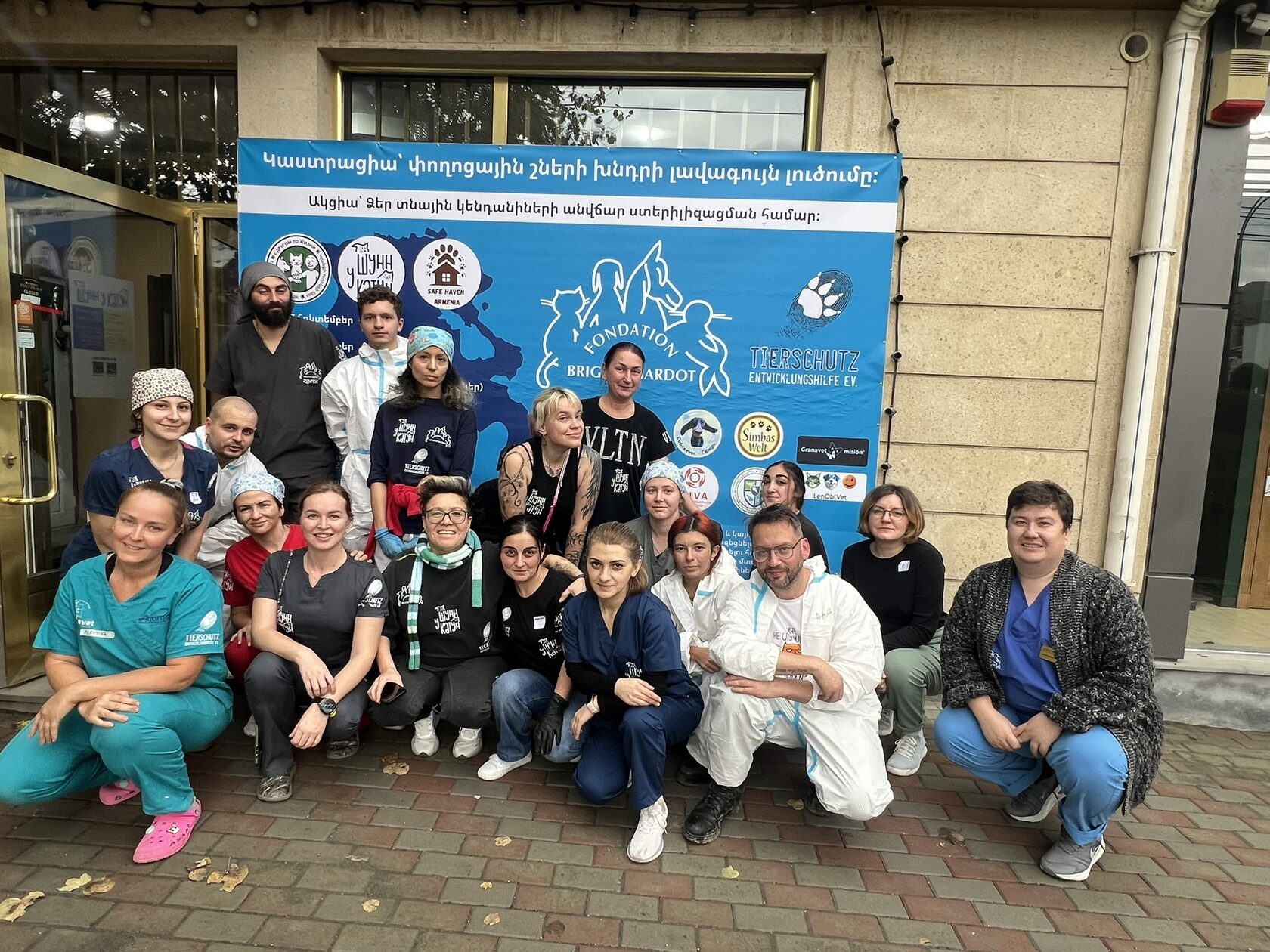
We have been working for three years now. And in that time, all sorts of things have happened in the clinic - late-night emergencies, endless “can you also take a look at this cat,” spays and neuters, injuries, rescued tails, and sometimes very hard conversations.
And in these three years we have reached one main conclusion: step by step, we are turning from a commercial clinic into a social one.
This does not mean we “stopped being a clinic” or are playing charity for pretty words. It means that more and more often, help comes first in our decisions - not profit. Someone needs treatment right here and now. Someone needs a chance to recover after surgery. Someone simply needs not to be left alone on their worst day.
And geography matters here too. We are not in Yerevan. Local incomes are not high. Our prices are on average 30% (or more) lower than in the capital. The flow of owned (pet) patients is not high.
At the same time, we clearly understand the other side of reality: if a clinic does not grow, does not upgrade equipment, and does not buy modern supplies and medications, the quality of help goes down. And that is not what we built this for.
There is one more thing we cannot avoid saying out loud.
We are the only veterinary clinic in Armenia’s Lori region. For some, that is just geography. For us, it means 24/7 responsibility: when there is no “other option” nearby, we have to be that option.
And right at this point, something happened that we never planned as a strategy - but it became our reality.
Over the past year we have merged very closely with the volunteer community. The clinic has become a hub for volunteers - a place where people can help in the way that suits them: financially, physically, emotionally, or with information. Some donate money, some bring animals in, some provide foster care, and some simply show up and say: “I’m here - what do you need?”
We want to thank every one of our volunteers. Calmly, sincerely, without pathos. Because without them, many stories simply would not happen.
Who are our volunteers?
Volunteers do not have one face and one “job description.” They are very different people - and that is exactly their strength.
Some care for street dogs and cats: they feed them, make sure they do not disappear, know who has a wound and who just has “sad eyes today.” Some help with logistics - bringing an animal to an appointment, picking them up after surgery, delivering medications, finding a carrier.
Some take animals into foster care. That deserves special respect: when you already have your own life at home, but you still make space for a dog after surgery or a kitten that needs quiet and warmth.
Some volunteers help not with hands, but with time and brainpower: keeping lists, collecting requests, verifying details, taking photos, writing texts, translating, replying to people when we are in appointments and simply cannot keep up.
And then there is a special category: “hearts with an organizer’s spark.”
Some volunteers organize events and fundraising to cover treatment costs for homeless animals. Some arrange outings, some run social media fundraisers for a specific case. Sometimes it looks like this: “We need to cover tests and antibiotics - I’ll post a fundraiser and collect it.” And a few hours later, it is done.
Some volunteers help physically on the ground: catching animals (safely and by agreement), accompanying them, helping to hold them, supporting aftercare, assisting with cleaning and treatments, buying food, finding a temporary carrier. Others help emotionally: supporting caretakers, taking over communication when a person simply has no strength left.
And then there are those who help “in small ways.” Funny enough, these small things often decide everything. Bringing disposable pads. Buying food. Stopping by a pharmacy. Dropping 2,000 AMD into the donation jar at the front desk. Sharing a post. Sometimes that is the exact turning point that gives an animal a chance.
Why does it matter?
Without romance: volunteers close critical risks.
Risk #1: the animal simply will not make it to the clinic. You cannot explain to a street dog that they should “hold on a bit” and come tomorrow. Tomorrow might not exist for them. So the person who can carefully transport, handle, calm, and organize the process is not “a helper” - they are part of the team.
Risk #2: no aftercare. Surgery or treatment is only half the story. The other half is the days when you need to clean the wound, watch appetite, prevent licking, notice fever in time, and message us. Foster care or a local caretaker often decides the outcome right there.
Risk #3: system overload. We are a small clinic, and we have one veterinarian. When waves of cases hit (tick season, poisonings, injuries in street animals), volunteers are exactly what helps us not fall apart at speed.
Three stories we will never forget
Archibald and the “fifth toe”
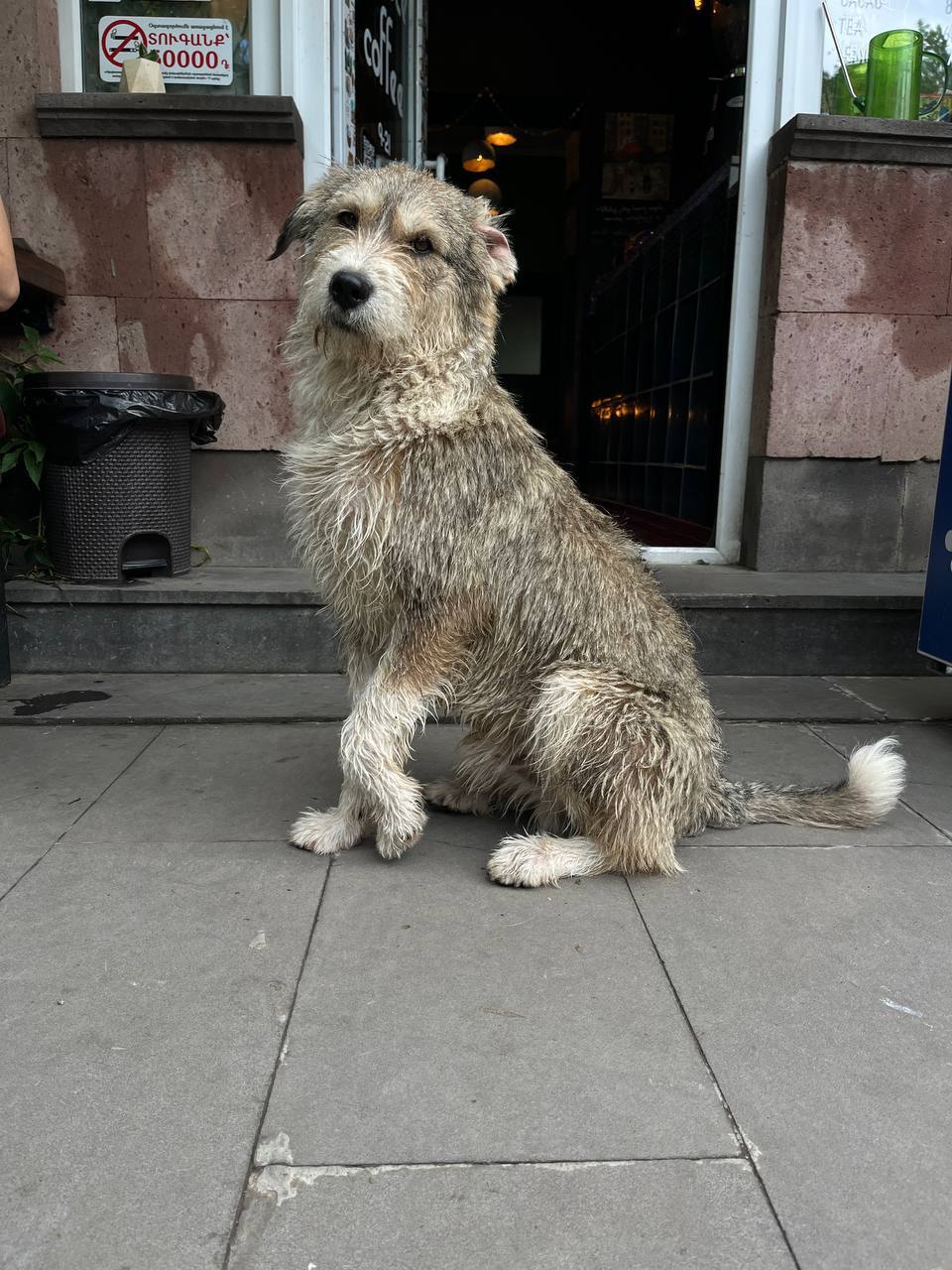
Archibald came to us wet, funny, and incredibly trusting. We performed castration and a small but important surgery - removing a dewclaw (“the fifth toe”) that often gets caught and is constantly injured in street dogs.
Recovery was quick, but the key point was not the stitch. A volunteer took Archibald into foster care. Gave him calm, warmth, proper food, and - most importantly - observation.
The treatment cost 56,000 AMD. Part was covered by the clinic as co-financing, part was paid by friends of the clinic, and the rest came from our “jar for homeless animals.” This is one of those cases where money in a donation jar turns into something real: stitches, pain relief, and a safe recovery.
Archibald is healthy now and looking for a home. And every time we see a street dog with a constantly injured claw, we remember: foster care can sometimes heal no worse than antibiotics.
When a street dog gets a name, a microchip, and a шанс
In our free vaccination and microchipping program for street dogs, volunteers are the foundation.
Usually it starts like this: someone feeds a dog near their home, sees that the dog is friendly, and decides to do things properly. They make an appointment, bring the dog in, help hold them during the exam, take a photo in advance. We vaccinate, microchip, enter the data into our database, and the dog gets a page on our website.
One important detail: the dog gets not only a chip, but also a specific contact person - a caretaker. That means it is no longer “just some dog in the neighborhood,” but an animal someone is responsible for. This is what real safety looks like - for people and for the animals themselves.
Two major campaigns - spring and autumn
Some things show volunteer power better than any slogan.
This year we ran two large spay/neuter campaigns.
In spring - 108 surgeries.
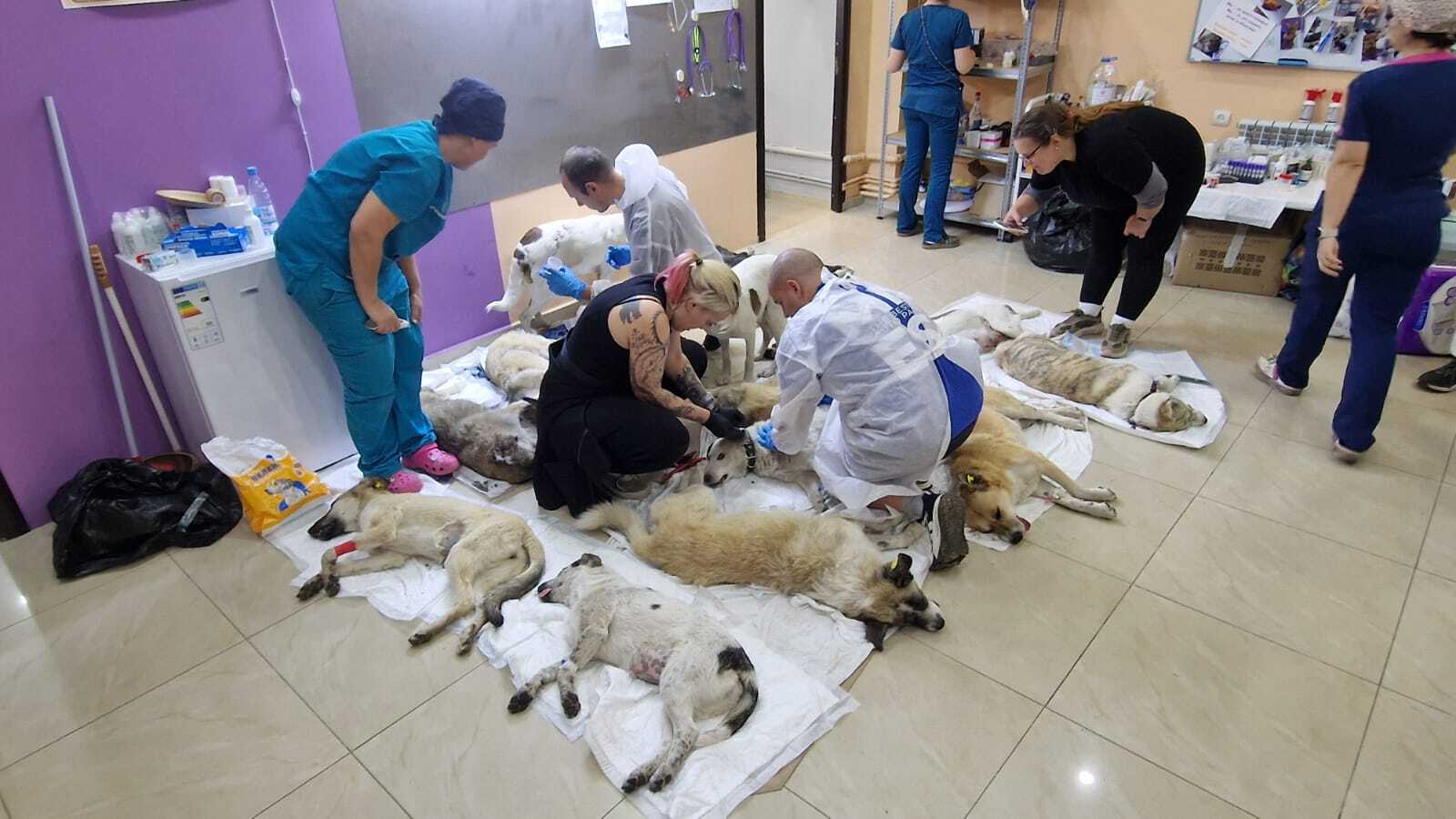
In autumn - 204 surgeries in Vanadzor alone.
And this is not “look how great we are.” This is joint work: volunteers, international foundations, the team, supplies, lists, transportation, and foster care.
If we look at it honestly, volunteers play the central role in stories like this. Because surgery is a table and a veterinarian. A campaign is hundreds of small tasks around it.
Some meet people at the door and manage the flow. Some check lists, fill forms, take photos, calm owners. Some transport animals from nearby areas. Some hold carriers and bring clean pads. Some make sure animals stay warm and calm after anesthesia. Some clean floors and tables - because after the 20th surgery in a row, cleanliness is not aesthetics, it is safety.
And there is another important part that you rarely see in photos.
After surgery, recovery begins. And here volunteers do what no veterinarian can do alone: they provide care, observation, foster care, monitoring, and keep in touch with us. That is why such campaigns are possible at all.
Stats - to be honest
We do not like playing with numbers for the sake of numbers, but the reality is simple: volunteers are not a “nice bonus.” They are a measurable contribution.
Based on our internal notes and chats (requests, calls, messengers) for 2025:
We received about 300 requests related specifically to homeless animals through volunteers and caretakers. About half of these requests resulted in an appointment at the clinic; the rest were consultations, triage, and help on-site.
Around 40 cases were truly urgent: injuries, suspected poisoning, severe skin issues, complications after street fights.
More than 60 times, volunteers handled logistics fully: bringing an animal in, picking them up after procedures, and returning them to their usual area.
And one more number that is hard to calculate but easy to see: in almost every second “street” case, a volunteer provides recovery support - one day, two days, sometimes a week. This directly reduces the risk of complications.
These are approximate figures, because not every volunteer likes to “check in.” Many simply do the work and move on. But even so, it is clear how systematic this has become.
How to join
If this resonates with you, you are already halfway there.
Message us in any convenient way (phone, messengers, social media, email). Tell us honestly what kind of help you can offer and how much time you have. We are not looking for “heroes.” We need people we can rely on. The clinic badly needs consistent support - from regular donations to basic supplies that will be used in the next spay/neuter campaign.
Then we will agree on a format. For some, one-time help fits best (transport, purchase, photo). For others - regular involvement (foster care, neighborhood caretaking, project support).
Clinic contacts
We are in Vanadzor, 7 Tumanyan Street.
Working hours: please check the current schedule on our website or social media (it can change due to surgeries and field work).
Phone: +374 55 895-495
Email: amvetmir@gmail.com
Thank you for being here. Thank you for your hands, your time, your strength, and for not walking past.
And if you are only looking from the side for now - start with the simplest thing: tell your friends about us, drop by the clinic, ask how you can help. Sometimes a big story starts with a small “I can give you a ride.”