
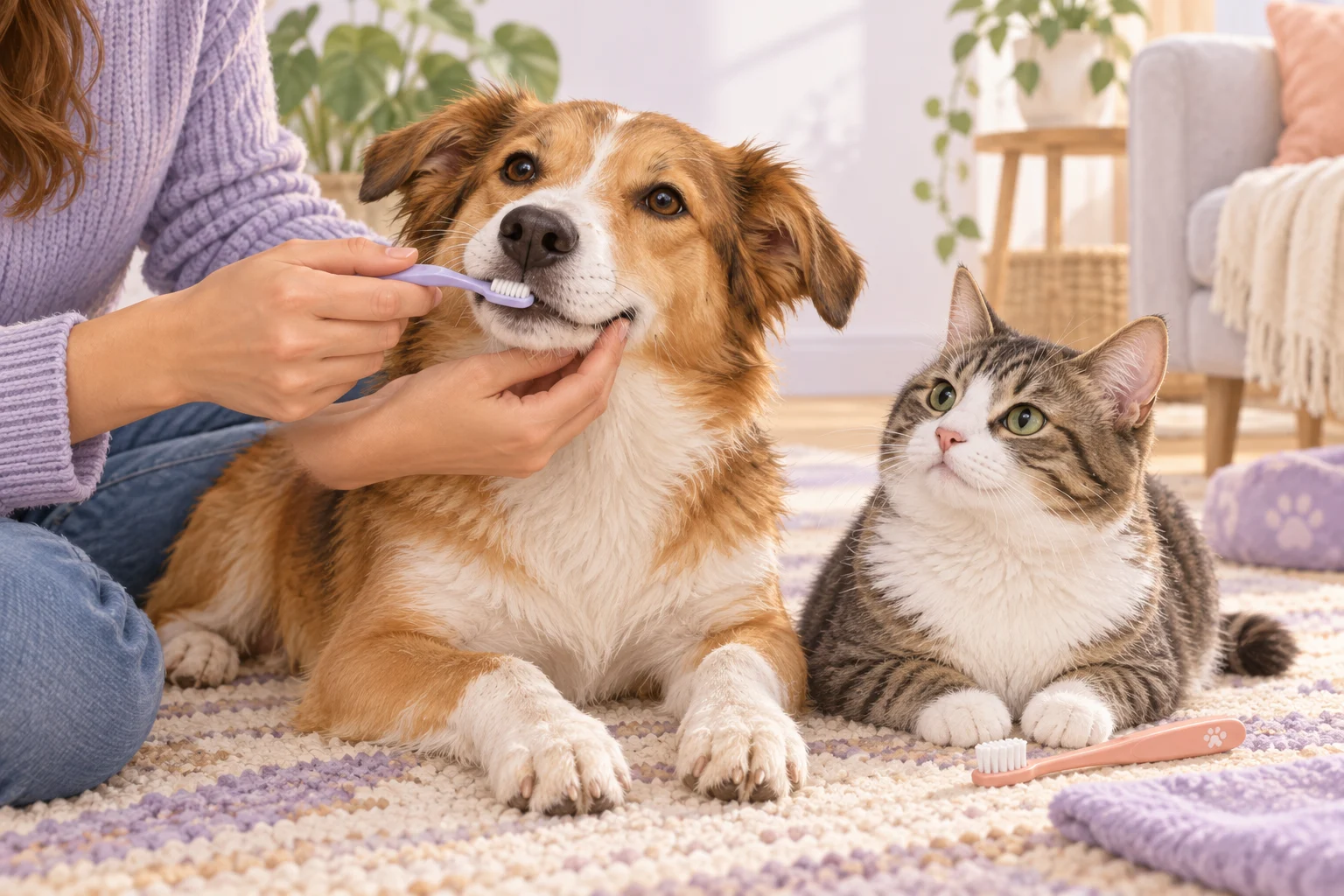
Changes in the mouth that should not wait
Dogs and cats often keep eating and playing even when their mouths hurt. Do not wait for a complete refusal to eat. Arrange an examination if you notice any of the following:
- persistent bad breath;
- red, swollen or bleeding gums;
- yellow-brown deposits along the gumline;
- drooling or blood on a toy or in the bowl;
- dropping food, chewing on one side, rubbing the face with a paw or resisting touch around the head;
- a broken, loose or discoloured tooth;
- swelling on the face.
Bad breath is not a diagnosis, but it is often the first clue. The visible crown is only part of the tooth: roots and tissues below the gumline need intraoral radiographs. In Archie’s story, heavy calculus reached the edge of the gum and made it difficult to assess the teeth. Eating became more comfortable after he received dental care.
While baby teeth are being replaced
In puppies, permanent teeth usually begin to appear at about four to five months, and the full adult set is generally present by seven months. In kittens, permanent teeth erupt at roughly four to seven months. These are useful ranges, not a timetable that every animal follows exactly.
Sometimes two canine teeth sit next to each other: the permanent tooth has erupted while the baby tooth remains. This is called a persistent deciduous tooth. It can displace the permanent tooth, affect the bite and create a crowded space where plaque collects quickly. Do not wait for months in the hope that it will always fall out on its own. Have the puppy or kitten examined. The veterinarian decides whether extraction is needed after an examination and, when appropriate, a radiograph.
You can teach a young pet to accept gentle handling around the face from the first days at home. Regular daily brushing is best started once the permanent teeth have erupted, at about six to seven months. If a baby tooth is loose and the gum is tender, do not insist on using a brush. A painful first experience can make later care much harder.
Introducing the toothbrush
The first sessions have one simple goal: your pet learns that hands near the face do not mean restraint or pain. Choose a quiet moment and practise for only a few seconds.
- Stroke the cheek, lift the lip gently and release it straight away. Praise your pet.
- After several short sessions, touch the outer surface of one tooth near the gumline with a finger.
- Let your pet smell a veterinary toothpaste and meet a soft toothbrush. Human toothpaste is unsuitable because pets swallow it and its ingredients are intended for people.
- Move the brush gently along the outer tooth surfaces and gumline. You do not need to force the mouth open.
- Stop before your pet starts to struggle. Five calm seconds today are more useful than a long fight and fear of the brush tomorrow.
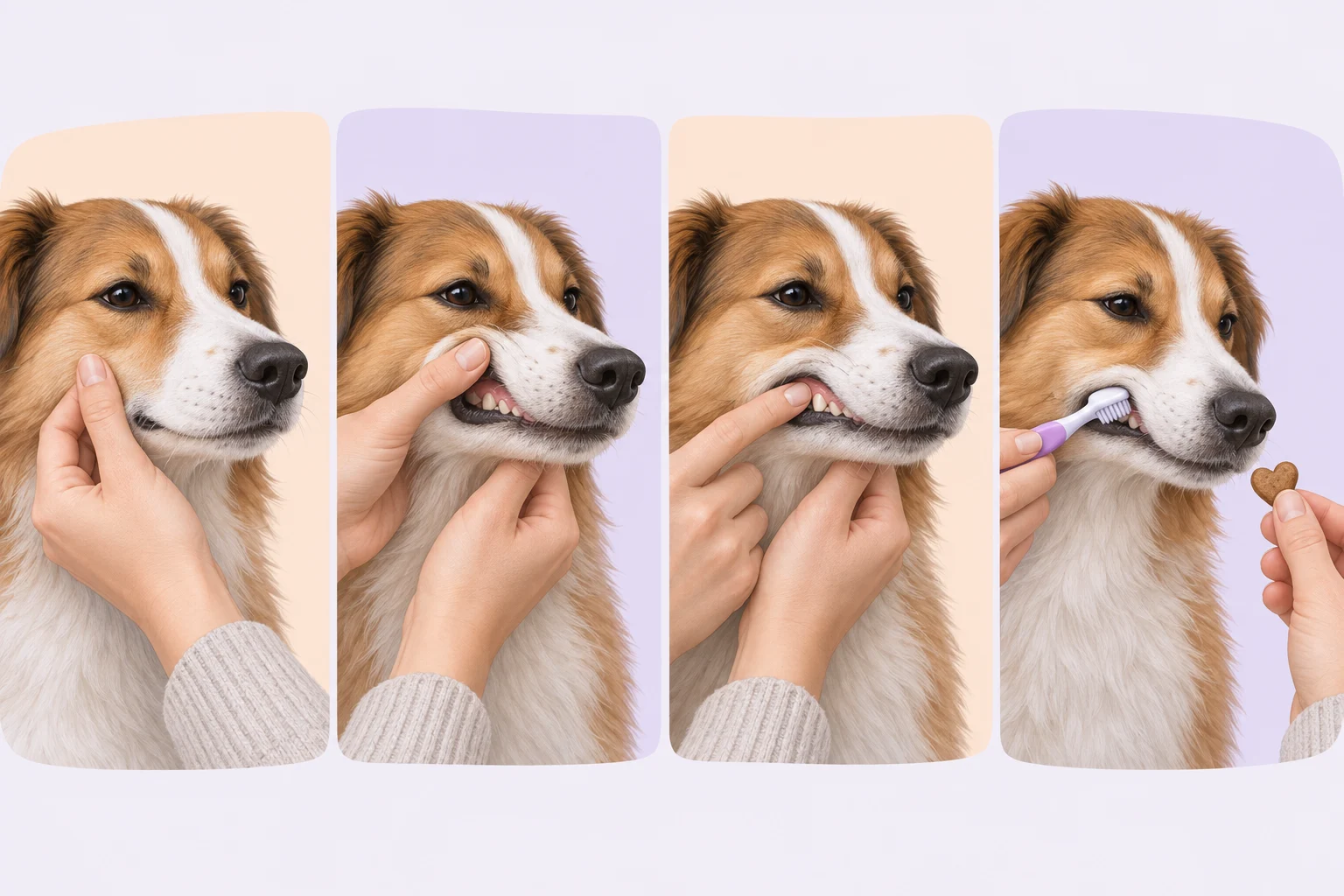
If touching the mouth causes pain, bleeding or a sudden defensive reaction, pause the brushing and arrange an examination. A toothbrush is for prevention, not for treating an inflamed mouth at home.
Toothpaste, spray, chew or dental diet
Daily brushing remains the most effective home method for reducing plaque. Toothpaste can make brushing easier and may help with plaque control, but flavour and claims on the packaging are not enough to choose a product. Dog and cat toothpastes, wipes, water additives, treats and dental diets are available with evidence for reducing plaque or calculus. The Veterinary Oral Health Council (VOHC) seal is one useful sign to look for on the packaging.
No paste or spray can dissolve established, hard calculus. It needs professional removal, including below the gumline. Ordinary dry food does not replace brushing either. A dental benefit is demonstrated for a particular product, not for every piece of kibble.
Bones, antlers, sticks, stones and very hard toys do not clean teeth. They can fracture a crown and expose the painful pulp. If you cannot press a thumbnail into a chew and it has no flexibility, it is too hard for the teeth.
What happens during a professional dental procedure
An examination while the pet is awake can reveal visible changes and guide the preparation. A complete dental assessment is carried out under general anaesthesia with endotracheal intubation, monitoring and physiological support. This allows the veterinarian to examine every tooth safely, take intraoral radiographs, probe around the gums, remove plaque and calculus above and below the gumline, polish the teeth and make a treatment plan.
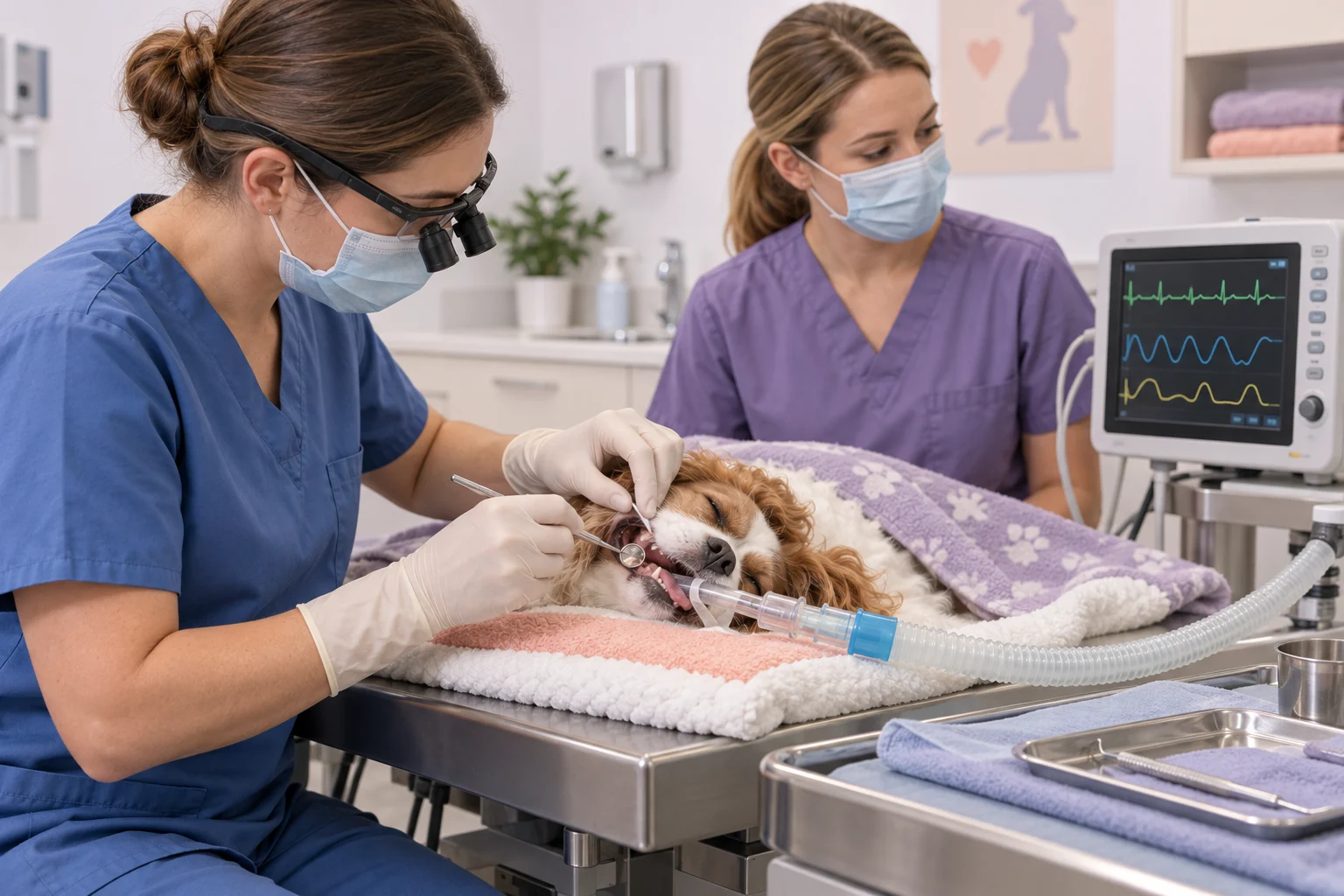
An “anaesthesia-free cleaning” removes only some visible deposits. It cannot safely assess or clean below the gumline, obtain a complete set of radiographs or find hidden disease. The teeth may look whiter afterwards while the source of pain remains.
Anaesthesia is never entirely risk-free, and a lightly sedating drug is not enough for a thorough dental procedure. Beforehand, the veterinarian considers age, current health, medical conditions, previous reactions and any tests that are needed. The protocol and monitoring are then tailored to that patient.
A simple plan for the next few days
Today, you can gently lift your pet’s lip and look at the teeth in good light. Do not hold the animal by force. If you see calculus, a broken tooth or red gums, notice an odour, or see a change in eating, begin with an examination. If the mouth appears comfortable, start with brief handling practice and work gradually towards daily brushing.
Even excellent home care does not replace veterinary examinations. There is no single professional cleaning schedule for every pet. Timing depends on species, age, jaw anatomy, current dental health and how quickly that individual develops plaque.

Comments
No comments yet.