
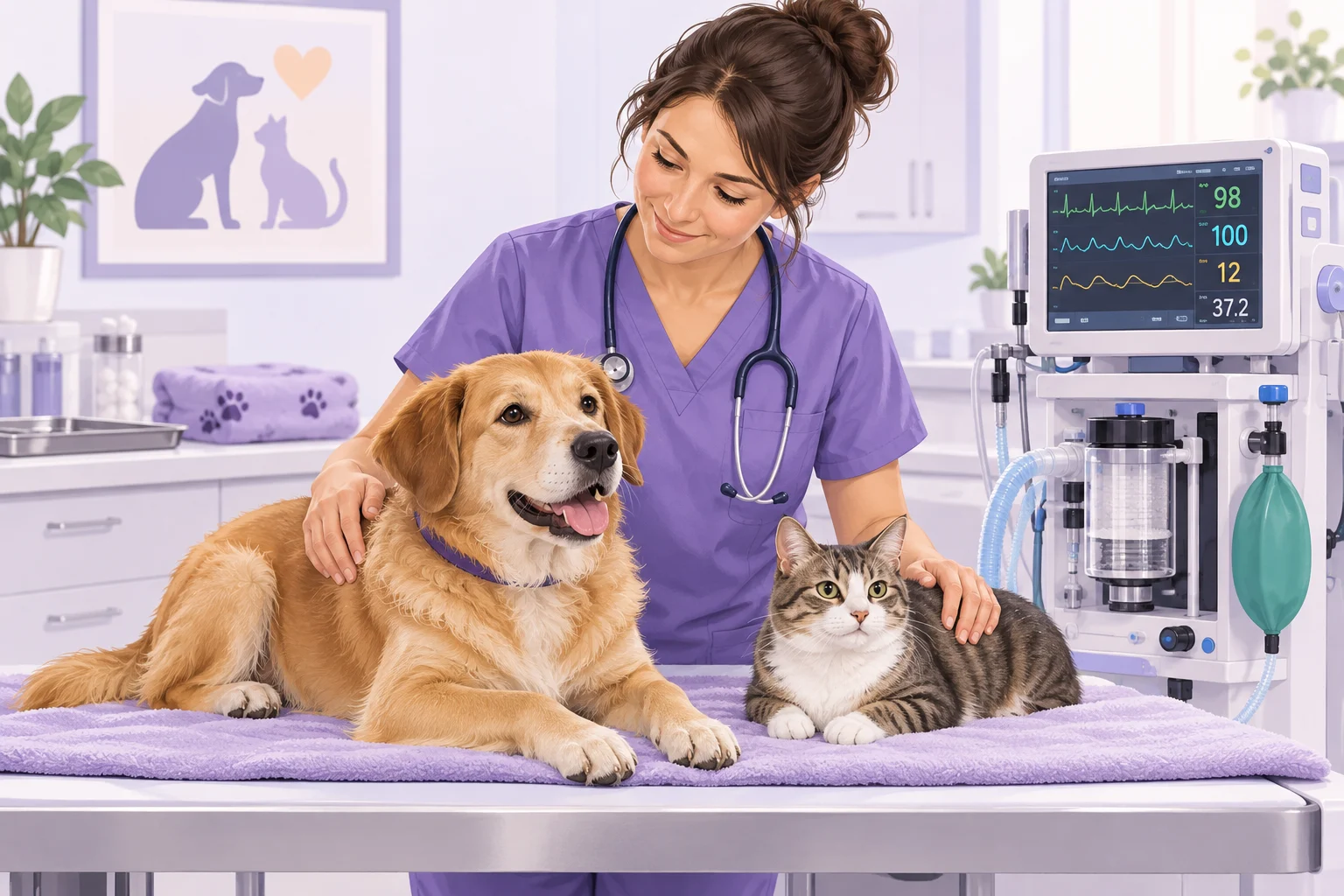
The word “surgery” can be frightening even when the procedure is a planned neutering or a small intervention. That reaction makes sense: you are placing someone who cannot describe how they feel in the care of a medical team. We discuss the procedure, your pet’s health and possible complications beforehand, so you can make an informed decision and prepare without unnecessary panic.
What affects the risk
Two patients who look similar may respond very differently to the same procedure. The veterinarian considers the whole animal, including the condition that led to surgery and everything else that could affect anaesthesia or recovery.
- Overall health and other medical conditions. Heart, respiratory, kidney or liver disease, endocrine disorders, anaemia, dehydration and infection may change the anaesthetic and recovery plan.
- Age and anatomy. Very young animals regulate temperature and blood glucose differently, while older pets are more likely to have an underlying illness. Short-nosed breeds need particular attention to their airways.
- The urgency, length and complexity of the procedure. An emergency leaves less time to stabilise the patient, while a long or invasive operation requires more prolonged support and pain relief.
- Previous reactions to medication and anaesthesia. Tell the team how your pet recovered from earlier procedures and whether there was nausea, marked agitation, prolonged drowsiness or another complication.
- Unexpected events. Bleeding and changes in breathing, blood pressure, heart rhythm or body temperature can occur during surgery and early recovery.
A decision about surgery for an older pet is based on their current health, other illnesses and the expected benefit of the procedure. A fit senior dog may recover more easily than a younger animal with severe disease. Age still matters when the team chooses medication, doses and preoperative tests.
How we prepare for surgery
- We take a full medical history. This includes chronic illness, recent symptoms, allergies, previous operations and anaesthetic reactions, and every medicine or supplement your pet receives.
- We examine the patient before anaesthesia. If anything has changed, we reassess the pet immediately before the procedure.
- We choose tests for the individual risk. These may include blood tests, blood pressure, an ECG, X-rays, ultrasound or other diagnostics. The same panel is not necessary for every patient.
- When needed, we stabilise the patient first by addressing dehydration, low body temperature, pain, blood glucose or electrolyte disturbances and other problems.
- We create an individual anaesthesia and pain relief plan based on weight, age, health, and the length and expected discomfort of the procedure.
- We check the equipment, prepare sterile instruments, and plan postoperative observation and home instructions before the operation starts.
Monitoring continues after the last stitch
During anaesthesia, the team assesses breathing, blood oxygen saturation, pulse, heart rhythm, blood pressure and body temperature. The exact monitoring and support depend on the patient and procedure. Observation continues afterwards while the pet wakes, warms up and regains reliable control of breathing and posture.
What you can do
- Tell the veterinarian about every known illness, allergy, pregnancy, recent change in health and previous experience with anaesthesia.
- List prescription medicines, over-the-counter products, vitamins and supplements. Do not stop or give medication before the procedure unless the veterinarian has given specific instructions.
- Follow the clinic’s instructions on food and water. Fasting time depends on age, weight and health, and an unnecessarily long fast can also be harmful.
- Tell the clinic before you arrive if your pet develops coughing, vomiting, diarrhoea, lethargy, loss of appetite or another change. It may be safer to postpone a planned procedure.
- Prepare a quiet, warm place at home, limit jumping and access to the incision, give medication exactly as directed, and confirm which number to call if you are worried.
Questions to ask before you consent
- What is the aim of the procedure, are there alternatives, and what could happen if we wait?
- Which risks matter for my pet, and how does their health change the plan?
- Which tests are needed before surgery, and what question does each one answer?
- How will pain relief, monitoring during anaesthesia and recovery be managed?
- What should normal recovery look like at home, and which signs mean I should call or return to the clinic immediately?
If surgery has been recommended for your pet, bring previous discharge notes, test results and a medication list to the consultation. Book an appointment at Shunn u Katun by calling +374 55 895 495 or messaging us on Telegram. We are at 7 Tumanyan Street, Vanadzor, and open Tuesday through Saturday from 11:00 to 19:00.

Comments
No comments yet.