
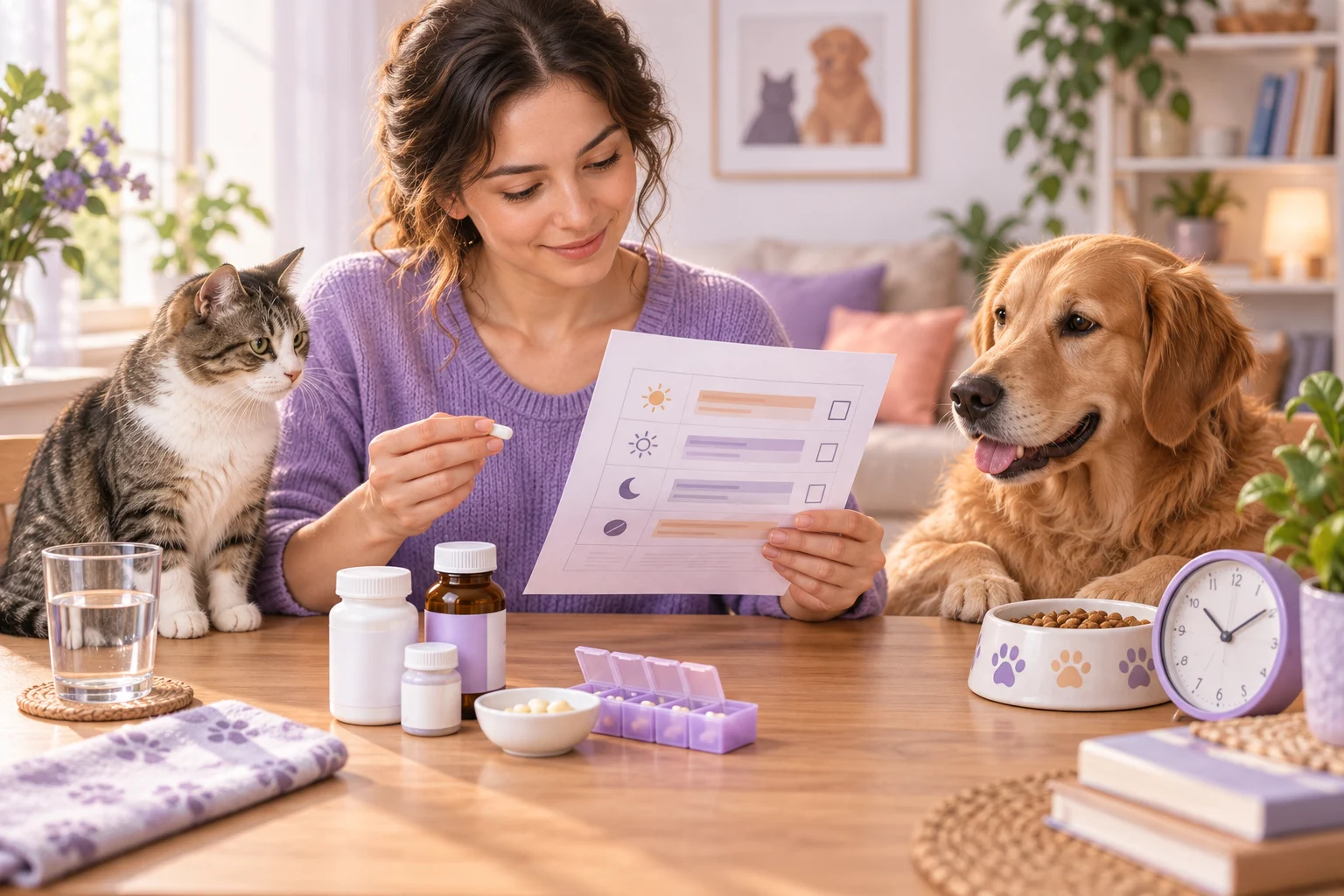
Treatment is always harder at home than it seemed during the appointment. A pet spits out a tablet, work disrupts the schedule, and after the first calm day you want to put the medicines away. We understand. The plan needs to be clear and manageable. If something is not working, tell your vet openly. They can explain it again and may adjust the plan after assessing your pet.
The treatment plan belongs to one particular pet
When prescribing treatment, a vet considers the diagnosis, weight, age, chronic conditions, allergies, other medicines and test results. A medicine that helped a friend’s dog or came from the family medicine cabinet may be ineffective or dangerous for your pet. The dose, route, timing with food and length of treatment all work together.
Six rules for treatment at home
- Check the written plan for the medicine name, dose, time, route, instructions about food and length of treatment.
- Use the dosing syringe, pill cutter or other device recommended by your vet. Do not split or crush a medicine without asking first.
- Set reminders and record every dose. If several people care for the pet, agree in advance who is responsible for each medicine.
- Keep medicines in their original labelled packaging, at the stated temperature, away from human medicines and out of reach of children and animals.
- Do not give the medicine to another pet or add human medicines, vitamins, supplements or pet-shop remedies without checking with your vet.
- Attend scheduled rechecks and laboratory monitoring. How a pet appears at home does not always show how their body is responding to treatment.
If a dose is missed, spat out or followed by vomiting
- Do not double the next dose. The advice differs between medicines, so ask when to continue treatment.
- If your pet spat out the medicine or vomited, do not automatically give another dose. Some of it may already have been absorbed.
- If you accidentally gave too much or mixed up medicines, call a vet straight away, even if your pet still looks normal.
- Write down the time, medicine name and amount. A photo of the packaging and written plan can help the vet assess the situation quickly.
Only a vet should change an antibiotic course
An infection may still need treatment after the symptoms begin to ease. Give the antibiotic at the prescribed dose and for the number of days your vet specified. Do not shorten or extend the course yourself, and do not save leftovers for another illness. Missed doses and stopping early can make treatment less effective and contribute to bacterial resistance. If your pet develops a reaction or you cannot give the medicine, contact your vet and agree on the next step.
A therapeutic diet is part of the treatment plan
For kidney, liver, gastrointestinal and other conditions, food may be part of the therapy. The vet selects a diet based on the diagnosis and test results. Even small table treats can disrupt the plan, so discuss food, treats, supplements and a safe transition to the new diet. If your pet refuses to eat it, do not wait until the bag is finished. Tell your vet.
Questions to ask before you leave the clinic
- What is each medicine for, and when should we expect the first change?
- How should I give it, and can it be mixed with food?
- What should I do after a missed dose, vomiting after treatment or an accidental extra dose?
- Which reactions can be monitored at home, and which need urgent care?
- Is the treatment compatible with every medicine and supplement my pet already receives?
- When is the recheck, and what changes should I record at home?
Keep the written plan close
After the appointment, we give you written instructions for your pet. Keep them beside the medicines or save a photo where everyone in the household can find it. If a note is unclear, the dose is difficult to measure or the schedule proves too complicated, please ask us. Your pet should receive treatment safely, and you should not have to work through every doubt alone.
How to contact the clinic about treatment
For questions about prescribed treatment, message us on Telegram or call +374 55 895 495. Include your pet’s name, the appointment date, the medicine name, the dose given and what has changed. If your pet has signs of an emergency, do not wait for a message and seek urgent veterinary care.

Comments
No comments yet.