
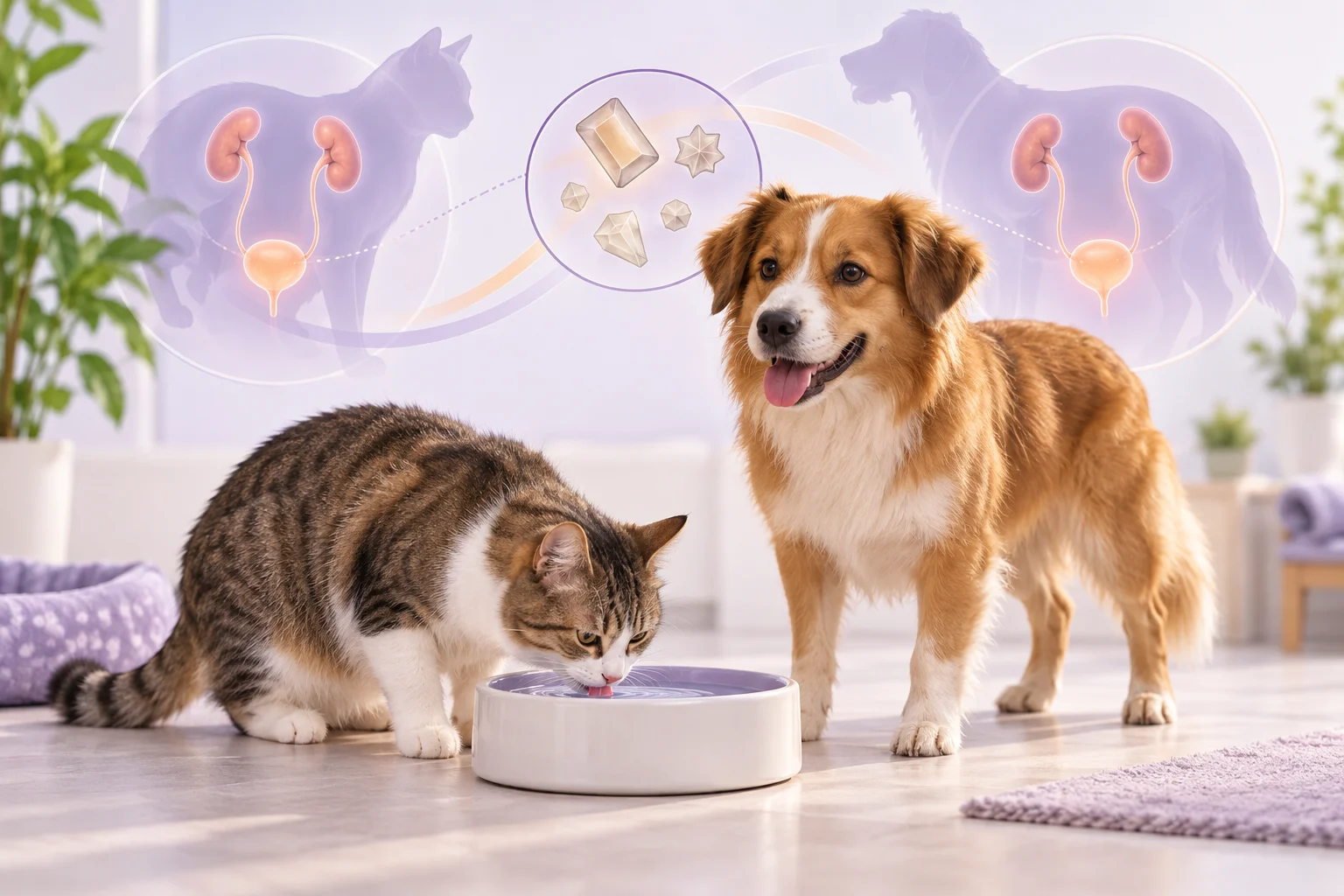
A cat goes back to the litter box, sits for a long time, leaves, and returns a minute later. A dog keeps squatting during a walk but produces almost no urine. It is easy to mistake these changes for constipation, a behavior problem, or mild inflammation. Stones, cystitis, infection, and urinary obstruction can all look much the same at first. The signs alone cannot reveal the cause, but they can tell you how urgently your pet needs help.
First check whether urine is coming out
Repeated attempts, tiny wet patches, blood, restlessness, or crying while urinating all call for a veterinary examination. A pet may lick under the tail more often or start urinating outside the litter box or indoors. If straining leaves no wet patch, do not watch for hours or wait until morning. A narrow urethra makes male cats particularly vulnerable, although a dangerous obstruction can occur in female cats and in dogs too.
How crystals grow into a stone
Urine always contains dissolved minerals. When their concentration becomes high, they can precipitate as crystals, join together, and gradually grow. Urine volume and acidity, frequency of urination, infection, diet, medication, and inherited traits all affect this process. A stone therefore rarely has a single cause or comes down to one “wrong” food. Uroliths can form in the kidneys, ureters, bladder, or urethra, and they vary greatly in composition, size, and density.
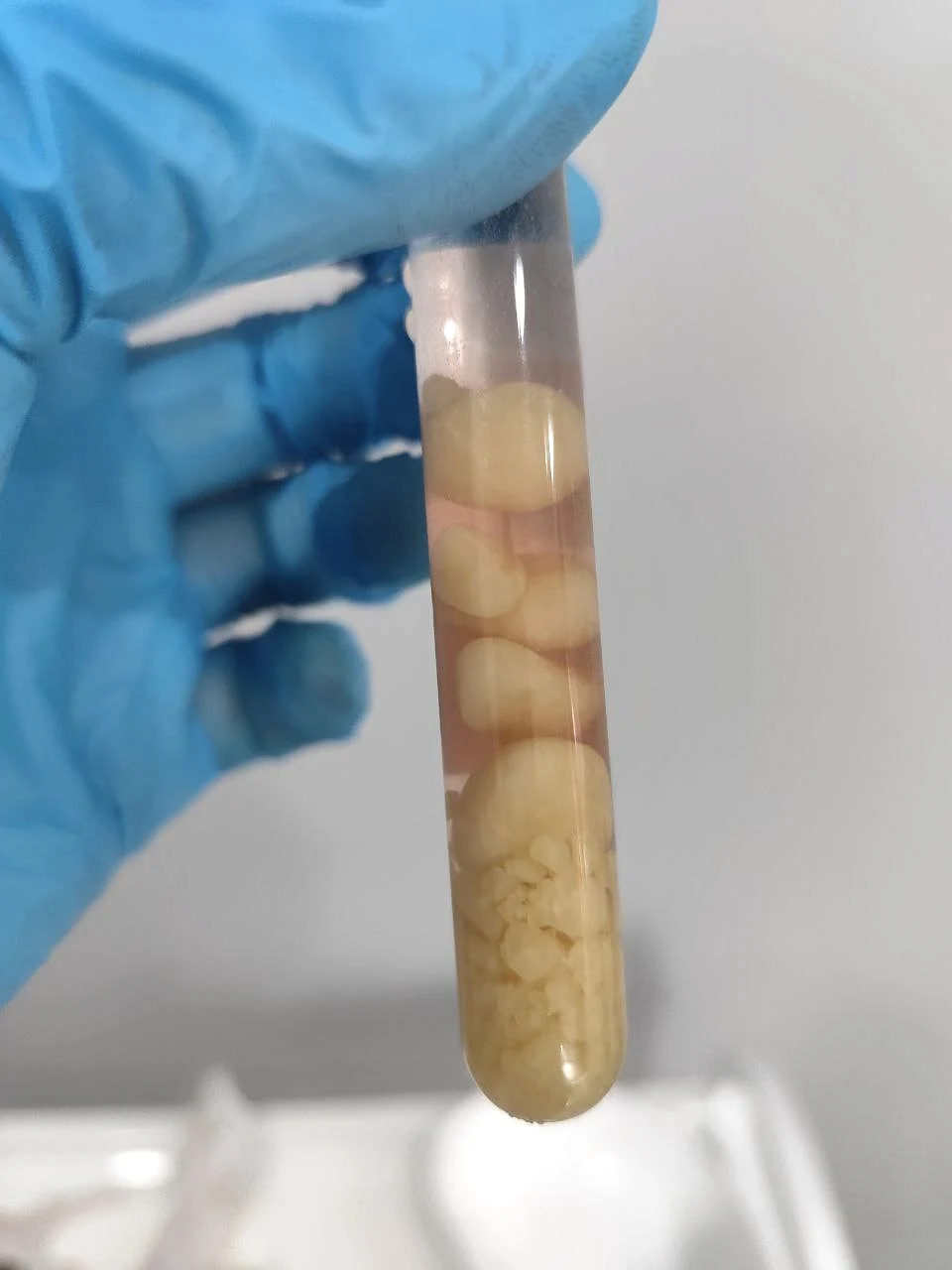
Crystals in a urine test do not necessarily mean there is a stone
Crystals show that urine is supersaturated with substances that can form uroliths. Yet a stone may be present without visible crystals, and crystals may appear when there is no stone. Sample freshness matters as well: storage, refrigeration, or a long delay before analysis can allow crystals to form outside the body. One line in a laboratory report cannot replace an examination and diagnostic imaging, so ask your veterinarian how and when the urine sample should be collected.
What helps identify the cause
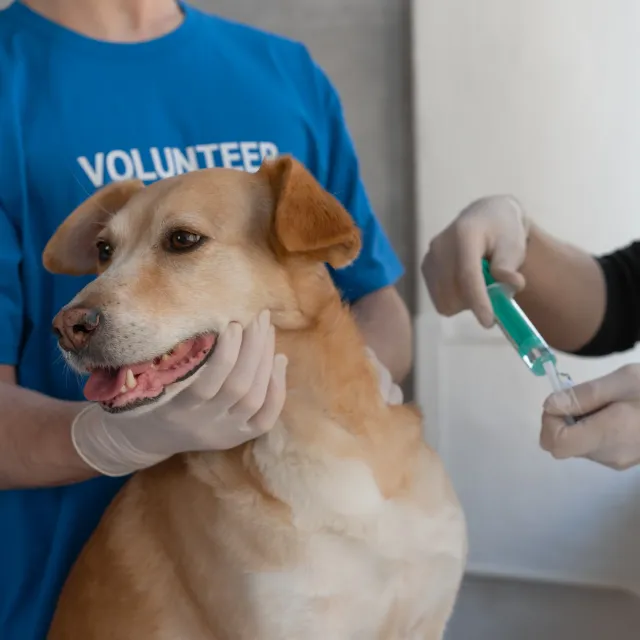
At the appointment, the veterinarian assesses your pet's overall condition and bladder. A urinalysis shows urine concentration and acidity, as well as cells, bacteria, and crystals; a culture may be needed if infection is suspected. Blood tests are particularly important when urine is being retained or dehydration, kidney problems, or electrolyte changes are possible. X-rays reveal many stones, but small uroliths and some mineral types are difficult to see. Ultrasound or another imaging method can then provide a clearer picture.
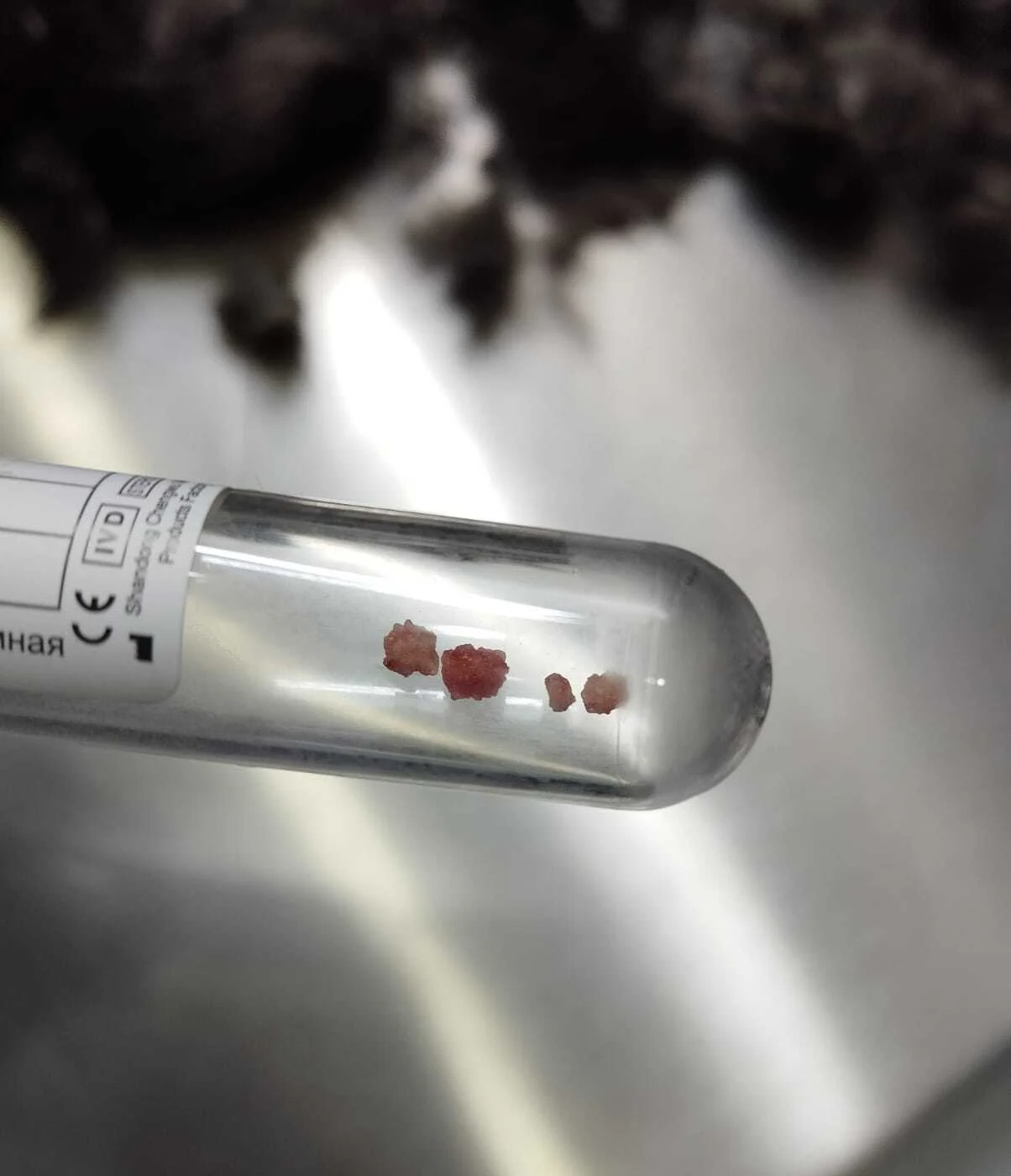
If a stone passes or is removed, ask for quantitative mineral analysis. Its color, smooth surface, or sharp edges can only suggest its composition: stones that look alike may be different, and a single urolith can contain several layers. The exact composition helps the veterinarian decide whether any remaining stones can be dissolved and how recurrence should be prevented.
Why some stones are dissolved and others removed
In suitable cases, struvite, urate, and cystine stones can be dissolved with a therapeutic diet and medication under veterinary supervision. Calcium oxalate stones do not dissolve this way. Size and location, infection, and the pet's general condition also affect the choice of treatment. When the urinary tract is blocked, the immediate priorities are to stabilize the pet and restore urine flow, usually with a catheter. Further treatment is decided afterwards.
Small bladder stones can sometimes be removed by flushing, endoscopy, or another minimally invasive technique. Large stones, a composition that cannot be dissolved, or an unsuccessful first approach may make surgery necessary. Urethrostomy is considered in selected cases of repeated obstruction. The method is chosen for the individual patient because equipment, suitability, and safety depend on the species, sex, body size, and location of the stone.
What to do before the appointment
- Call the clinic and say at once whether urine is coming out. If it is not, arrange the trip without delay.
- Note the last normal urination and whether you have seen blood, vomiting, or weakness. Bring a medication list and the name of the food.
- Do not press or massage the abdomen or try to squeeze urine out. Do not give human painkillers, diuretics, antibiotics, or antispasmodics unless a veterinarian has prescribed them.
- Do not force food or water. Put your cat in a carrier, keep your dog on a lead, and travel calmly.
How to encourage drinking without a struggle
More water makes urine less concentrated, so minerals are less likely to join into crystals. Place water in several quiet spots and see what your pet prefers: a wide bowl, cool fresh water, or a fountain. Wet food contains far more water than dry food, and water can sometimes be mixed into food if your pet accepts it and the veterinarian agrees. The amount consumed is probably more important to stone risk than the type of water. Be cautious with broth because it may contain excess salt, onion, or garlic, and plain water should always remain available.
A therapeutic diet must match the stone type
The word “urinary” on a packet does not make a food a universal treatment. A diet that changes urine acidity and mineral content may help with one type of urolith and be unsuitable for another. When a diet is prescribed to dissolve stones, treats, table food, and supplements count too. Do not change that diet or add minerals, vitamins, or products that alter pH without follow-up tests and your veterinarian's agreement.
Litter boxes and walks affect urination too
A cat is less likely to hold urine when the litter box is clean, easy to reach, in a quiet place, and not occupied by another pet. In a multi-cat home, provide one more box than the number of cats when possible, and place them in separate areas. Dogs need regular walks without long waits between them. A healthy weight and daily movement also help. Similar urinary signs in cats are often caused by idiopathic cystitis, which is influenced by stress, so a predictable routine, hiding places, and play are useful, but they do not replace an examination.
After the first episode, learn what the stone was made of
Keep the mineral analysis with the discharge notes and ask your veterinarian for a schedule of urine tests and diagnostic imaging. Timing depends on the type of urolith and the risk of recurrence. A confirmed bacterial infection should be treated as prescribed and checked afterwards; leftover antibiotics are not appropriate. If your pet begins squatting frequently again, shows pain, or passes blood, seek help promptly. An early examination can sometimes address the problem before complete obstruction or major surgery becomes necessary.
Contact the clinic
Shunn u Katun Clinic: 7 Tumanyan Street, Vanadzor, opposite Milagro Restaurant. Book through Telegram or call +374 55 895 495. We are open Tuesday through Saturday from 11:00 to 19:00. If no urine is coming out and we are closed or do not answer, go straight to the nearest open veterinary clinic.
Sources
- Merck Veterinary Manual · Overview of Urolithiasis in Small Animals
- Merck Veterinary Manual · Urethral Obstruction in Small Animals
- University of Minnesota · How to Increase Water Intake in Pets
- University of Minnesota · Being Crystal Clear About Crystalluria
- University of Minnesota · Can the Appearance of Canine Uroliths Reveal Its Composition?
- Cornell University · Feline Lower Urinary Tract Disease
Comments
No comments yet.