
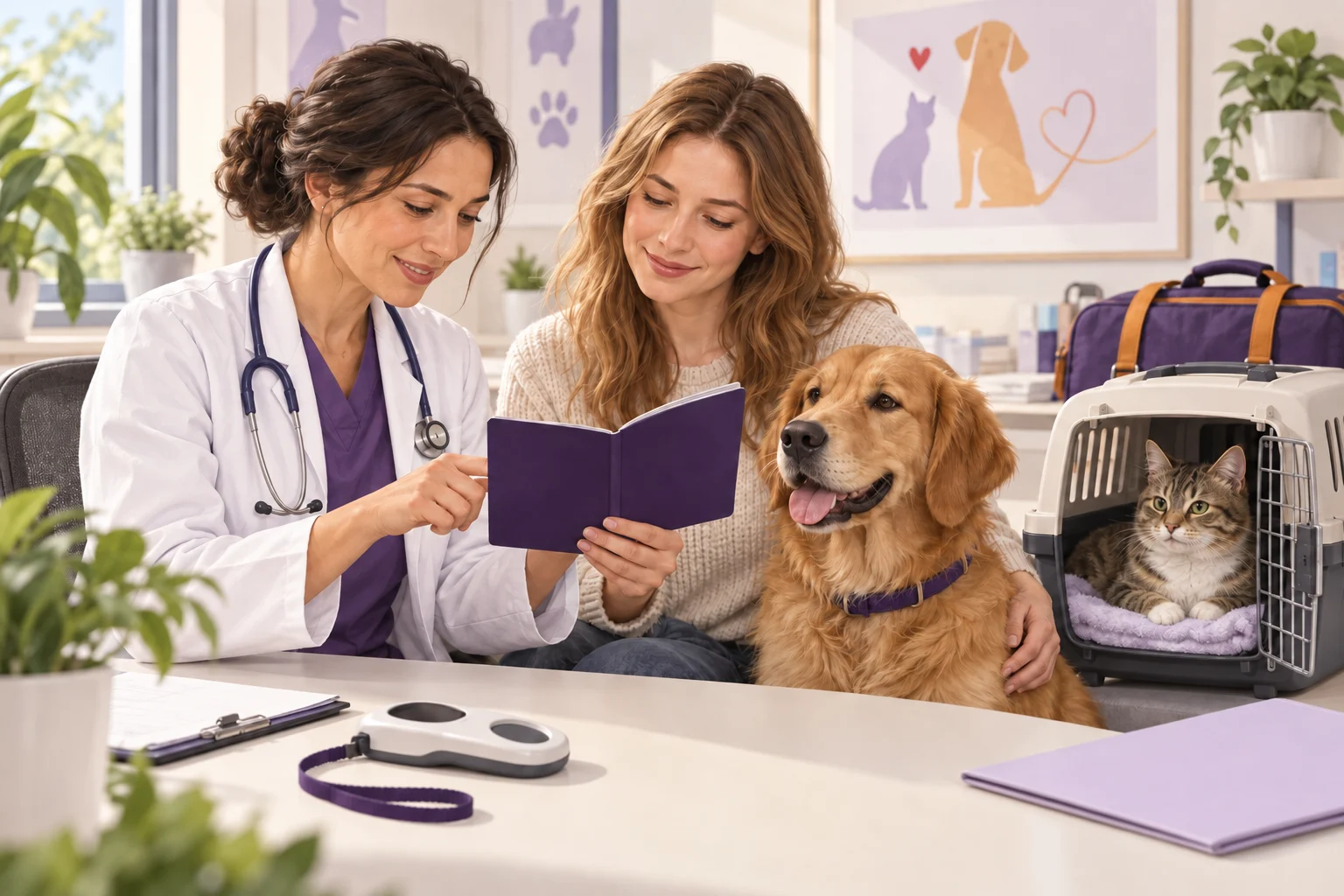
Start preparing for the trip at the veterinary clinic while there is still time to adjust the route. The passport keeps the pet's details, microchip number, vaccinations and parasite treatments together. We can help organise the records and calculate the deadlines, giving you a clear plan and sparing your pet unnecessary visits and stress.
What goes into a veterinary passport
The name “international veterinary passport” sounds universal, but every country sets its own travel requirements. The passport is the animal's medical and identification record. It helps a veterinarian, pet hotel or show organiser find the necessary entries, but it does not replace an examination or the official certificate used for border crossing.
- Owner and pet details: name, species, breed, sex, date of birth and distinguishing features.
- Microchip number, the date it was implanted or read, and the location of the marking.
- Vaccinations with the date, product name, batch, validity period, veterinarian's signature and stamp.
- Internal and external parasite treatments, test results and other procedures required for the route.
Define the complete route first
Tell the veterinarian the destination, every transit country, the departure date and how you will travel. Neighbouring countries may have different rules, and an airline can set its own requirements for carriers, pet reservations and documents. Check the entire outward and return journey.
How to prepare the documents step by step
- Check the current rules of the destination, transit countries and carrier. The passport is a useful foundation, while the final document list depends on the route.
- Check the microchip and the number recorded in the passport. For entry into the EU, the chip must have been implanted or read before the rabies vaccination, or on the same date.
- Check the rabies vaccination. The EU requires at least 21 days after a primary vaccination. A booster preserves continuity only when it is given before the previous vaccination expires.
- For entry into the EU from Armenia, plan a rabies antibody titre test. After a primary vaccination, the blood sample is taken no sooner than 30 days later and at least 90 days before the health certificate is issued. The result must be at least 0.5 IU/ml. A successful test does not need to be repeated while boosters remain continuously valid.
- Check any additional treatments. For example, a dog entering Finland, Ireland, Malta, Norway or Northern Ireland needs treatment against Echinococcus multilocularis 24–120 hours before entry, recorded by a veterinarian.
- Obtain the official veterinary health certificate. In Armenia, the Food Safety Inspection Body issues it according to the destination country's requirements. For EU entry, the certificate is valid for 10 days until the document and identity check at the travellers' point of entry. It is accompanied by the owner's declaration that the movement is non-commercial.
When to start
A passport can be opened during one appointment, but travel preparation can take months. If a pet is travelling from Armenia to the EU after a primary rabies vaccination, allow at least 30 days before the blood test and another 90 days before the certificate is issued. Laboratory work and route checks take time too, so starting 4–5 months ahead is sensible. The process may be shorter when vaccination has remained continuously valid.
What to bring to the first appointment
- Your pet and their current passport, even if the records are incomplete.
- Old vaccine labels, certificates, titre results and microchip documentation, if you still have them.
- The exact destination and transit countries, travel dates and carrier name.
- Information about the pet's health, medicines and previous vaccine reactions.
What the clinic prepares and what the authority issues
At Shunn u Katun, we can open and complete the veterinary passport, check or implant the microchip, provide vaccinations and the required parasite treatments, then build a preparation schedule around your route. Armenia's Food Safety Inspection Body issues the official export health certificate. The passport preserves the record, while the certificate confirms that the requirements for this particular journey have been met.
Book an appointment at Shunn u Katun by calling +374 55 895 495 or messaging us on Telegram. We are at 7 Tumanyan Street, Vanadzor, and open Tuesday through Saturday from 11:00 to 19:00. Bring the pet's passport and your route even if some documents are not ready yet.
Where to check the rules for your destination
For reliable information about travelling with animals, we wholeheartedly recommend “Увожу кроликов” (Rabbits Leaving Russia), a project run by our friends. We know how much careful work goes into this guide. The page brings together country entry requirements for pets, links to official rules, and practical explanations for documents and route planning. Once you know the destination and transit countries, start there and collect every requirement into one preparation schedule.


Comments
No comments yet.