
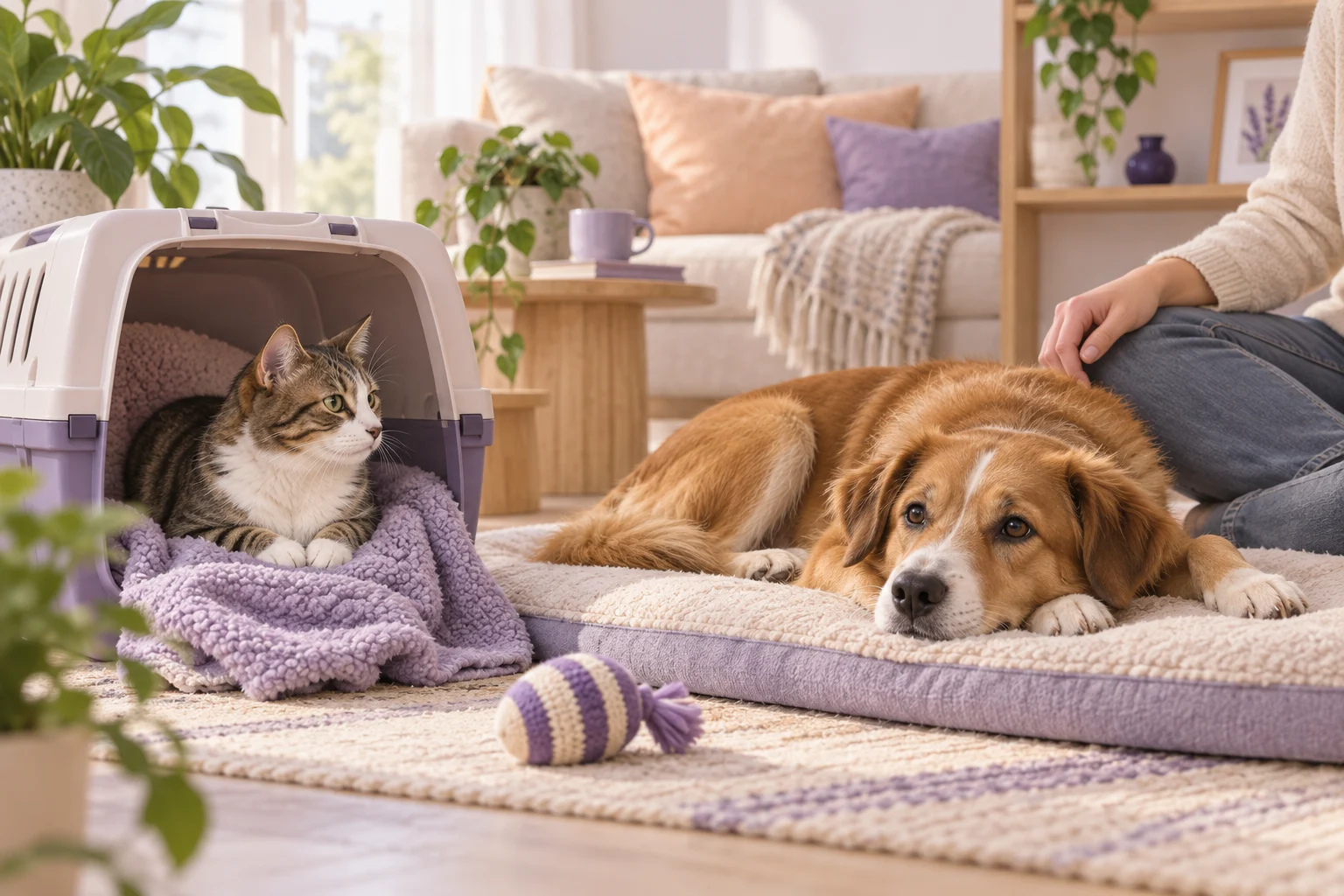
Animals learn the rhythm of a home and notice changes that may seem small to us: a new smell, moved furniture, noise outside, a visitor, another pet, or a different walk time. Brief caution in an unfamiliar situation is normal. A pet needs help when it cannot settle, its usual behaviour changes, or anxiety interferes with eating, sleeping, walking, or using the litter box.
Compare your pet with their usual behaviour
One yawn or a spell under the bed does not tell the whole story. Think about how your pet usually greets you, eats, rests, plays, and responds to touch. Anxiety in cats is often quiet. It may be more obvious in dogs, but each animal has its own set of signals.
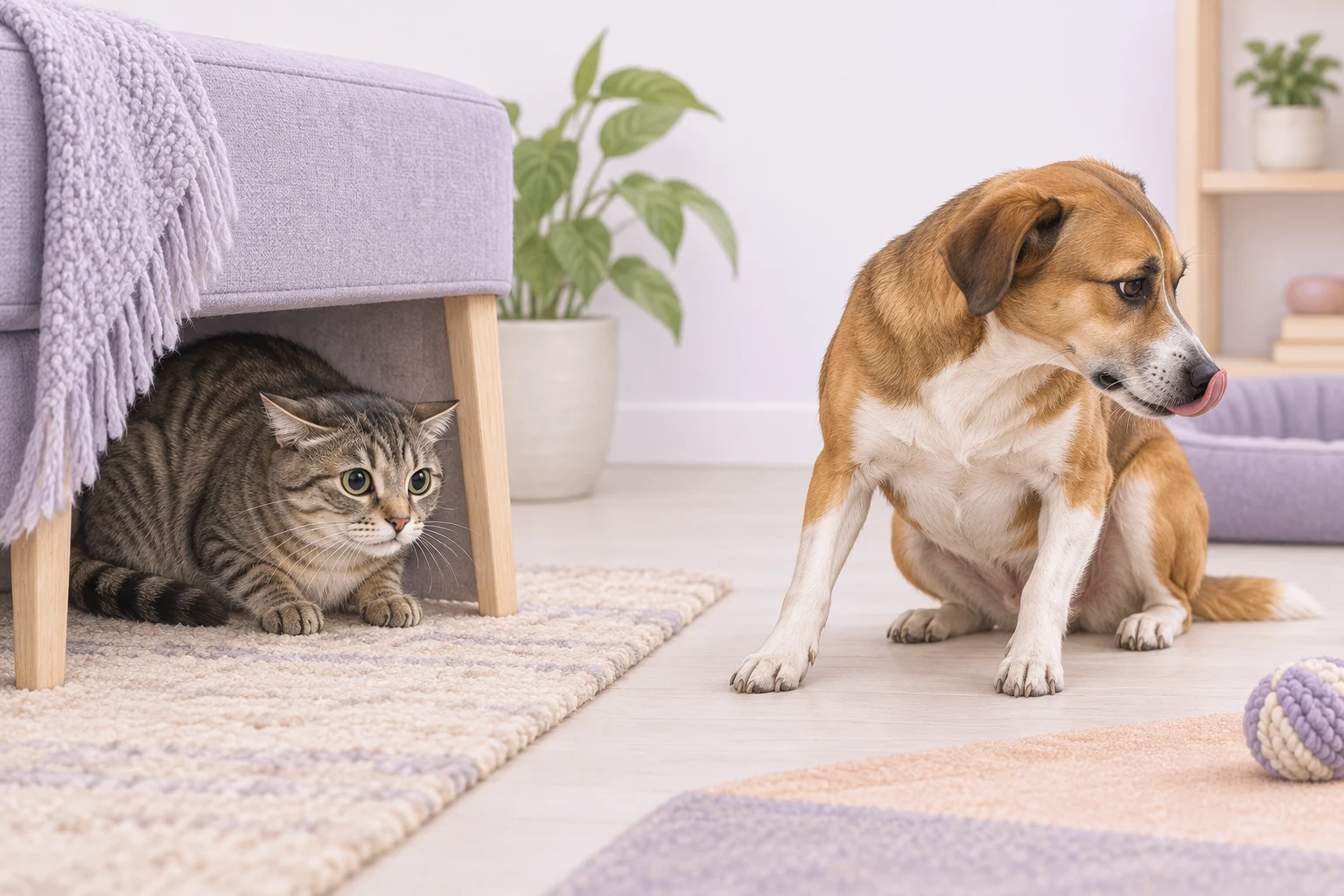
- The body becomes tense: your pet crouches low, freezes, turns away, tucks the tail, or holds the ears back.
- Familiar habits change: your pet hides for longer, eats less, paces, plays less, or cannot settle to sleep.
- Lip licking, trembling, drooling, heavy breathing without heat or exercise, or unusual vocalising become frequent.
- Your pet avoids people and animals, or follows their caregiver constantly and keeps seeking contact.
Look for what changed before the reaction
Think back over the last few hours and days. Building work, fireworks, travel, a clinic visit, a new baby or pet, being left alone, conflict near a food bowl, different litter, pain, or even a slippery floor may trigger anxiety. Note where and when the reaction starts, how long it lasts, and what helps your pet recover. A short video of a safe episode can also help the veterinarian understand the context. Do not provoke fear for the recording, and do not punish hiding, barking, meowing, or a startle response.
Provide a safe place, choice, and a predictable routine
A safe place should always be available, including when the home is quiet. A cat may prefer an enclosed hiding place or a high shelf. A dog may choose a bed in a quiet part of the room. Do not pull a pet out or invite visitors to touch them there. In a home with several animals, separate food, water, resting places, and toilets so that pets do not have to compete for them. Regular feeding, walks, play, and sleep make the day easier to predict.
Introduce difficult situations gradually
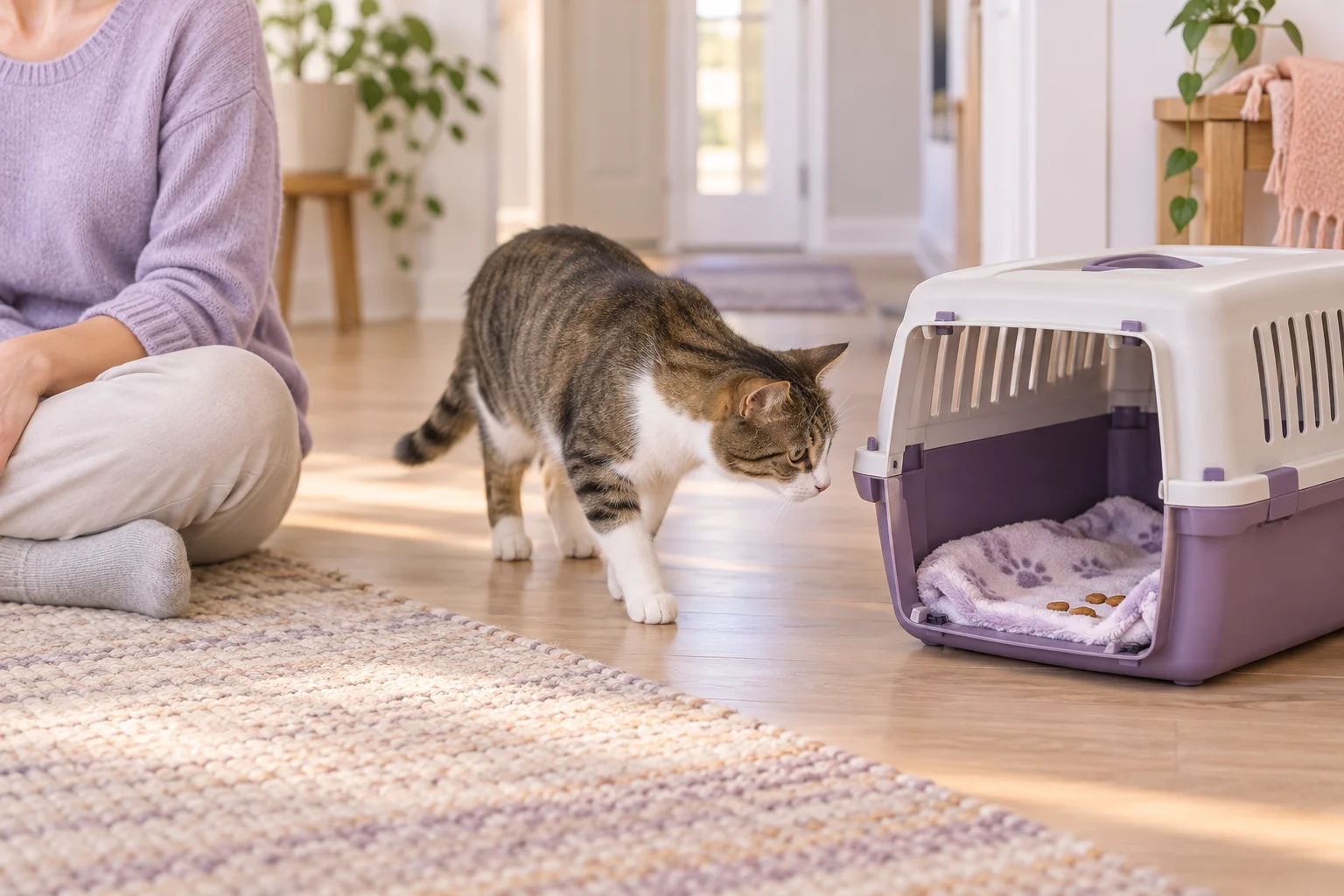
Start with an intensity and distance at which your pet can still look around, take a treat, or calmly move away. Leave the carrier open in the room, place a familiar blanket inside, and occasionally put a treat there. Later, close the door briefly, carry your pet around the home, and only then try a short journey. If your pet freezes, struggles to escape, pants heavily, or stops taking treats, the step was too difficult. Return to an easier stage. Before a long journey, prepare the route and documents early so that urgent appointments do not add pressure just before departure.
Movement and play help when they suit the pet
A dog may benefit from a quiet walk, time to sniff, and simple familiar tasks. Cats often enjoy short games that imitate hunting and places where they can watch from above. Choose the activity by watching your pet's response. Give them a break if they refuse to play or look for somewhere to hide. On a very stressful day, a familiar route and an easy activity are often more manageable than a new park or a noisy group.
Quiet sound, familiar scent, and pheromones
Some pets settle more easily with a quiet familiar sound, an item that smells like home, or a suitable pheromone product. Responses vary. You can discuss these options with a veterinarian, but they will not resolve constant conflict, too few resources, pain, or training that moves too fast. Never give a pet human sedatives or medication prescribed for another animal. If medication could help, a veterinarian should choose it for that patient.
When to ask for professional help
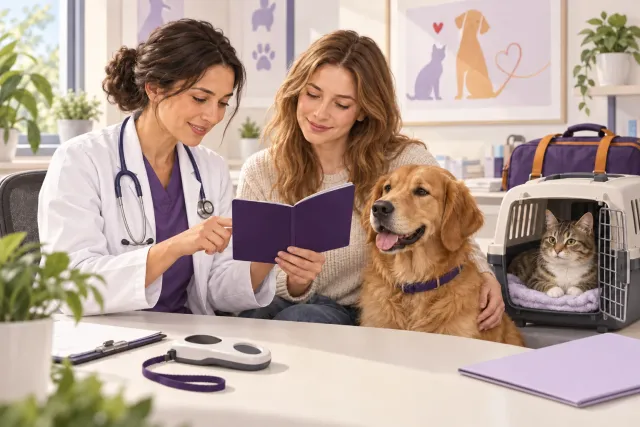
Book an examination if anxiety keeps returning, grows worse, disrupts everyday life, or leads to destructive behaviour, aggression, or injury. A medical cause should be ruled out first. The veterinarian can then suggest changes to the environment and behaviour plan, and refer you to a qualified behaviour professional when needed. Urinating outside the litter box should not automatically be blamed on stress. If your pet repeatedly squats and strains but produces little or no urine, read how to recognise dangerous urinary signs and go to an open clinic without waiting.
Shunn u Katun veterinary clinic: 7 Tumanyan Street, Vanadzor, opposite Milagro restaurant. Book through Telegram or call +374 55 895 495. We are open Tuesday to Saturday, 11:00 to 19:00.
Comments
No comments yet.