
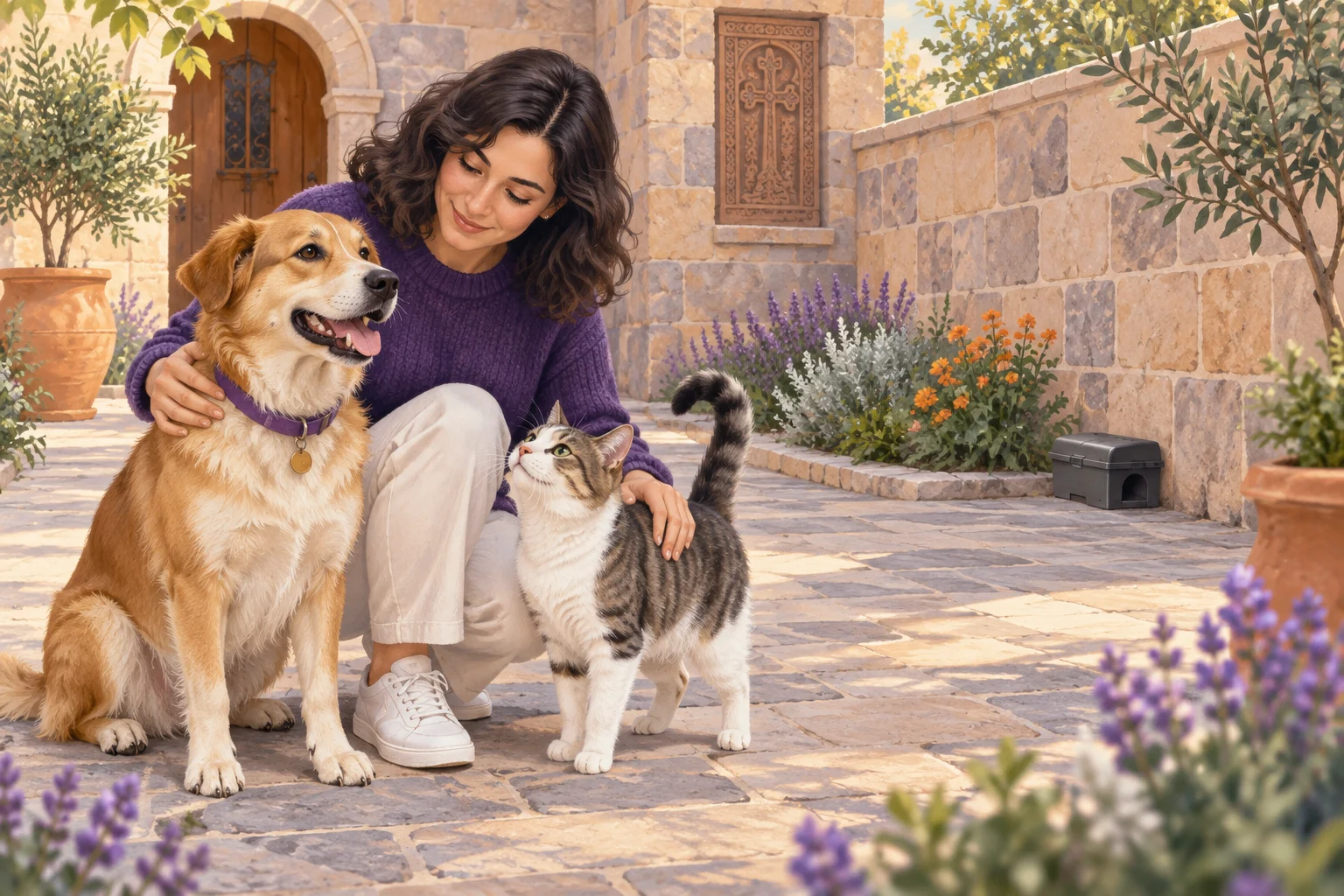
A packet of bait in a garage or poison laid out in a yard can come within a pet’s reach. Baits contain food that attracts rodents, and the smell can interest a dog or cat too. Hunting poisoned mice and rats is another risk. Please take possible exposure seriously, even if your pet seems lively. The colour and shape of the bait will not tell you what they have eaten; keeping the packaging can be a real help to the vet.
Types of rodenticide
Rat poison is a general name for products that work in different ways. Their symptoms, timing and treatment differ too.
- Anticoagulants disrupt blood clotting and may cause internal or external bleeding. Signs of bleeding usually appear 3–5 days after ingestion.
- Bromethalin affects the nervous system. Possible signs include hind-leg weakness, loss of balance, tremors and seizures. A large dose may cause severe signs within hours, while a smaller dose may cause signs 1–4 days later.
- Cholecalciferol raises calcium levels in the blood and can damage the kidneys, heart and other tissues. The first signs often appear within 18–36 hours.
- Zinc phosphide releases toxic phosphine gas in the stomach. It may cause vomiting, pain, breathing difficulty, seizures and rapid deterioration. Signs can begin quickly.
The differences between these substances explain why treatment cannot be chosen from the bait's appearance. The vet needs the active ingredient from the label, the likely time of exposure, the estimated amount and your pet's weight.
Symptoms that need urgent care
The signs depend on the substance and dose. Any of the following after possible contact with bait needs immediate veterinary attention. If you know exposure occurred, seek help even when there are no symptoms.
- sudden weakness, lethargy, loss of appetite or collapse;
- pale gums, bruising, bleeding from the nose or gums, or blood in urine, stools or vomit;
- rapid or difficult breathing, or coughing;
- an unsteady gait, hind-leg weakness, tremors, seizures or unusual agitation;
- vomiting, abdominal pain or diarrhoea;
- excessive thirst and unusually frequent urination.
What to do after possible exposure
- Move your pet away from the bait and keep other animals out of the area.
- Call a veterinary clinic at once and say that rodenticide exposure may have occurred. If that clinic is unavailable, go to the nearest open veterinary clinic.
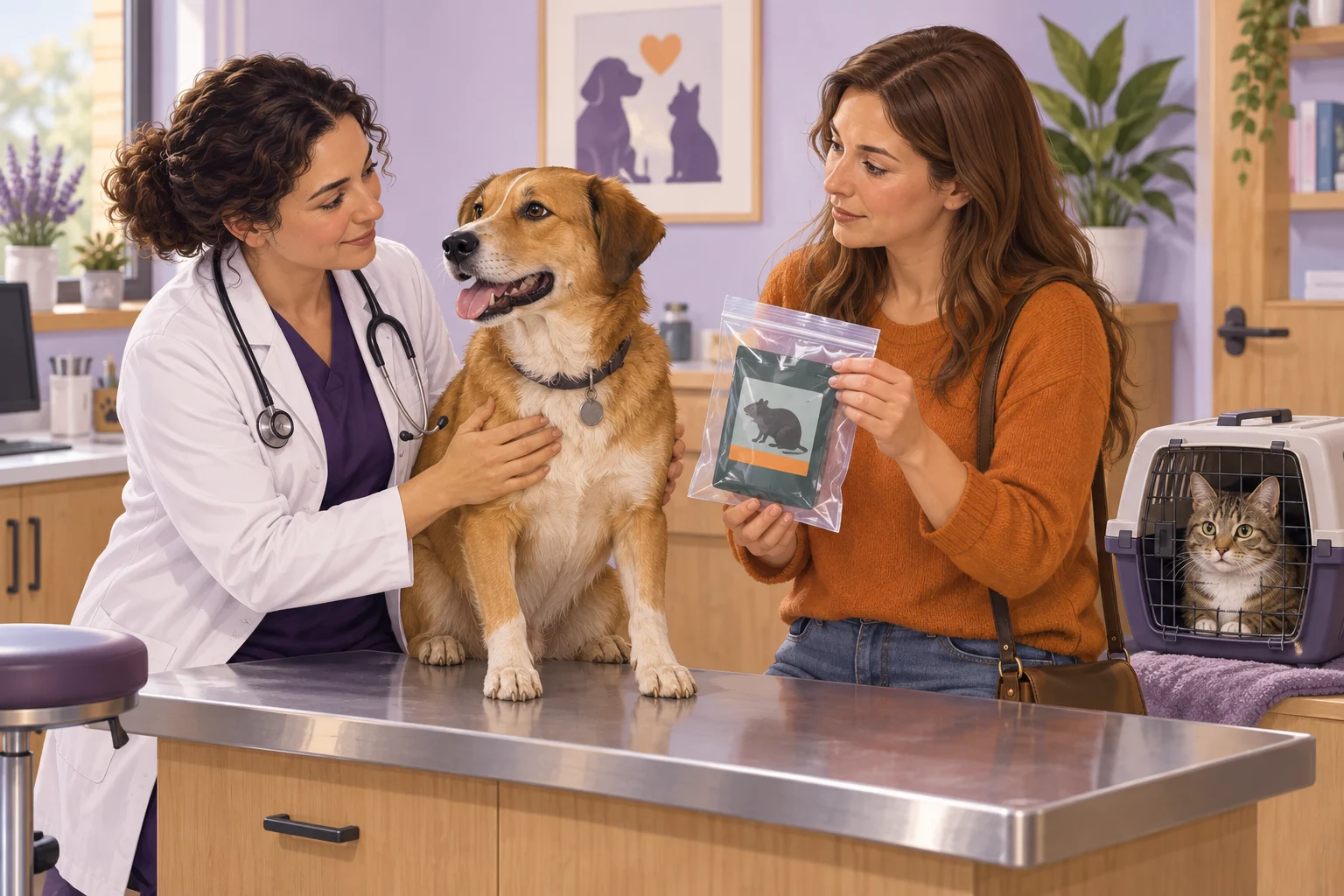
- Take the packaging or photograph the whole label. Tell the vet the likely time, possible amount, your pet's weight and whether the pet ate the product or a poisoned rodent.
- Follow the vet's instructions. Whether to induce vomiting, give activated charcoal, run tests or start treatment depends on the substance, timing and your pet's condition.
Can a pet be poisoned by eating a rat or mouse?
Secondary poisoning is possible if a cat or dog eats a rodent with rodenticide still in its body. The risk depends on the active ingredient, the amount and repeated exposure. If your pet has eaten a poisoned rodent, contact a vet as quickly as you would after direct access to bait. Remove dead rodents promptly so that pets and wildlife cannot reach them.
How to reduce the risk at home and outdoors
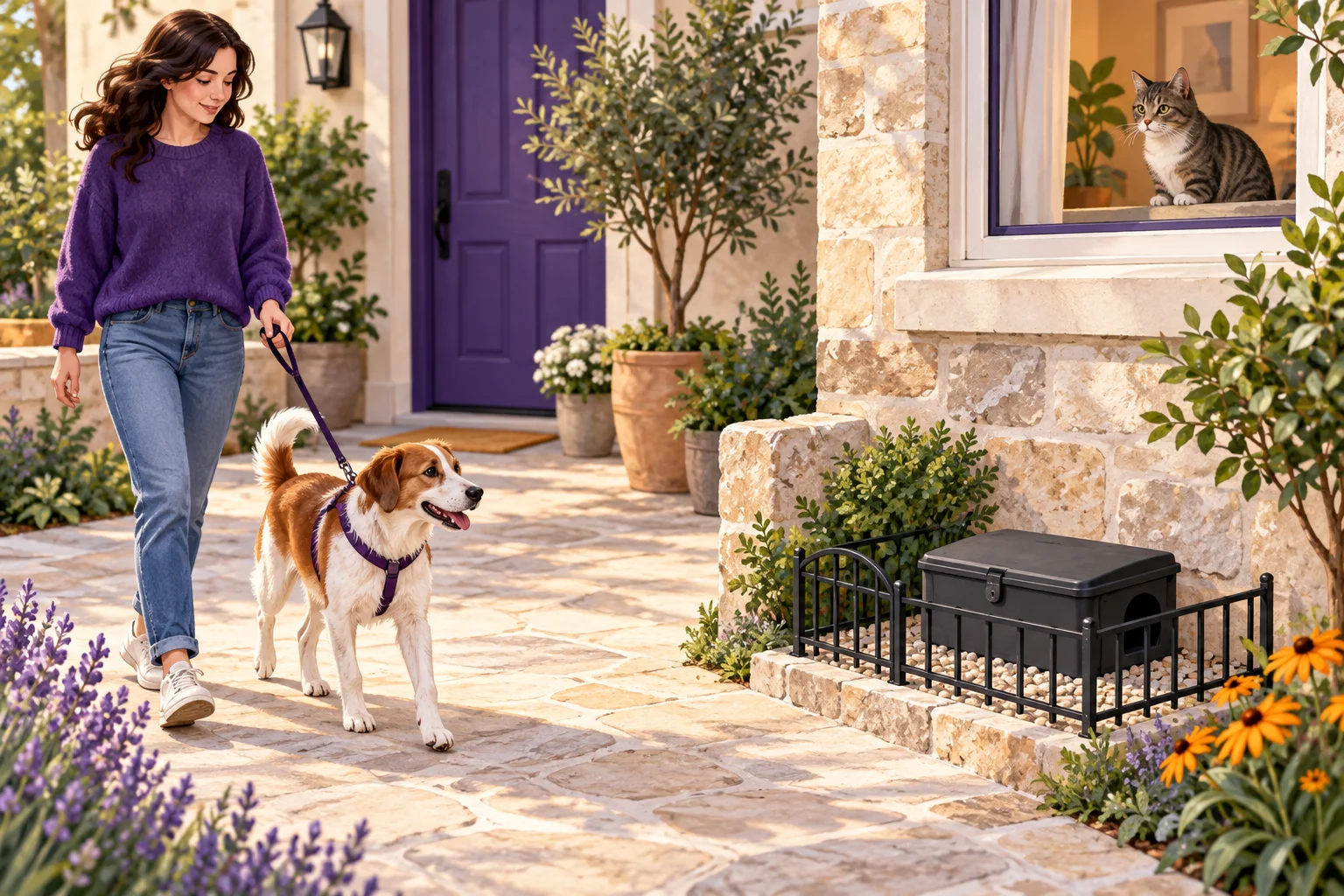
- Start by sealing gaps and rodent entry points, keeping food waste in closed containers and removing pet food at night.
- Use the product only as directed on the label. Put bait in a tamper-resistant station and place it where children and animals cannot reach it.
- Store rodenticides in a locked cupboard, away from food and pet food.
- Keep your dog on a lead where baits may be present, and do not let pets pick up food or rodent remains.
- After pest control, inspect the area regularly and remove dead rodents promptly, following the product label and local disposal rules.
Why waiting is risky
At Shunn u Katun, we see cats and dogs with suspected rodenticide poisoning. What makes these cases particularly worrying is that a pet may still look well after exposure, making it tempting to wait. Please call straight away. Early care gives us more options to limit absorption and start the appropriate treatment in time.
Shunn u Katun: +374 55 895 495, 7 Tumanyan Street, Vanadzor. We are open Tuesday to Saturday from 11:00 to 19:00. If your pet needs urgent help and we are closed or not answering, go to the nearest open veterinary clinic.
Sources
- Merck Veterinary Manual · Overview of Rodenticide Poisoning in Animals
- Merck Veterinary Manual · Rodenticide Poisoning
- Cornell Wildlife Health Lab · Rodenticide Toxicity
- Cornell University College of Veterinary Medicine · First-aid for poisonous substances
- US EPA · Safely Use Rodent Bait Products
- US EPA · Options for Dealing With Rodent Infestations
Comments
No comments yet.