
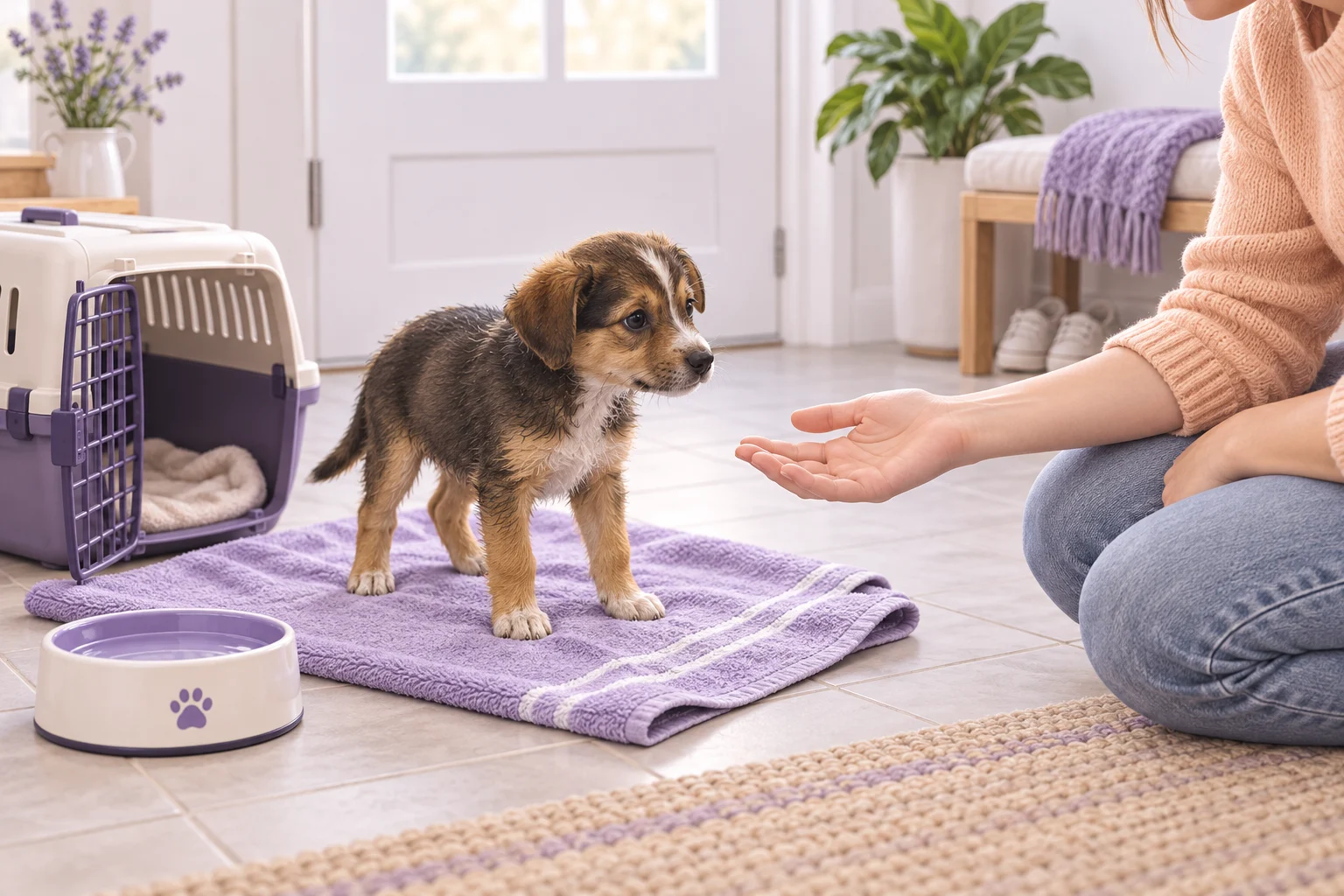
If you find a puppy in or near Vanadzor, first move them away from danger and assess their condition. During opening hours, call Shunn u Katun and describe how the puppy is breathing, moving and responding to you. We will tell you how urgently the puppy needs care and how to bring them in safely. At the appointment, our veterinarian Anna will examine the puppy, scan for a microchip and plan the next steps with you.
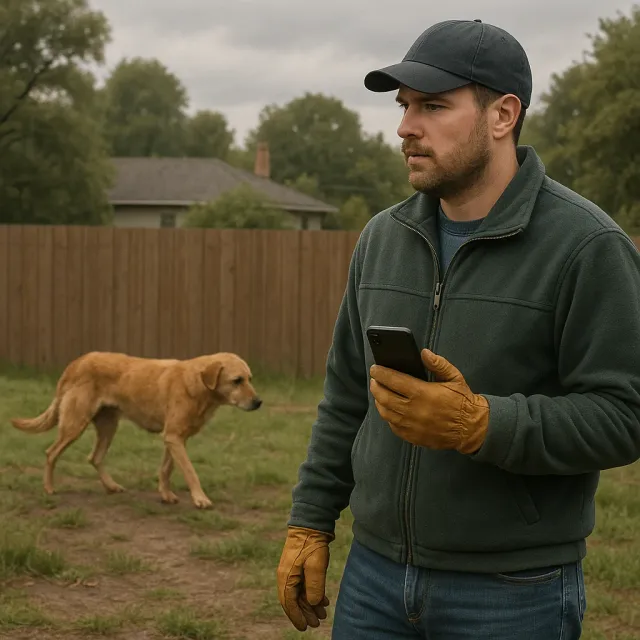
Assess the danger before picking the puppy up
If the puppy is in traffic, near aggressive dogs or in another dangerous place, first move them somewhere away from vehicles and crowds. Approach from the side, speak quietly, avoid leaning over them and keep your hand away from their face. Pain or fear can make a puppy bite, including one who would normally seek contact with people.
A very young puppy may not be alone. Look for their mother, littermates or a nearby hiding place. If the area is safe, watch from a distance and ask local residents whether they know the dogs. Do not leave an injured or very weak puppy in place just to continue observing them.
Use a closed carrier or a sturdy box with air holes and a towel on the bottom for transport. The puppy should not roam freely inside a car. Photograph the location and note the time you found them. This information will help the vet and may help you find the owner.
The first hour before the appointment: quiet, warmth and a separate space
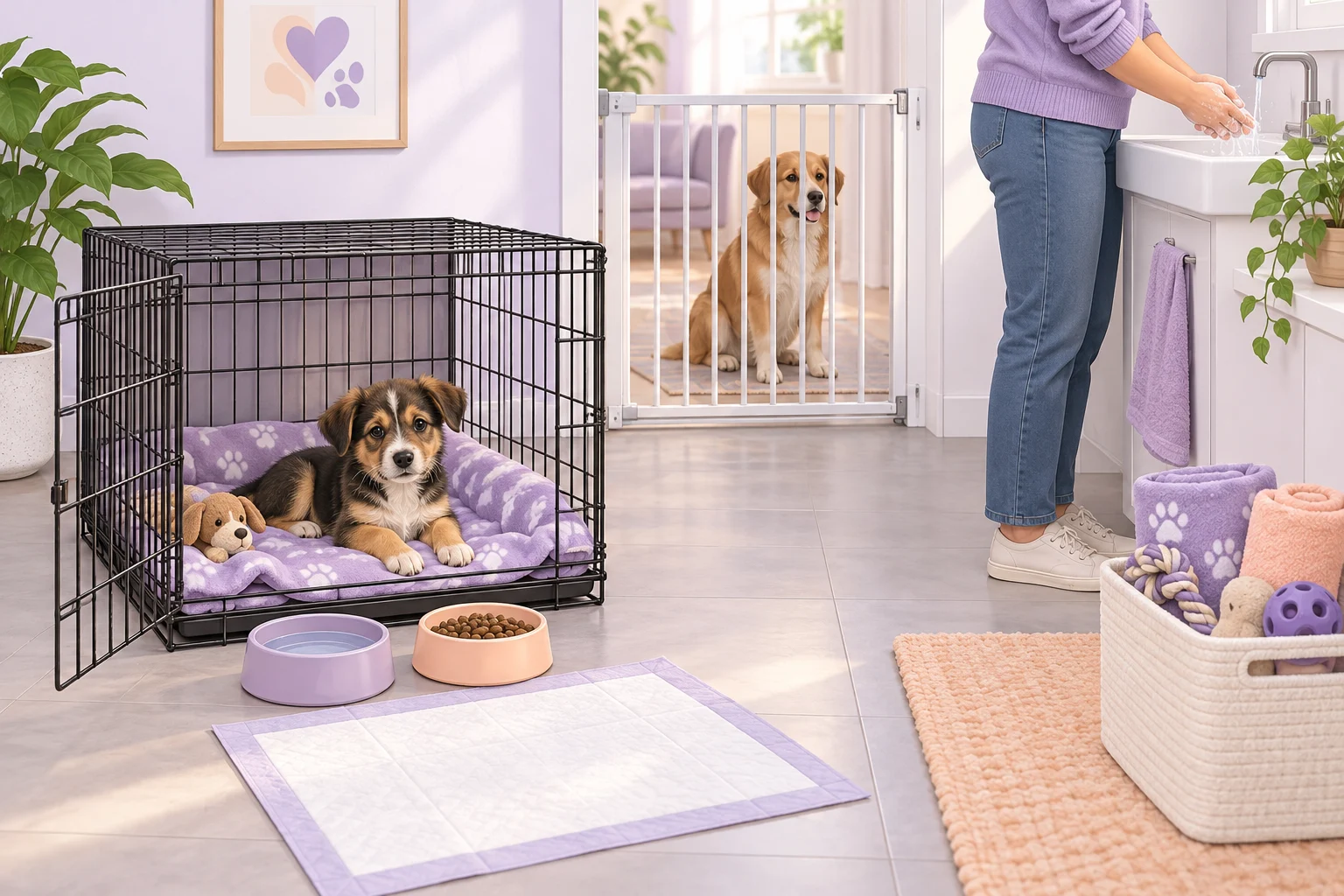
Set the puppy up in a quiet room with a door that closes. Choose an easy-to-clean floor and provide dry bedding, a puppy pad, water and a separate food bowl. Remove wires, household chemicals, rubbish, small objects and anything else the puppy could swallow. Do not introduce them to children or resident pets on the first evening.
Until a vet has assessed the risk of infection and parasites, use separate bowls, bedding and toys. Care for your own animals first, then visit the puppy. Wash your hands after contact and after cleaning up faeces. If the puppy is coughing, has diarrhoea, eye or nasal discharge, patches of abnormal skin or many fleas, change your clothes before handling other pets.
If the puppy is alert, swallowing normally and not vomiting, offer fresh water and a small portion of complete puppy food. Do not force them to eat or give cow's milk, bones, processed meat or fatty food. A very young, cold, weak or unable-to-eat puppy needs urgent advice from a vet because the formula, amount and feeding method depend on age and condition.
Do not bathe a cold, weak or injured puppy. You can gently wipe away heavy dirt with a warm damp towel, then dry the coat thoroughly. Do not guess which flea, tick or deworming product to use. The suitable product and dose depend on the puppy's age, weight and health.
What happens at the first Shunn u Katun appointment
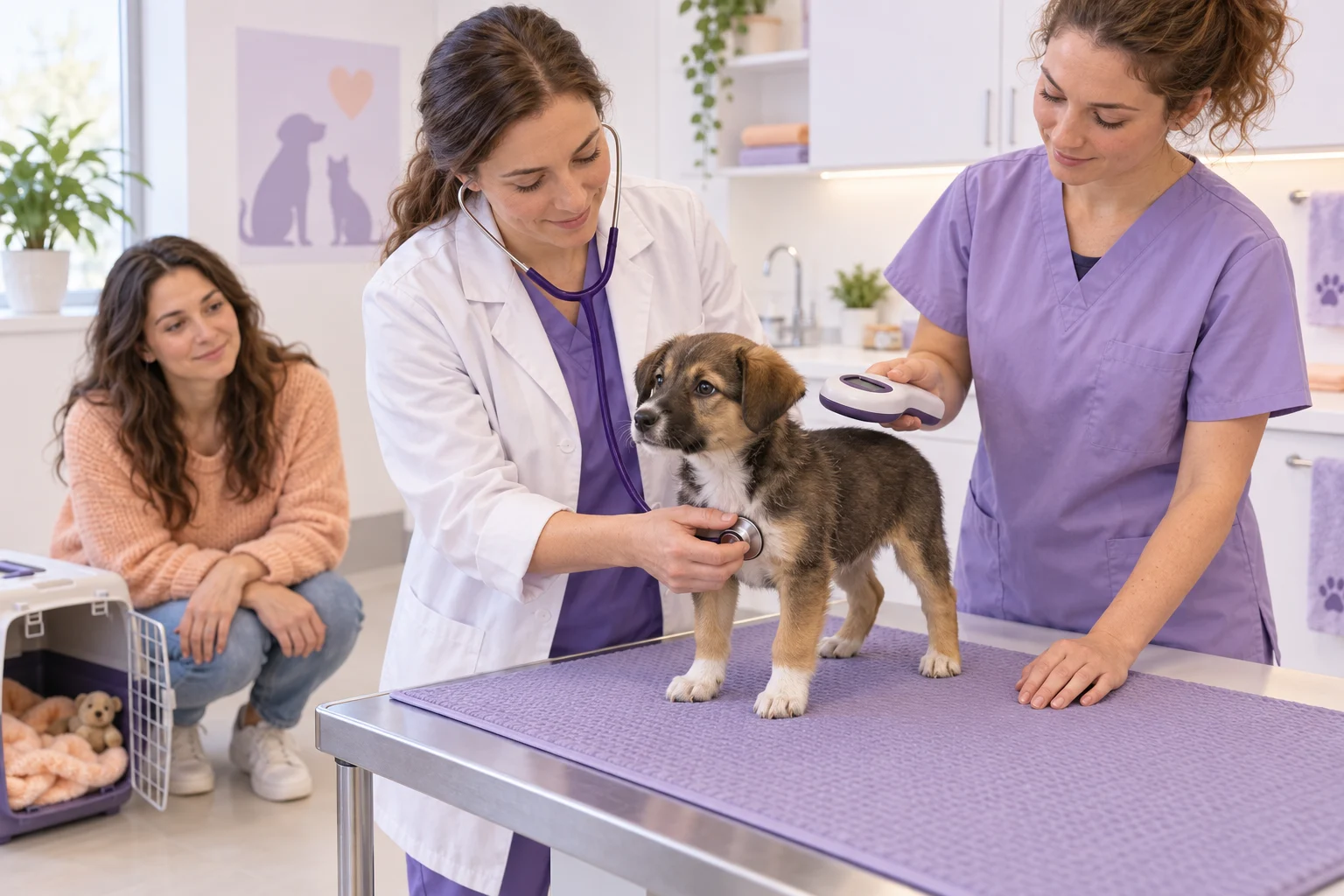
Call us before travelling and explain that you found the puppy on the street. Mention coughing, diarrhoea, eye or nasal discharge when you book. We will explain how to enter the clinic and where to wait so other patients are not exposed. Do not place the carrier beside other animals.
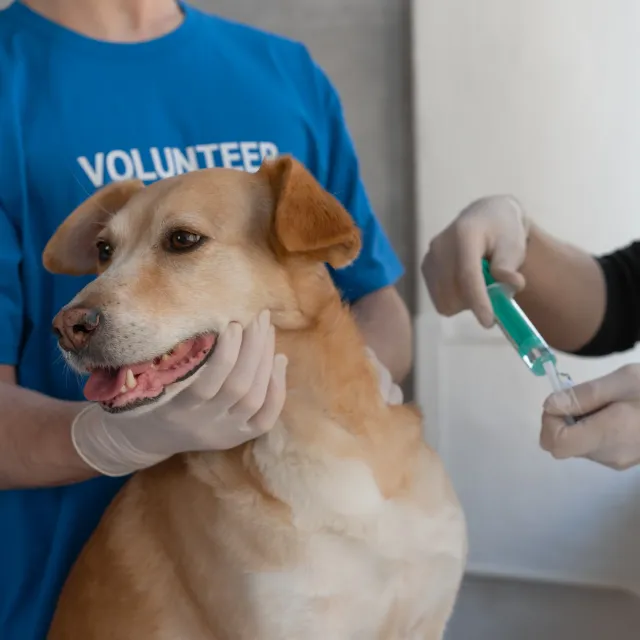
At the first appointment, our veterinarian Anna will estimate age, check weight, temperature, hydration and body condition, and examine the skin, mucous membranes, eyes, ears, mouth, heart, lungs, abdomen and musculoskeletal system. Depending on the puppy's condition, faecal, blood or infectious disease tests may be needed. We will also scan for a microchip and discuss food, parasite control and vaccines. Some care is safer to postpone until the examination or test results are available. Our guide to a pet's first and routine veterinary examination has a full preparation checklist.
What to tell us when booking and what to bring
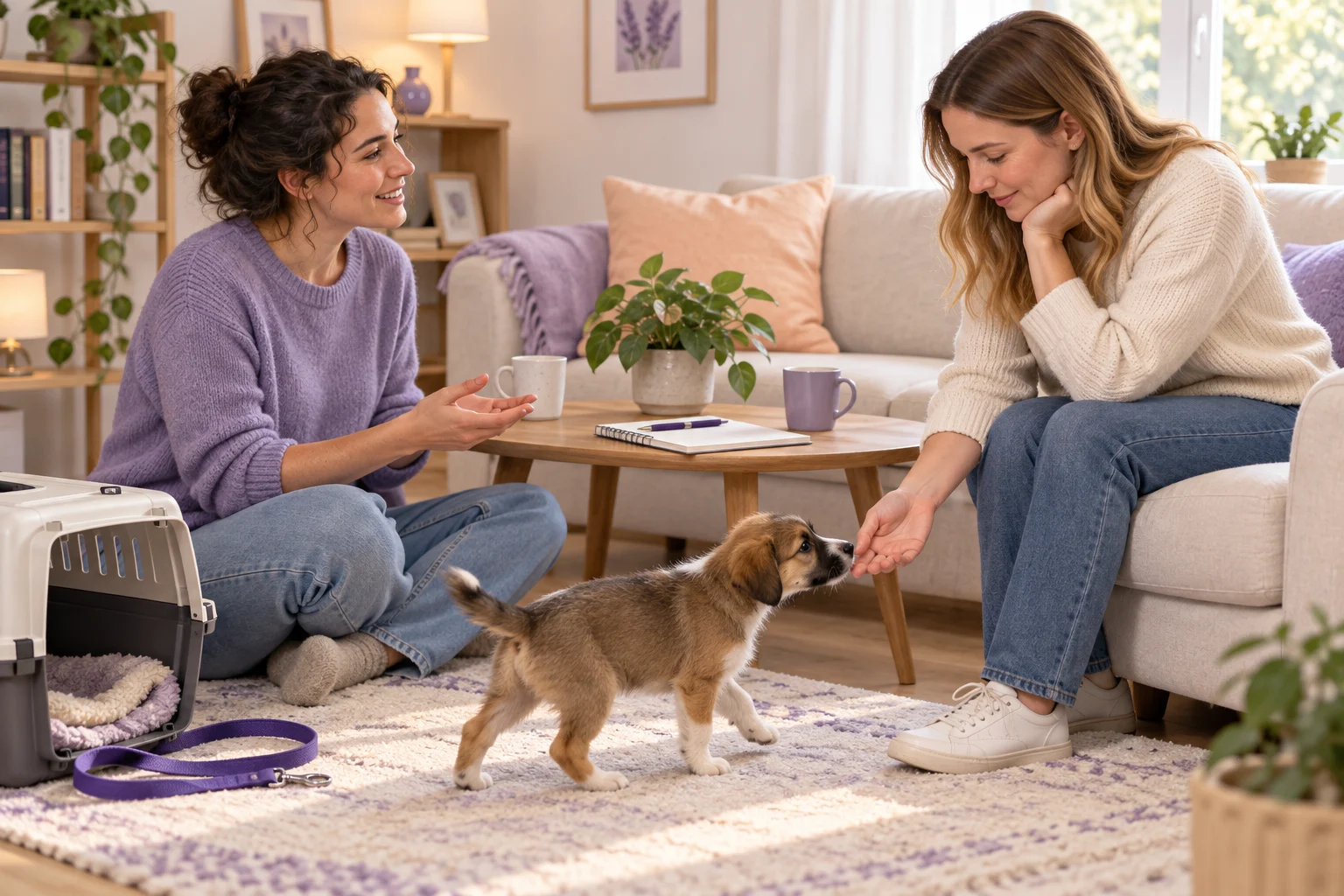
- Where and when you found the puppy, whether they were alone, and whether they may have been hit by a vehicle or eaten something unknown.
- How they breathe, walk, eat and drink; whether you have seen vomiting, diarrhoea, coughing, discharge, seizures, urination or stools.
- Everything already given at home, including food, medication and parasite products. Bring the packaging and mention any accidental mistake.
- Photos of the location, stool, vomit or unusual behaviour when they help explain what happened.
- A clean towel, puppy pad and secure carrier. Bring a faecal sample only if the clinic asks for one, using a clean container.
How we plan parasite control and vaccination
The formula “deworm first, vaccinate two weeks later” does not fit every found puppy. Anna will consider age, weight, temperature, nutrition, symptoms, test results, likely exposure and any care the puppy may have received before you found them.
Do not combine several parasite products or split an adult tablet by eye. Even products made for puppies have age and weight restrictions. After assessing the puppy's health and history, we will make a safe plan for parasite control and the primary vaccine series. An unknown history alone does not require a wait of several months.
If the puppy bites or scratches someone
Immediately wash the wound with soap and running water for at least 15 minutes and seek medical care as soon as possible. A human healthcare professional will assess the need for rabies post-exposure care, tetanus prevention and treatment for bacterial infection. Do not wait for the veterinary examination before seeking advice about your own protection.
Do not release the puppy back onto the street or try to decide for yourself whether they have rabies. Medical and veterinary professionals should coordinate the animal's observation and the person's post-exposure care.
Look for the previous owner first
A missing collar does not prove that the puppy was born on the street. Ask the clinic to scan for a microchip. Post in neighbourhood chats and lost-pet groups, and notify nearby clinics and volunteers. Include the city, area, date, a photograph and a way to contact you.
Keep one distinctive feature out of the public post and ask a claimant to describe it or show earlier photographs. This helps distinguish an owner from someone who has simply seen the advert. Before returning the puppy, ask where and when they went missing and arrange a safe meeting.
If the puppy stays with you
Keep the first few days simple: sleep, brief calm contact, feeding according to the vet's plan and frequent opportunities to toilet in the right place. Do not punish puddles, frightened behaviour or damaged objects. The puppy does not know the house rules yet and may sleep poorly after living outside.
Begin introductions to resident animals after the veterinary assessment, gradually and under supervision. Socialisation does not have to mean months of complete isolation. Your vet can help you balance infection control with safe exposure to people, sounds, surfaces and calm vaccinated dogs.
The medical part of finding a new home
Keep the treatment instructions and test results after the appointment. At a volunteer's request, we can prepare a photographic report of the visit. These records help you describe the puppy's health accurately and give the new owner a medical history.
The person who finds the puppy and starts helping remains the coordinator until the puppy returns to the previous owner or moves to an agreed foster or new home. The clinic, volunteers and donors may take on particular tasks, but you cannot leave the puppy with them without an agreement and disappear. Start with a place where the vet's recommendations can be followed. In the advert, give the location found, estimated age, sex, size, completed care and only the behaviour you have actually observed. Do not promise that the puppy is “perfect with everyone” if they have not met children, cats or other dogs.
Take several clear photographs in daylight and a short video showing the puppy moving and interacting without pressure. Ask a potential adopter:
- whether every adult in the household agrees and pets are allowed in the home;
- where the puppy will live, how long they will be alone and who will care for them during the first weeks;
- whether there are children or other animals and how introductions will be managed;
- whether the household is ready for the cost of food, vaccination, parasite control and treatment;
- who will take the puppy back if the placement does not work out.
Meet in person with everyone who will be responsible for the dog. Send the veterinary records, a small amount of the current food and a familiar item carrying the foster home's scent. It is sensible to write down the handover terms and both parties' contact details. Discuss photo updates in advance and only by mutual agreement. There is no need to collect passport details “just in case.”
A short checklist for the first 24 hours
- Move the puppy away from traffic and transport them in a closed carrier.
- Call us immediately during opening hours for emergency signs. If the clinic is closed, contact the nearest open veterinary service.
- Provide a separate warm space, water and, if the puppy is alert and swallowing normally, a small amount of puppy food.
- Do not introduce resident pets, bathe the puppy or give medication without veterinary advice.
- Record where and when you found the puppy, ask for a microchip scan and begin looking for the owner.
- After the examination, follow the individual plan for food, tests, parasite control and vaccination.
Contact the clinic
Call Shunn u Katun on [+374 55 895 495](tel:+37455895495) or write to us on Telegram. We are at 7 Tumanyan Street in Vanadzor, opposite Milagro restaurant. We see patients Tuesday to Saturday, 11:00 to 19:00. The clinic is closed on Sunday and Monday. Before you travel, tell us that you are bringing a found puppy and briefly describe their condition.
Comments
No comments yet.