
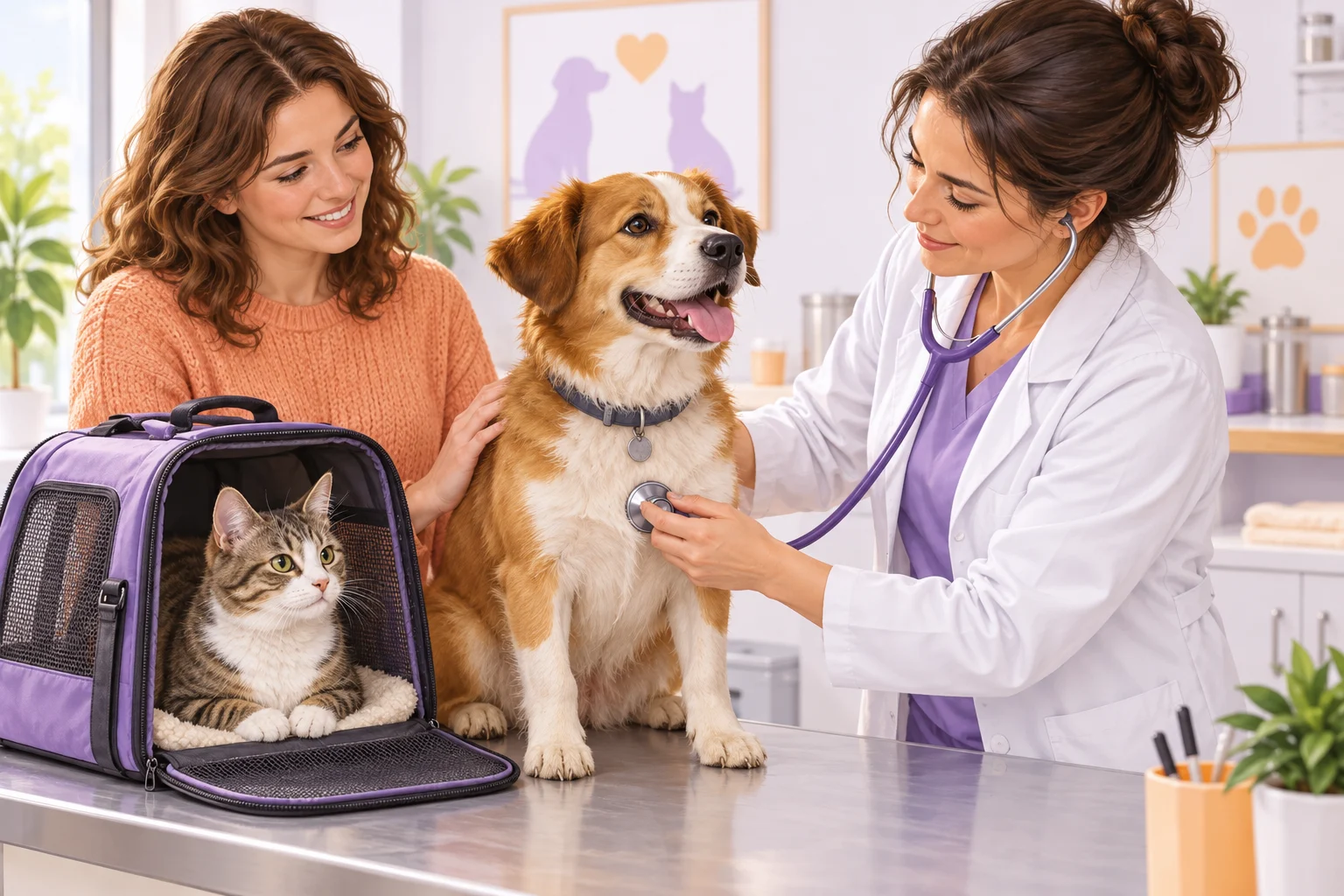
A preventive appointment gives us time to compare your pet's weight and condition with the previous visit, notice changes, update vaccination and parasite-control plans, and answer the questions that are easy to put off at home. The better a vet knows an animal's usual condition, the easier it is to make sense of small changes.
How often to book a checkup
For a healthy adult dog or cat, a preventive examination at least once a year is a useful starting point. Puppies and kittens need more frequent visits while the vet monitors growth and development and plans their first vaccines and parasite treatments. Older pets, animals with chronic conditions, those taking regular medication and pets with recent changes often need to be seen more often. A dog's life stage depends on size and expected lifespan. Feline guidelines define cats over 10 as senior and recommend a checkup at least every six months. Your vet will set the right interval for the individual animal.
- Do not wait for the routine date if appetite, thirst, weight, breathing, urination or stools change.
- Book sooner if your pet moves less, avoids jumping, hides, sleeps poorly or reacts differently to touch.
- Agree the next check after a new diagnosis, surgery, the start of long-term treatment or a noticeable reaction to a medicine.
What the vet checks during a preventive visit
The examination begins with a conversation. The vet needs to know what your pet eats, how they drink, toilet, move and sleep, which medicines they receive, and what has changed since the last visit. Your observations at home add context to what can be seen in the consulting room.
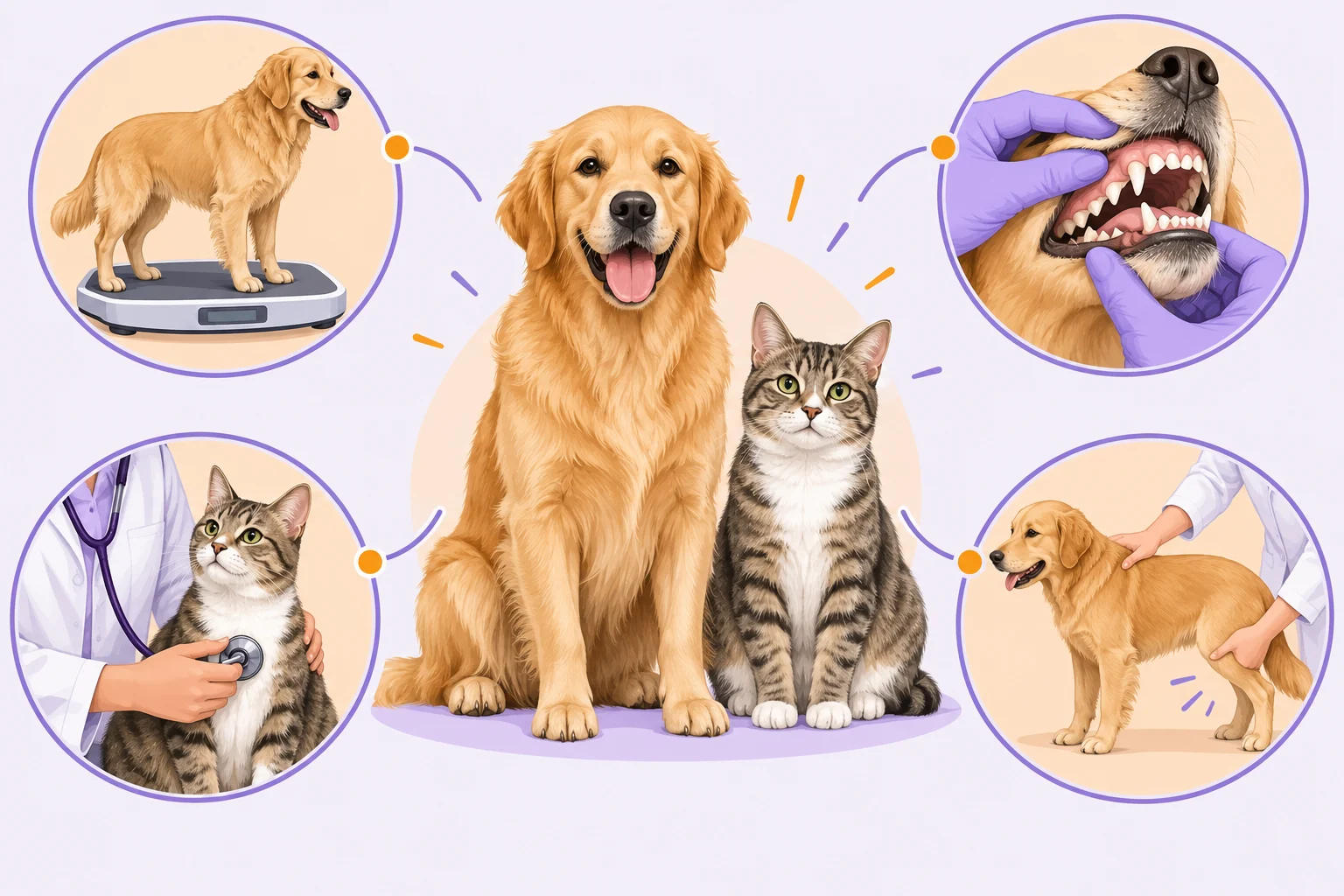
- Weight, body condition and muscle mass. A series of measurements over time is more useful than one number.
- Temperature, pulse and breathing; the vet listens to the heart and lungs with a stethoscope.
- Teeth, gums, eyes, ears, skin, coat and mucous membranes.
- The abdomen, lymph nodes, joints, gait and any pain during movement or touch.
- Vaccination and parasite-control plans, diet, behaviour and any tests this particular animal needs.
Vaccination and parasite control
There is no single calendar for every animal. The schedule depends on age, previous doses, the product, health, walks, travel and contact with other animals. Not every adult vaccine is given annually, so bring the veterinary passport and let the vet check the recorded doses. Our guide to why vaccination timing matters covers the primary course, overdue doses and reactions after vaccination. Parasite control also has to match the species, weight and risks: a product intended for a dog should not automatically be given to a cat.
A puppy or kitten's first visit
Arrange an examination soon after a puppy or kitten comes home, even if they are active and eating well. At the first visit, the vet assesses development, diet and living conditions, checks the skin, mucous membranes, heart, lungs and abdomen, looks for congenital problems, and plans vaccines and parasite treatment. Core vaccination usually starts between 6 and 8 weeks of age and continues as a series of doses; the exact schedule depends on age and history. A newborn needs earlier attention if they feed poorly, fail to gain weight, feel cold, struggle to breathe or are noticeably weaker than their littermates.
How to prepare for the appointment
- Bring the veterinary passport, discharge notes, test results and a list of medicines with doses. If your pet has no passport yet or you are planning a trip, use our guide to what to arrange in advance.
- Write down your questions and observations from home. A short video of a cough, unusual gait or behaviour may be more useful than trying to describe it from memory.
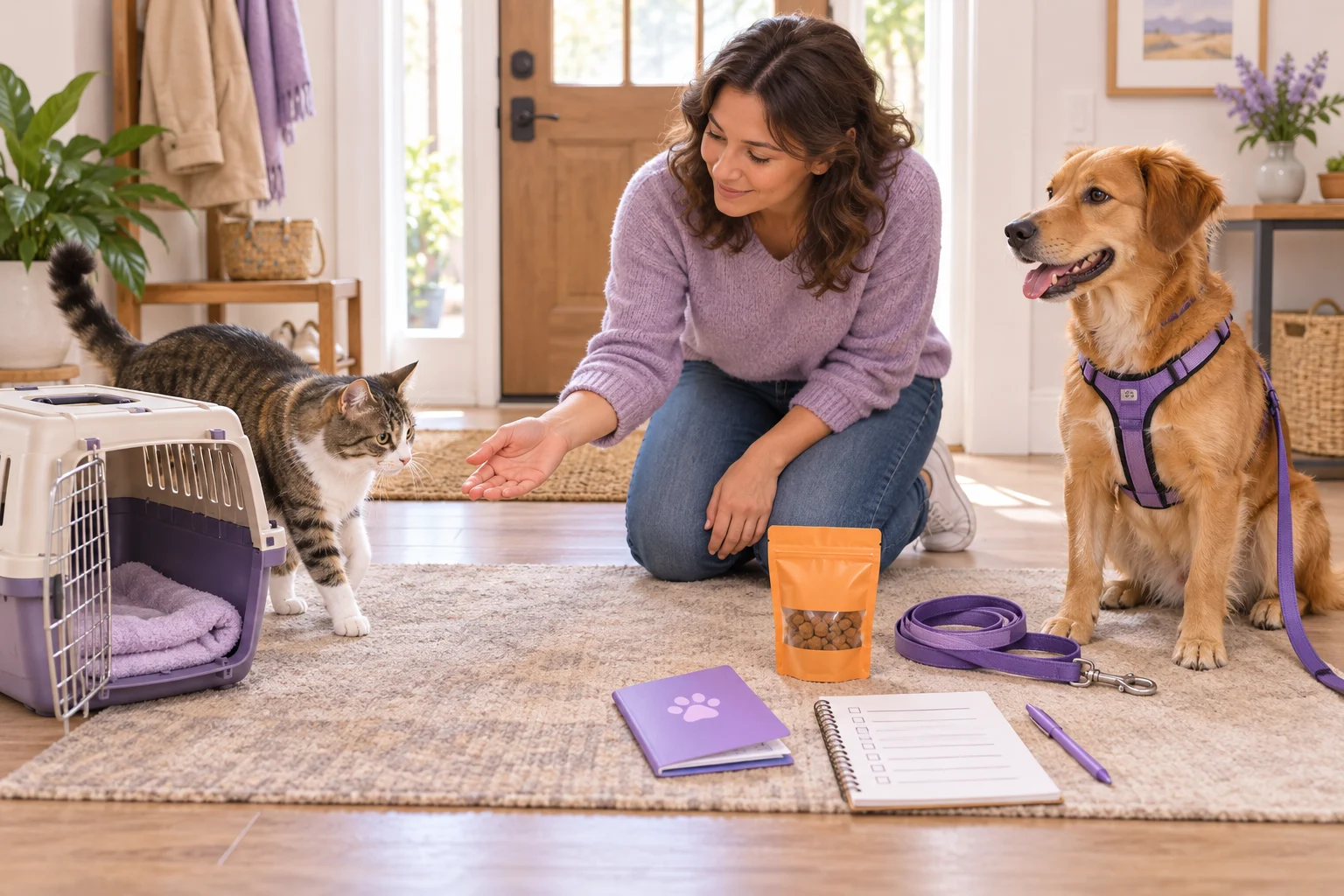
- Leave the cat carrier open at home in advance, with familiar bedding and a treat inside. Bring a dog on a lead or in a carrier and secure them safely in the car.
- Do not give calming medication on your own. If previous visits caused intense fear, ask the vet beforehand what to give and when.
- Do not withhold food by default. Ask when booking whether tests or a procedure require fasting; for an ordinary examination, food can be useful as a reward.
- Allow extra time before leaving. Rushing, sudden movements and forcing a cat into the carrier add anxiety before the journey has even begun.
What to notice between visits
Your pet spends a few minutes in the consulting room; you see them every day at home. Knowing their usual appetite, activity and behaviour, and recording changes that persist, is enough. Those notes help the vet see the full picture.
- Weigh your pet under similar conditions and note marked weight loss or gain.
- Watch for changes in thirst, urine volume, stools, appetite or interest in familiar food.
- Notice bad breath, difficulty chewing, itching, hair loss, new lumps and limping.
- For an older pet, look for difficulty getting up, climbing stairs, jumping onto a familiar place or grooming.
Book a preventive checkup
Book at Shunn u Katun by calling +374 55 895 495 or messaging us on Telegram. We are at 7 Tumanyan Street in Vanadzor and open Tuesday to Saturday from 11:00 to 19:00. When booking, tell us your pet's age, the reason for the visit and whether they have any current symptoms, so we can explain how to prepare.
Sources
- AAHA · 2019 Canine Life Stage Guidelines
- AAHA/AAFP · 2021 Feline Life Stage Guidelines
- WSAVA · 2024 Guidelines for the Vaccination of Dogs and Cats
- Companion Animal Parasite Council · General Guidelines for Dogs and Cats
- AAHA · Preparing your pet for a successful veterinary visit
- AAHA · Help! Is This a Pet Emergency?
- AAHA · Kitten Health Care Guide


Comments
No comments yet.