
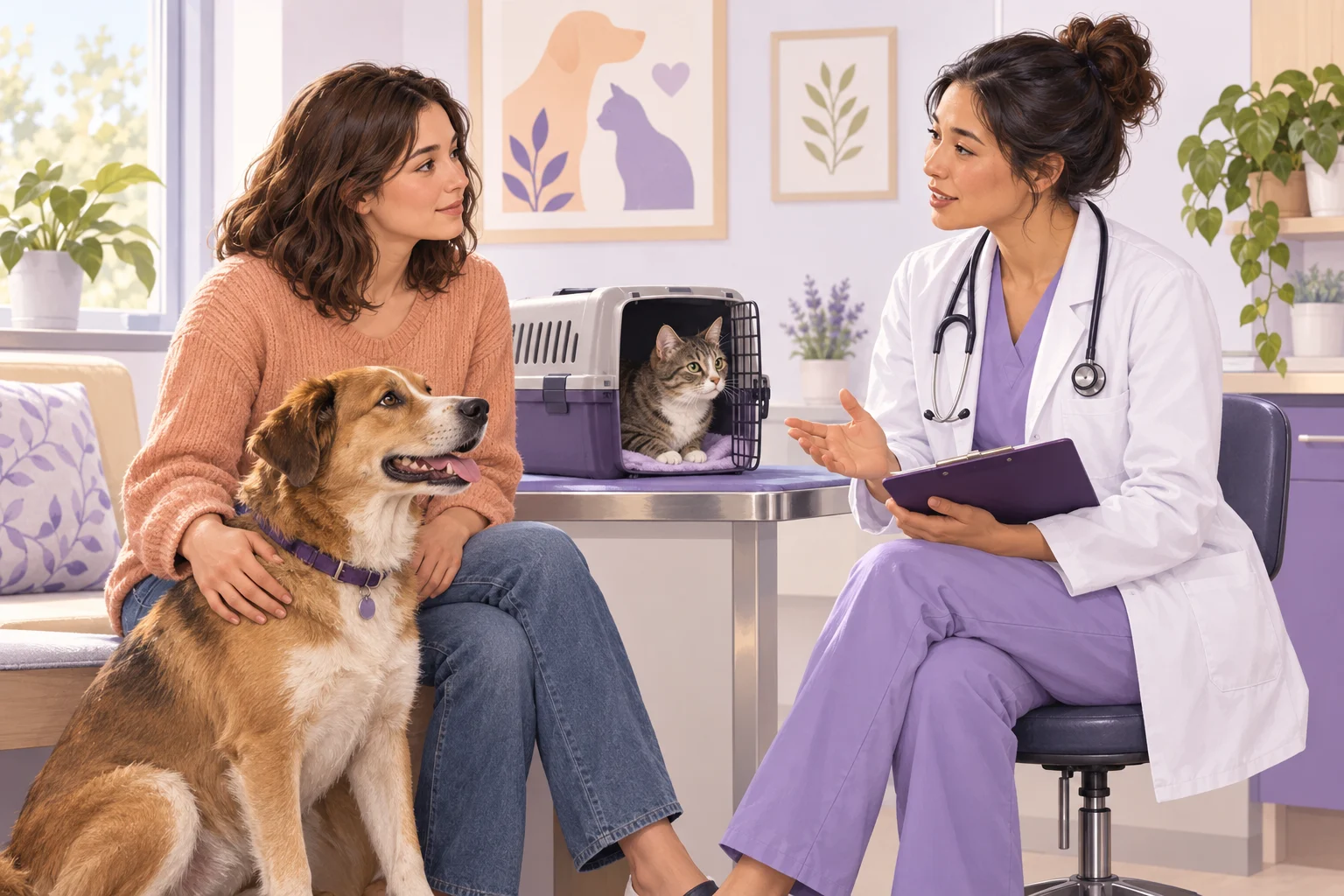
Every day, we see where the thought ‘one litter will not make a difference’ can lead. Puppies and kittens are left without homes, volunteers search for foster care, and clinics treat consequences that could have been prevented. Our position is therefore unequivocal: a household pet that is not part of a professionally organised breeding programme should be spayed or neutered at a medically appropriate time.
Surgery should not be an impulsive decision. We assess health, anaesthetic risk, age, breed and way of life in advance. Choosing the timing for the individual animal does not mean treating accidental mating as an acceptable option. Unwanted offspring must be prevented.
Breeding is a professional responsibility
‘She should have one litter’, ‘I want a puppy from my beloved dog’ and ‘we will find homes for all of them’ are not breeding programmes. Responsible breeding begins long before mating and does not end when a puppy or kitten goes to a new family.
Anyone taking on this work needs to understand inherited risks, select a pairing on health grounds, and have both a veterinarian and an emergency plan for complications during pregnancy or birth. The budget must exist before mating: health screening, pregnancy care, a possible emergency operation, neonatal support, food, vaccination, identification and care for the whole litter all cost money. Responsibility continues after the animals leave for their new homes.
What Armenian law requires
- A keeper must take minimum measures to prevent the unwanted reproduction of a household animal.
- Natural or artificial insemination is prohibited when it causes disease or abnormalities in offspring, including musculoskeletal disease, deafness, blindness, deformities of the head or teeth, or aggression.
- Breeding household animals for business purposes must take place in a specially equipped breeding establishment.
- Selling animals for business purposes requires permission from the local authority.
- Failure to prevent unwanted reproduction and breaches of breeding or sales rules may result in administrative penalties.
The law sets the minimum. Our professional position goes further: a casual household litter is not an acceptable experiment. For an animal outside responsible breeding, spaying or neutering remains the most reliable way to avoid shifting the consequences onto the female, her offspring, volunteers and the street.
What the terms mean
Sterilisation is an umbrella term for methods that prevent an animal from reproducing. In everyday English, surgery in a female is generally called spaying, while surgery in a male is called neutering or castration. In veterinary medicine, castration or gonadectomy means removing the gonads in either sex: the ovaries in females and testicles in males. A female’s uterus may also be removed.
Other methods preserve the gonads while preventing pregnancy. They affect hormone-related disease and behaviour differently, so ask about the exact procedure rather than relying on the name alone.
What surgery changes for health
The main benefits depend on the animal’s sex and the method used. Removing the gonads prevents pregnancy and disease in the organs that have been removed. It reduces some other risks too, but surgery does not make a pet immune to illness or replace checkups, vaccination and weight monitoring.
- In females, removing the ovaries, sometimes together with the uterus, prevents pyometra, a dangerous uterine infection. Surgery at a young age is also associated with a lower risk of mammary tumours; this benefit is particularly well established in cats.
- In males, removing the testicles eliminates testicular tumours and lowers the risk of benign prostate enlargement. It does not prevent every disease of the urinary or reproductive system.
- In both sexes, surgery prevents unplanned offspring and complications associated with pregnancy and birth.
- In dogs, outcomes can also depend on breed, sex and age at surgery. Potential benefits need to be weighed against individual risks, including some orthopaedic conditions and cancers.
Personality remains; hormone-driven behaviour may change
After the gonads are removed, a female no longer has heat cycles, and animals of either sex may have less drive to seek a mate. Some pets roam, urine-mark or enter mating-related conflicts less often. These changes can help, but they cannot be promised for every animal.
Affection for people, curiosity, enjoyment of play and familiar temperament do not disappear because of surgery. Fear, boredom, anxiety, resource guarding and learned aggression do not resolve automatically either. If behaviour is already worrying the family, it needs its own assessment that considers the animal’s health, environment and experience.
Weight can be kept under control
Energy requirements often fall after the gonads are removed. If the old portion stays the same and treats are not counted, weight may start to rise. Surgery itself does not make obesity inevitable. Regular checks of weight and body condition, measuring the full daily allowance and maintaining suitable activity all help.
Do not sharply restrict a puppy’s or kitten’s food without veterinary advice. Growing animals still need enough energy and nutrients. Our guide to choosing food for a dog or cat includes practical advice on portions, treats and changing diets.
An unwanted litter is not a private matter
Behind the words ‘we will find homes somehow’ are months of feeding, vaccination, treatment, socialisation and careful placement. When homes cannot be found, the work falls to people who are already collecting animals from the street, paying for treatment and providing foster care. Our article about the volunteers behind so many rescue stories shows how much work lies between the street, the operating theatre and a safe home.
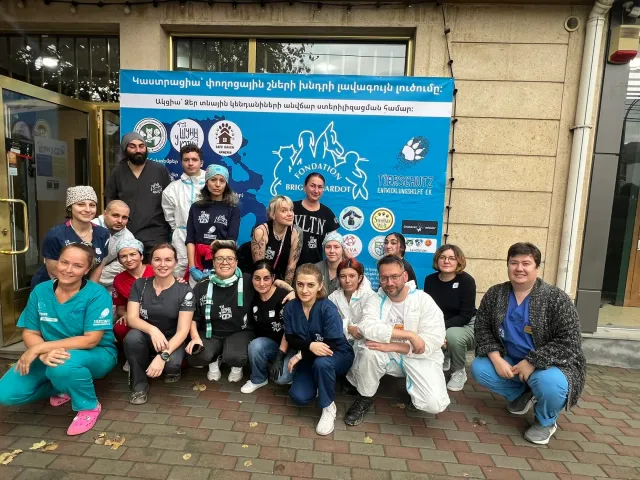
For us, this is not an abstract principle. In spring 2025, the clinic and volunteers carried out 108 procedures, followed by another 204 in Vanadzor in the autumn. From 17 June to 11 July that year, our team joined an international charity campaign: veterinary surgeons neutered 1,850 owned and stray dogs and cats in six cities across Kazakhstan in 25 days. That programme shows the scale of work required once unwanted offspring have become a shared problem. Such campaigns help deal with the consequences; they do not justify creating new accidental litters.
When to consider surgery
It is best to plan before accidental mating becomes a realistic risk. Cats may become reproductively active as early as four to five months, so the conversation with your vet should not be left too late. Professional associations recommend discussing surgery for cats not intended for breeding so that it can be completed by five months of age. Size and breed have a greater effect on the rate of maturity in dogs, and evidence about long-term outcomes differs. An individual plan is especially important for them.
Surgery can also be considered for an adult animal. Age alone does not provide the answer. The vet assesses current health, chronic conditions, medicines, previous anaesthetic experience and the expected benefit.
Planned surgery still needs preparation
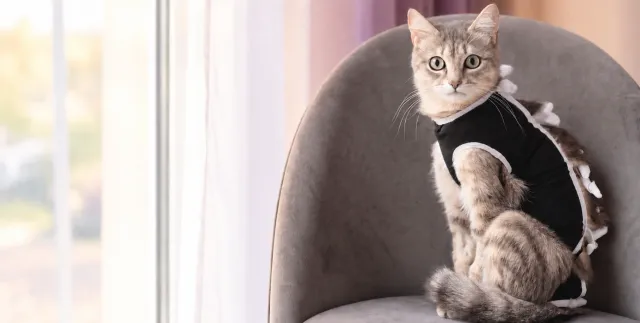
Anaesthetic risk cannot be reduced to zero. Before the procedure, the vet takes a health history and examines the animal, then recommends tests based on age, condition and identified risks. The anaesthetic, pain-relief and monitoring plan is also tailored to the patient. After surgery, the team needs to monitor recovery from anaesthesia, and the owner needs to protect the wound and follow the discharge instructions at home.
Do not rely on universal online instructions about fasting or medicines. The time without food and water, and whether regular medicines should be given, depend on the animal’s age and health. The clinic performing the procedure should provide the exact instructions.
What to discuss at the consultation
- How to prevent mating reliably before surgery if the pet is already reproductively mature.
- Which procedure the vet recommends and which organs will be removed.
- Why this age was chosen and what might change if surgery happens earlier or later.
- Which benefits and risks matter for your pet’s species, sex, breed and health.
- Which tests are needed before anaesthesia and what question each one answers.
- How pain relief, monitoring during surgery and recovery from anaesthesia are organised.
- How long recovery usually takes, how to protect the wound and which signs mean you should contact the vet immediately.
- How feeding should change and when to check weight after surgery.
Do not wait for the first accidental mating
If your pet is not part of a professionally organised breeding programme, come and plan surgery before reproduction becomes possible. Bring previous records, test results and a list of medicines. We will examine the animal, discuss the risks honestly, explain the procedure and choose a safe time. If surgery needs to be postponed, we will agree on how to prevent mating until then.
To book an appointment at Shunn u Katun, call +374 55 895 495 or message us on Telegram. We are at 7 Tumanyan Street in Vanadzor and are open Tuesday to Saturday from 11:00 to 19:00.
Sources
- WSAVA · Guidelines for the Control of Reproduction in Dogs and Cats (2024)
- AVMA · Gonadectomy resources for veterinarians
- FelineVMA · Pediatric sterilization in cats
- AAHA · Prevention of obesity
- AAHA · Preanesthetic evaluation and plan considerations
- ՀՀ օրենքը «Կենդանիների նկատմամբ պատասխանատու վերաբերմունքի մասին» · действующая редакция
- Изменения в Кодексе Республики Армения об административных правонарушениях · ՀՕ-124-Ն
Comments
No comments yet.