
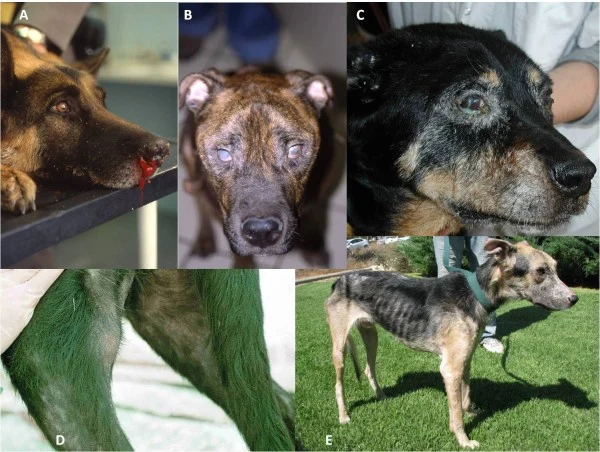
Canine leishmaniosis is not a rare exotic infection. It is a constant threat to dogs in Armenia, and at Shunn u Katun we diagnose several cases every week. The disease may remain unnoticed for months and later affect the skin, eyes, blood, joints and kidneys. The earlier kidney function is assessed and treatment begins, the better the chance of achieving remission. Without treatment, a dog can decline quickly and die from severe complications, particularly kidney failure.
What this disease is
In our region, canine leishmaniosis is caused mainly by the protozoan parasite Leishmania infantum. It lives inside cells of the immune system. The main natural route of transmission is the bite of an infected female phlebotomine sand fly, a tiny fly rather than an ordinary mosquito.
Infection and clinical disease are different. An infected dog may look healthy for a long time. Clinical leishmaniosis means that confirmed infection is accompanied by signs and/or abnormal test results. Months or even years can pass between infection and visible illness.
Leishmaniasis matters to human health too, but stroking an affected dog, sharing a home or using the same yard does not ordinarily transmit the parasite. The vector is usually a sand fly. The risk from normal direct contact is low; blood and biological samples should still be handled by professionals using routine precautions. Questions about a person's health belong with a human medical doctor.
Why this matters in Armenia
Leishmaniosis is common in Armenia, and managing it is part of our day-to-day clinical work. In a 2020–2021 study, 30% of the dogs tested positive: 75 of 250 animals from 11 districts of Yerevan. The sample consisted of dogs suspected of visceral leishmaniosis, so the 30% figure applies to that tested group rather than to every dog in the city. The scale of the problem is still clear: positive dogs were found in many districts and in every age group examined.
Sand-fly activity varies with altitude, weather and the local environment. Protection should not be treated as a summer-only task: the beginning and end of the season move from year to year, and some insects enter buildings. Review each dog's prevention plan before warm weather begins.
How leishmaniosis is transmitted
- A bite from an infected sand fly is the main route.
- Infection can be transmitted in contaminated donor blood.
- Transmission from an infected mother to her puppies and venereal transmission have been documented.
- Normal contact between dogs, shared bowls, touching and routine care are not considered usual routes of infection.
- Ticks and fleas have not been proven to be the principal natural vector of L. infantum. A product that kills ticks after they bite does not necessarily repel sand flies.
A sick dog, or an infected dog that still appears healthy, may infect a feeding sand fly. Repellent protection therefore remains important during treatment and after the dog improves.
Signs to look for
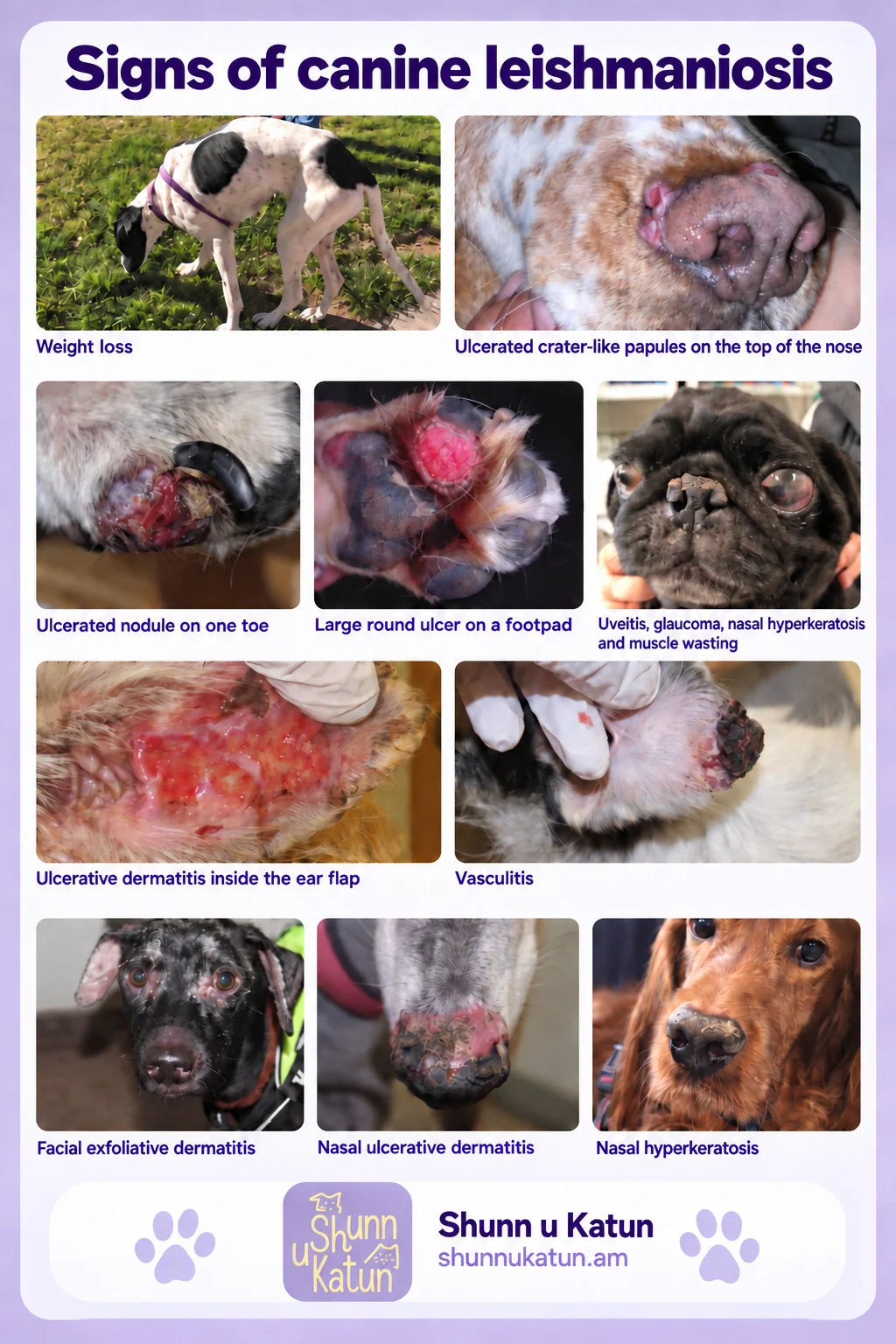
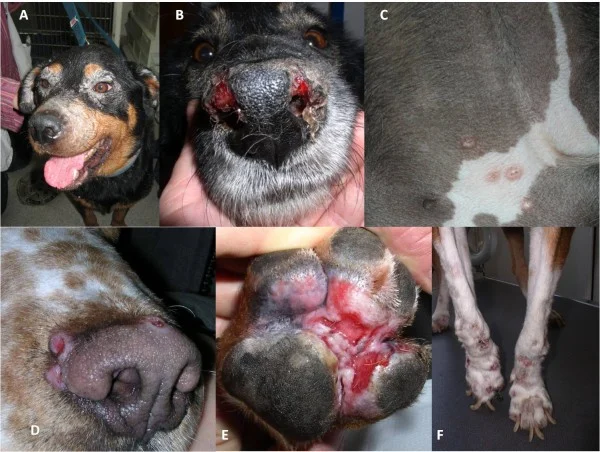
Leishmaniosis is sometimes called a great imitator. The same abnormalities can occur with other infections, immune-mediated disease, cancer and kidney disease. One dog may have obvious skin lesions; in another, protein in the urine is the first clue.
Look for combinations of the following:
- weight and muscle loss, weakness, lethargy, reduced or unusually increased appetite;
- enlarged lymph nodes, pale gums and intermittent fever;
- dry scaling or dandruff, especially around the eyes and ears, and patches of hair loss;
- ulcers, nodules and crusts on the nose, ears, skin or footpads;
- overgrown, thickened or misshapen claws;
- red eyes, discharge, blepharitis, keratoconjunctivitis, uveitis, cloudiness or pain;
- nosebleeds;
- lameness or painful joints and muscles;
- increased drinking and urination, vomiting, diarrhoea or poor appetite, which may reflect systemic or kidney involvement.
Why we check the kidneys even when the problem looks like skin disease
Immune complexes can damage the kidney's glomeruli. A dog may initially seem well while protein in the urine is the only clue. The disease can then progress to nephrotic syndrome and chronic kidney disease. Kidney failure remains one of the leading causes of death in canine leishmaniosis.
A normal creatinine result does not rule out early damage. A complete urinalysis and a urine protein-to-creatinine ratio (UPC) matter alongside blood chemistry. Disease stage and kidney function affect drug choice, prognosis and the monitoring schedule.
How we confirm the diagnosis
We do not diagnose leishmaniosis from a photograph, a single sign or one positive rapid test. We combine four elements: a compatible clinical picture, blood and urine abnormalities, evidence of infection and a quantitative antibody result, while excluding other likely causes.
The work-up commonly includes:
- An examination and history, including where the dog lives or has travelled, sand-fly protection and previous treatment.
- A complete blood count, chemistry including kidney and liver values, and protein fractions or electrophoresis.
- A complete urinalysis and UPC; blood pressure and further kidney tests when indicated.
- Quantitative serology, usually ELISA or IFAT. A rapid test gives a yes/no answer, but must be interpreted in context.
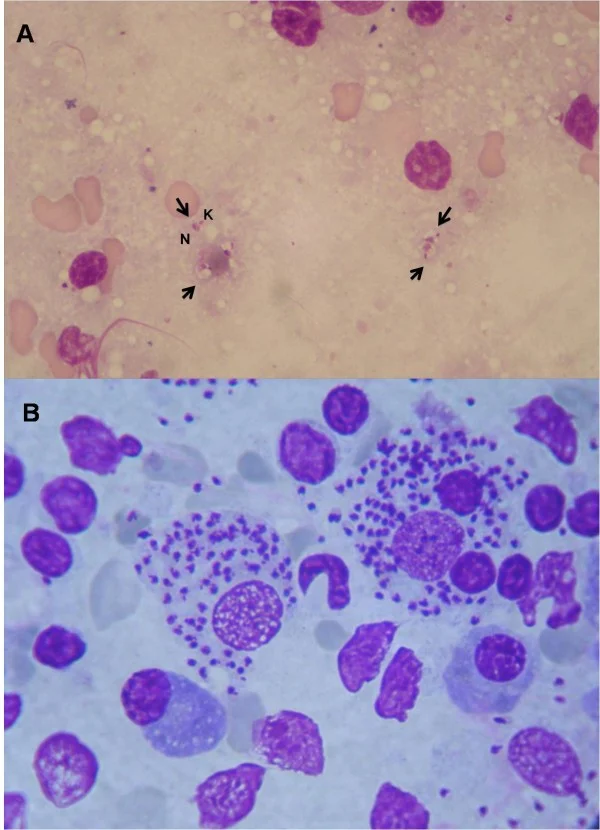
- PCR, cytology or histology of a suitable sample when this can confirm infection, assess parasite burden or exclude another disease.
A positive PCR confirms parasite DNA, but cannot by itself prove clinical disease. A negative blood PCR does not always exclude infection because tissue samples may be more informative. The tests should fit the patient, not the other way around. Bring previous results and a medication list using our guide to preparing for a veterinary examination.
Treatment
Treatment aims for clinical remission, improvement of important laboratory abnormalities, a lower parasite burden and reduced infectiousness to sand flies. It usually does not remove every Leishmania parasite from the body. A dog that looks well after treatment still needs monitoring and bite prevention.
The main treatment regimens combine meglumine antimoniate with allopurinol, or miltefosine with allopurinol. Glucantime is a brand of meglumine antimoniate. Its standard course is usually 28–30 days and is extended only when the dog's condition and response make this necessary. Allopurinol continues much longer, commonly for at least 6 months. The choice depends on disease stage, kidney function, concurrent disease, tolerance and medicine availability. Kidney, eye and skin complications, hypertension, dehydration, pain and secondary infections are treated separately when present.
We deliberately do not give doses here. A calculation error or a regimen chosen without assessing kidney function can cause harm. Allopurinol is not an antibiotic; it slows Leishmania replication by disrupting purine metabolism. Long-term use can cause xanthine crystals and stones, so urine monitoring, adequate water intake and sometimes a diet change are required. Do not shorten or extend Glucantime yourself, give allopurinol intermittently “for prevention,” or stop it as soon as the crusts disappear.
Anti-Leishmania drugs are not automatically started in a subclinically infected dog with no signs or laboratory abnormalities. Such dogs need an individual monitoring plan and sand-fly protection. Our guide to following a veterinary treatment plan safely can help you check every instruction.
Monitoring during and after treatment
Follow-up visits assess wellbeing and weight, skin and eyes, lymph nodes, the complete blood count, chemistry, protein profile, urinalysis and UPC. Quantitative serology and parasite burden are repeated when the result can show a meaningful trend. Timing depends on the initial stage and complications.
Stopping allopurinol is considered only after a long uninterrupted course, generally no earlier than 6–12 months, and only after clinical signs and reversible laboratory abnormalities have resolved and antibody concentrations and parasite burden have fallen. Lifelong follow-up is needed after withdrawal, commonly every 6–12 months and sooner if relapse is suspected. Repellent protection continues.
The cost is not limited to medication. Initial staging, kidney and urine monitoring, repeat tests, treatment of complications and long-term prevention all matter. We explain which parts of the plan are essential, what alternatives may exist and when the plan can be reassessed.
Prognosis and euthanasia
Prognosis depends mainly on disease stage and kidney involvement. Many dogs diagnosed early reach remission and retain a good quality of life. Severe chronic kidney disease, marked wasting or irreversible complications carry a guarded or poor prognosis.
A positive test does not automatically mean that a dog must be euthanised immediately. For an owned dog, we discuss treatment, kidney monitoring, continuous sand-fly protection and the realistic prognosis. When treatment works, the dog is brought into remission and then monitored for life. If the disease continues to progress, causes severe suffering and an acceptable quality of life can no longer be maintained, the owner makes the euthanasia decision with the veterinarian. A binding order issued by the competent state authority as part of official disease-control measures is a separate exception.
Protecting your dog and family
The main preventive step is to stop sand flies from feeding on the dog. The label should specifically state repellent or anti-feeding activity against sand flies or phlebotomine sand flies. Tick protection alone is not enough.
- Advantix spot-on contains permethrin and imidacloprid and repels sand flies. Choose the pipette for the dog's weight and repeat treatment exactly as directed on the label.
- Scalibor Protectorband, containing deltamethrin, controls phlebotomine sand-fly feeding for about 5–6 months. Full protection is not immediate, so fit the collar in advance and keep it on continuously.
- Foresto / Seresto, containing flumethrin and imidacloprid, reduces the risk of Leishmania infantum transmission by sand flies for up to 8 months. Check the exact duration and restrictions on the pack you are using.
- Bravecto tablets contain fluralaner and act against the fleas and ticks listed in their product information, but they do not repel a sand fly before it bites. They do not replace Advantix or a sand-fly collar.
- Do not let the dog sleep outdoors. Sand flies are particularly active from dusk to dawn.
- Fit fine-mesh screens, reduce damp shaded organic debris near sleeping areas and discuss environmental insect control with specialists when needed.
- Keep treated dogs protected too. No product provides a 100% guarantee.
- Use screened blood donors. Seropositive female dogs and dogs with clinical leishmaniosis should not be bred.
Vaccines against canine leishmaniosis are available in some countries, but they do not replace repellents and are not a do-it-yourself measure. The availability and registration status of a particular vaccine in Armenia must be checked at the time of the visit.
Travelling with a dog
Before international travel, check the destination's current requirements. Tests, timing and veterinary certification depend on the route. A positive result may affect blood donation, breeding and medical management, but it does not replace ordinary identification and documentation rules. Begin with our guide to pet passports and preparing for travel.
What Armenian law requires
This section was checked against the legislation in force in ARLIS on 10 October 2026. It is practical information for owners, not legal advice.
- Leishmaniosis is expressly included in Armenia's official list of particularly dangerous infectious animal diseases and in the list of diseases subject to compulsory notification.
- The law requires the veterinary service or competent authority to be informed immediately when such a disease is suspected or detected. Government Decision No. 1477-N describes what happens to laboratory-confirmed information: the diagnostic laboratory notifies the Food Safety Inspection Body, and the competent authority maintains the state register.
- No separate reporting form, online account or access to the state register is provided for a private companion-animal clinic. In our current practice, the clinic has no functioning channel through which it can register an individual case itself. We explain the legal status of the disease to the owner, record the results in the patient's medical record and do not send personal data or the medical record through an undefined channel. When an external diagnostic laboratory performs the test, that laboratory follows the duties that apply to laboratories.
- One positive test is not an automatic order to euthanise an owned dog immediately. Euthanasia as a disease-control measure requires a decision by the competent authority. If such a decision is issued, ownership does not override it.
- Until an individual order is issued, the owner decides whether to treat the dog. For a dog with no identified owner, the decision belongs to the person or organisation that has lawfully assumed responsibility for the animal and is authorised to consent to treatment. Merely bringing a dog to the clinic does not give a volunteer unlimited authority over the dog's fate. If treatment fails and the animal is suffering severely, humane euthanasia is discussed with the veterinarian and requires the consent of a person who is entitled to make that decision.
Rules and lists can change. Before travel, import, export, blood donation or breeding, confirm the current requirements with the clinic and, when appropriate, the Food Safety Inspection Body of Armenia.
What to do if you suspect leishmaniosis
- Note the signs and when they began, including changes in weight, thirst and urination.
- Photograph the skin, eyes, nose and claws in good light.
- Bring previous test results, a medication list and the repellent packaging.
- Do not start allopurinol, antibiotics or steroids without a veterinarian. They can alter the clinical picture and complicate treatment choices.
- Book an examination. If urgent signs are present, do not wait for a routine appointment.
Contacting the clinic
Call Shunn u Katun on +374 55 895 495 or write to us on Telegram. We are at 7 Tumanyan Street in Vanadzor, opposite Milagro restaurant. We are open Tuesday to Saturday, 11:00–19:00, and closed on Sunday and Monday. When booking, say that you suspect leishmaniosis and briefly describe your dog's condition.
Sources
- World Association for Veterinary Dermatology · Consensus statement and evidence-based guidelines for canine leishmaniosis, 2025
- LeishVet · Practical management guidelines for canine leishmaniosis, 2011
- ESCCAP · Control of Vector-Borne Diseases in Dogs and Cats, 2024
- WOAH · Infection with Leishmania spp., Terrestrial Animal Health Code
- WHO · Leishmaniasis fact sheet
- Armenian National Agrarian University · The Prevalence of Leishmaniasis in Dogs in the Districts of Yerevan, 2022
- ARLIS · Law of the Republic of Armenia on Veterinary Medicine
- ARLIS · List of quarantinable, particularly dangerous and compulsorily notifiable animal diseases, Decision N 974-N
- ARLIS · Procedure for notification and registration of infectious animal diseases, Decision N 1477-N
- EU Veterinary Medicines · Advantix: imidacloprid and permethrin
- EU Veterinary Medicines · Scalibor Protectorband: control of phlebotomine sand-fly feeding
- EMA · Seresto / Foresto: reduction of the risk of Leishmania infantum transmission by sand flies
- EU Veterinary Medicines · Bravecto: fluralaner against fleas and ticks
- Creative Commons · Attribution 2.0 Generic
Comments
No comments yet.