

When a pet becomes unwell in the evening, it is easy to reach for a reassuring explanation: too much running, too much food, a fright from the storm, probably better by morning. Sometimes watching closely is reasonable. Some conditions, however, change over a few hours. This guide will help you recognise those signs without losing time. It does not replace an examination or cover every possible emergency.
Breathing has become difficult
Look at effort as well as rate. A dog may stretch the neck, hold the elbows away from the chest, breathe with the abdomen, struggle to lie down or keep sitting upright. A cat may breathe with an open mouth. Pale, blue-tinged or unusually bright gums and tongue are also worrying. If breathing is difficult, do not spend time taking a temperature or trying to inspect deep inside the throat. Keep your pet quiet, provide fresh air, handle as little as possible and leave for the clinic.
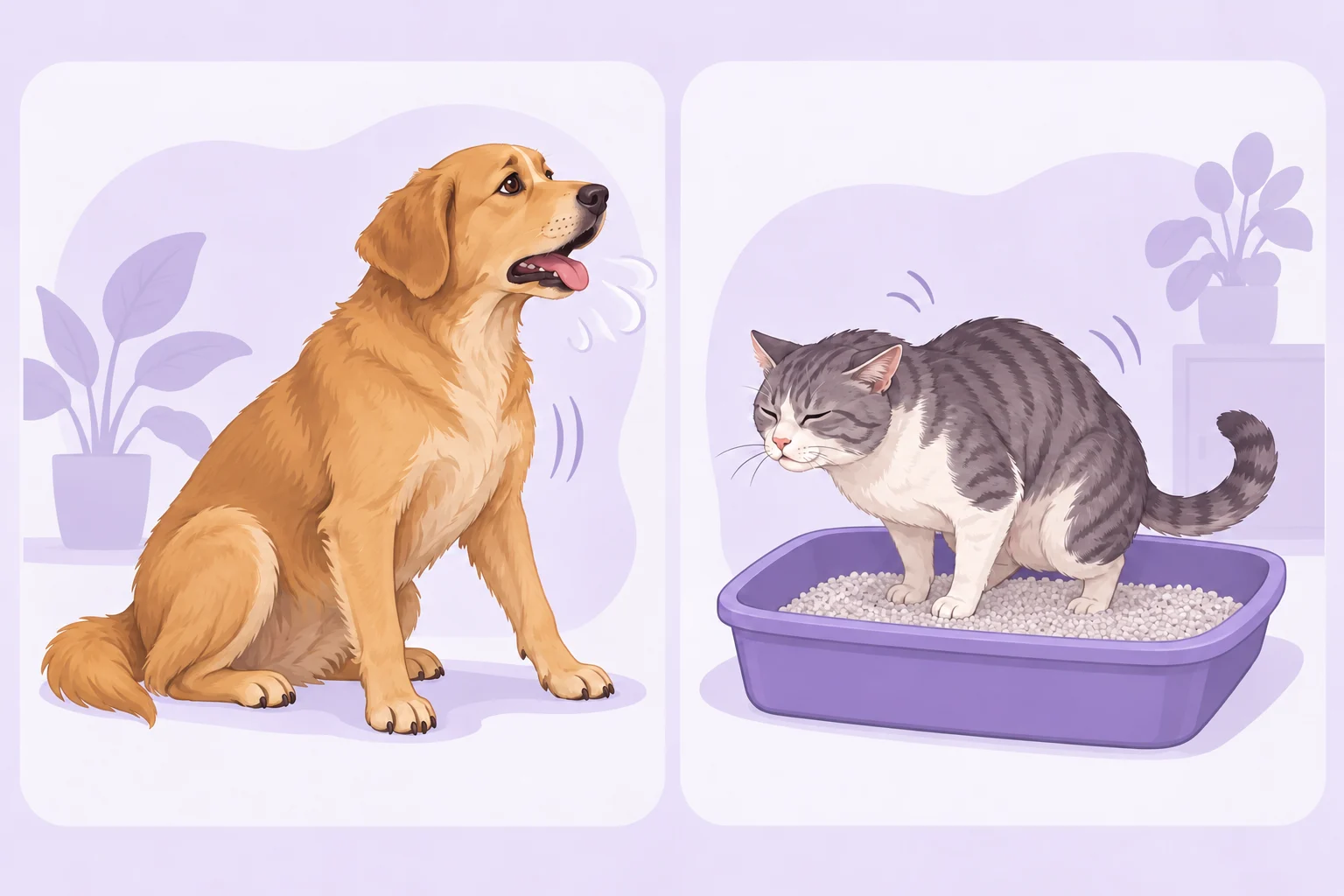
Your pet strains but cannot urinate
A cat returns to the litter tray again and again, sits for a long time, cries or licks under the tail, but leaves no wet patch or only a few drops. In a dog, you may notice repeated fruitless attempts during a walk. This can look like constipation, but a blocked urinary tract is an emergency, especially in male cats. Do not give a diuretic or press on the abdomen.
The abdomen is swollen, vomiting keeps returning or there is blood
Your pet needs an urgent examination if the abdomen suddenly becomes enlarged, tense or painful and a dog is restless or keeps trying to vomit without bringing anything up. Repeated vomiting, inability to keep water down, profuse watery diarrhoea, fresh red blood or black tarry stools should not wait until morning either. Puppies, kittens, older pets and animals with chronic disease lose fluid more quickly. Loss of appetite is especially concerning when it comes with lethargy, pain, vomiting or deterioration.
- Photograph vomit or stool if you can do so without delaying the journey.
- If a foreign object is possible, tell the vet what your pet may have swallowed and when.
- Do not force food or water into a pet that is still vomiting or struggling to breathe.
Seizures, loss of balance or sudden weakness
Collapse, loss of consciousness, inability to stand, a new unsteady gait, dragging a limb or sudden severe weakness all need an urgent call. Possible causes include trauma, poisoning, a metabolic problem, heart disease or a neurological condition. You cannot distinguish them by appearance alone.
- During a seizure, move away objects that could cause injury and keep other pets out of the room.
- Do not hold your pet down or put your hands near the mouth. Pets do not swallow their tongues, and an involuntary bite can be severe.
- Time the seizure. If it is safe, record a short video for the vet.
- Leave immediately if the seizure lasts more than two minutes, happens again, affects breathing or is followed by failure to regain awareness.
Heavy bleeding, pale gums or trauma
Press a clean cloth or gauze firmly over an external wound and keep steady pressure on it during transport. Pale gums, weakness, collapse, an enlarged painful abdomen or difficult breathing after a fall, vehicle impact or bite may point to internal bleeding. A pet can stand up and look almost normal immediately after an injury without being unharmed. Limit movement and take them for an examination.
Facial swelling, possible poisoning or a swallowed object
Rapidly increasing swelling of the face, lips or eyelids, or hives accompanied by vomiting, weakness or breathing difficulty, need immediate help. If poisoning is possible, do not wait for symptoms. Prevent further access, take the packaging or photograph the entire label and call a vet. Do not induce vomiting unless a veterinarian tells you to. Do not pull forcefully on string, bone or another object lodged in the mouth.
Temperature helps, but it does not replace an assessment
A normal rectal temperature is roughly 37.5–39.2 °C in dogs and 38.1–39.2 °C in cats. A reading above 40 °C or below 37 °C together with lethargy, shaking, poor coordination, vomiting or altered breathing warrants an urgent call and journey. A low temperature can occur with shock. A dry or warm nose does not measure body temperature. Do not take a temperature from a pet that is struggling to breathe, resisting or likely to bite. Leaving calmly matters more in that situation.
What not to do before the clinic
- Do not guess a dose of a human painkiller, fever medicine, antihistamine or another drug. Safety depends on the species, weight, condition and medicine.
- Do not force food or water if your pet is vomiting, cannot swallow, is unconscious or is struggling to breathe.
- Do not induce vomiting yourself after a substance or object has been swallowed.
- Do not wait for a dangerous sign to happen twice if your pet has already changed suddenly or is weakening quickly.
What to say on the phone
Give your pet’s species, breed, approximate age and weight. Briefly say when the problem began and which sign came first. Tell the clinic whether your pet is eating, drinking and urinating, how many times vomiting or diarrhoea occurred, and what may have been swallowed. Mention chronic conditions and current medicines. If you are leaving for the clinic, take a carrier, the pet passport, written treatment instructions and any packaging from a possible toxin or medicine.

How to contact us
Shunn u Katun is open Tuesday to Saturday from 11:00 to 19:00. Call +374 55 895 495 if you are unsure how urgent the situation is or are preparing to travel. For breathing difficulty, loss of consciousness, an ongoing seizure, inability to pass urine, severe bleeding or rapid deterioration, do not wait for a chat reply. If we are closed or unavailable, go to the nearest veterinary clinic that is open.
Sources
- MSD Veterinary Manual · Evaluation and Initial Treatment of Dog and Cat Emergencies
- Cornell University College of Veterinary Medicine · Feline Lower Urinary Tract Disease
- UC Davis School of Veterinary Medicine · Guide to Pet Emergencies
- UC Davis School of Veterinary Medicine · Pet First Aid
- MSD Veterinary Manual · General Treatment of Poisoning
- MSD Veterinary Manual · Normal Rectal Temperature Ranges


Comments
No comments yet.