
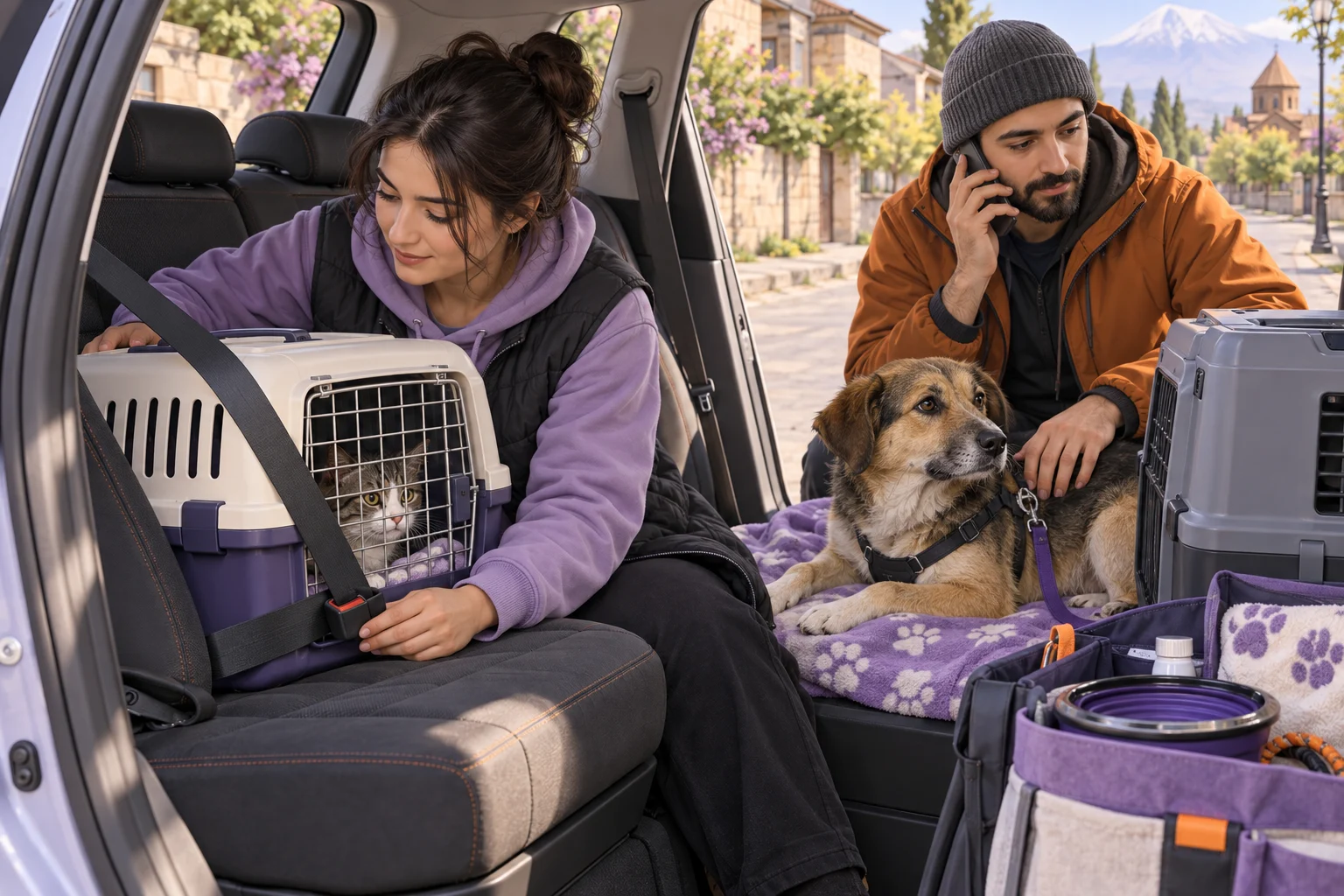
The worry is real: an animal may bite, escape or be hurt further during transport. Yet improvised transport is dangerous, and waiting can be worse when there are emergency signs. Plan the route first and keep handling to the minimum required.
Before the trip
- Call the clinic, describe what you can observe and check that they can receive you.
- Prepare a closed carrier, sturdy ventilated box or suitable crate, plus a blanket.
- Do not pull the animal by the legs, head, tail or collar. If a spinal injury is possible, minimise movement.
- If the animal growls, lunges or flees in panic, do not catch it by hand. Switch to the safe-capture guidance.
In the car and on the road
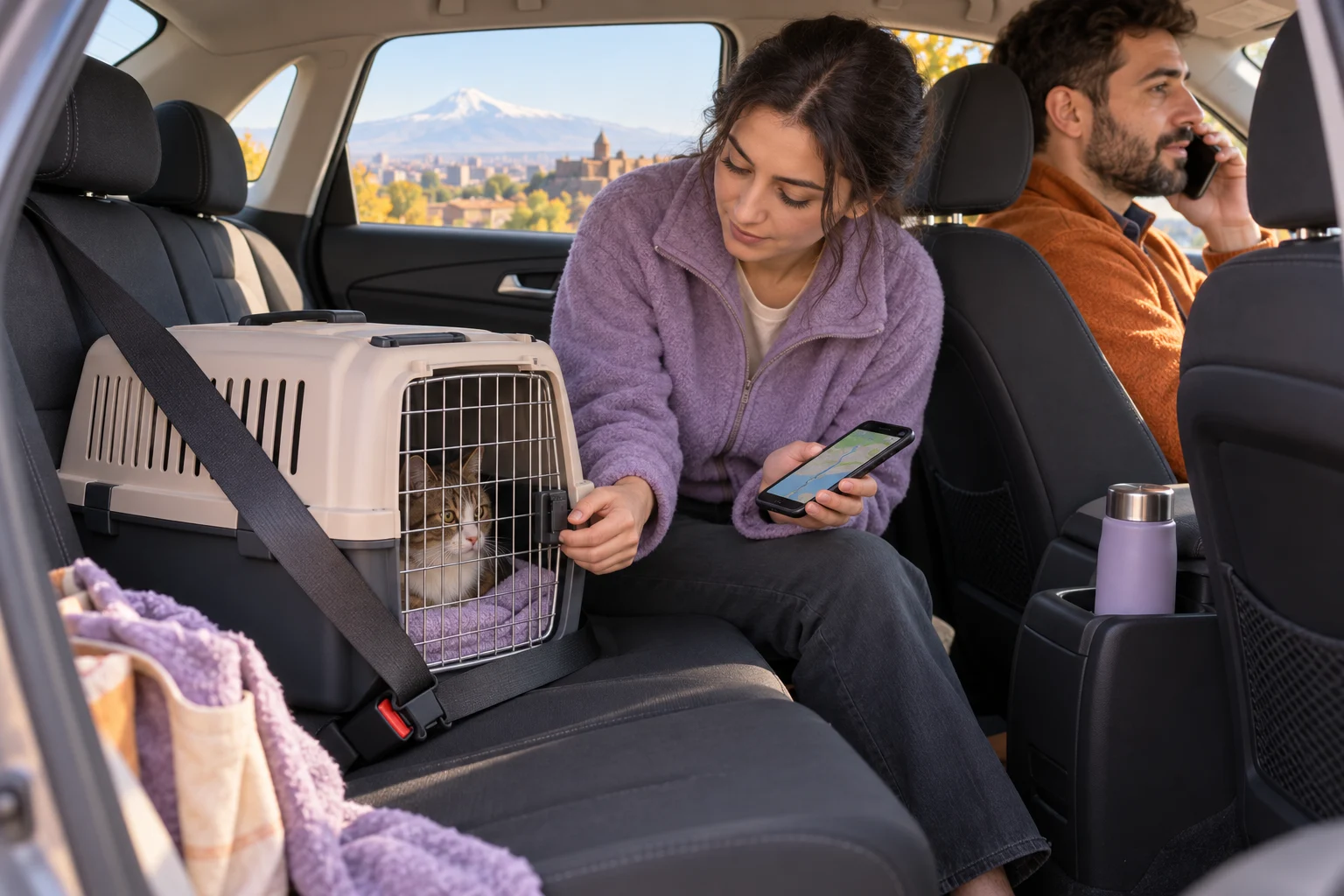
Keep the vehicle quiet, do not probe wounds with your fingers and never let the animal loose in the cabin. Secure the carrier with a seat belt. Our guide to safe capture and transport covers the preparation in more detail.
- Do not force food or water before the trip.
- Do not give painkillers, sedatives or other medicines from a home cabinet. Many are toxic, as explained in our guide to human medicines that are dangerous to animals.
- Give medicine only when a veterinarian has provided a specific instruction for that animal.
- Take your phone, the clinic address, a blanket and another person who can manage the carrier and calls.
This is Part 3.1
We covered the first message and division of tasks in Part 1, and transparent treatment funding in Part 2.

Comments
No comments yet.