
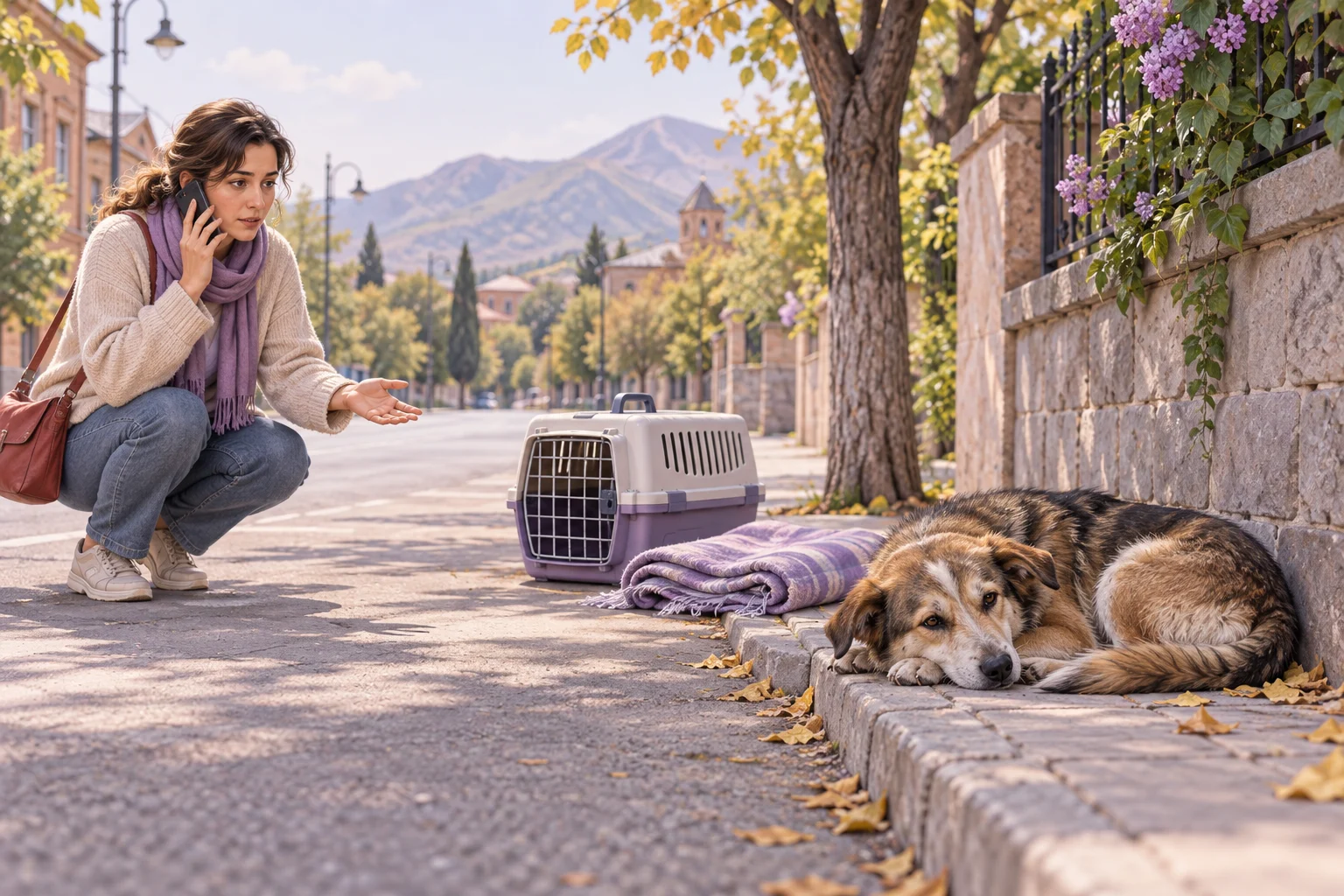
You are walking down the street when you notice a dog or cat that is clearly in pain. The first reaction is understandable: record a video, write a post, tag every volunteer you know and wait for someone to arrive. A post can start a rescue, but it cannot transport the animal or stay beside them. Begin with an honest question: what can I do right now?
The first few minutes: stop and look around
- Stay far enough away that the animal does not try to flee or defend themselves. Do not surround them, and leave a clear escape route.
- Look at how they breathe, whether they can stand and move, and how they respond to people. Do not touch a wound or try to straighten an injured leg.
- If there is traffic nearby, warn drivers or ask someone else to help protect the area. Do not step into moving traffic or chase the animal off the road.
- Move a noisy crowd back. One calm person nearby is more useful than several people approaching, calling and filming from different sides.
Share the exact location and visible signs
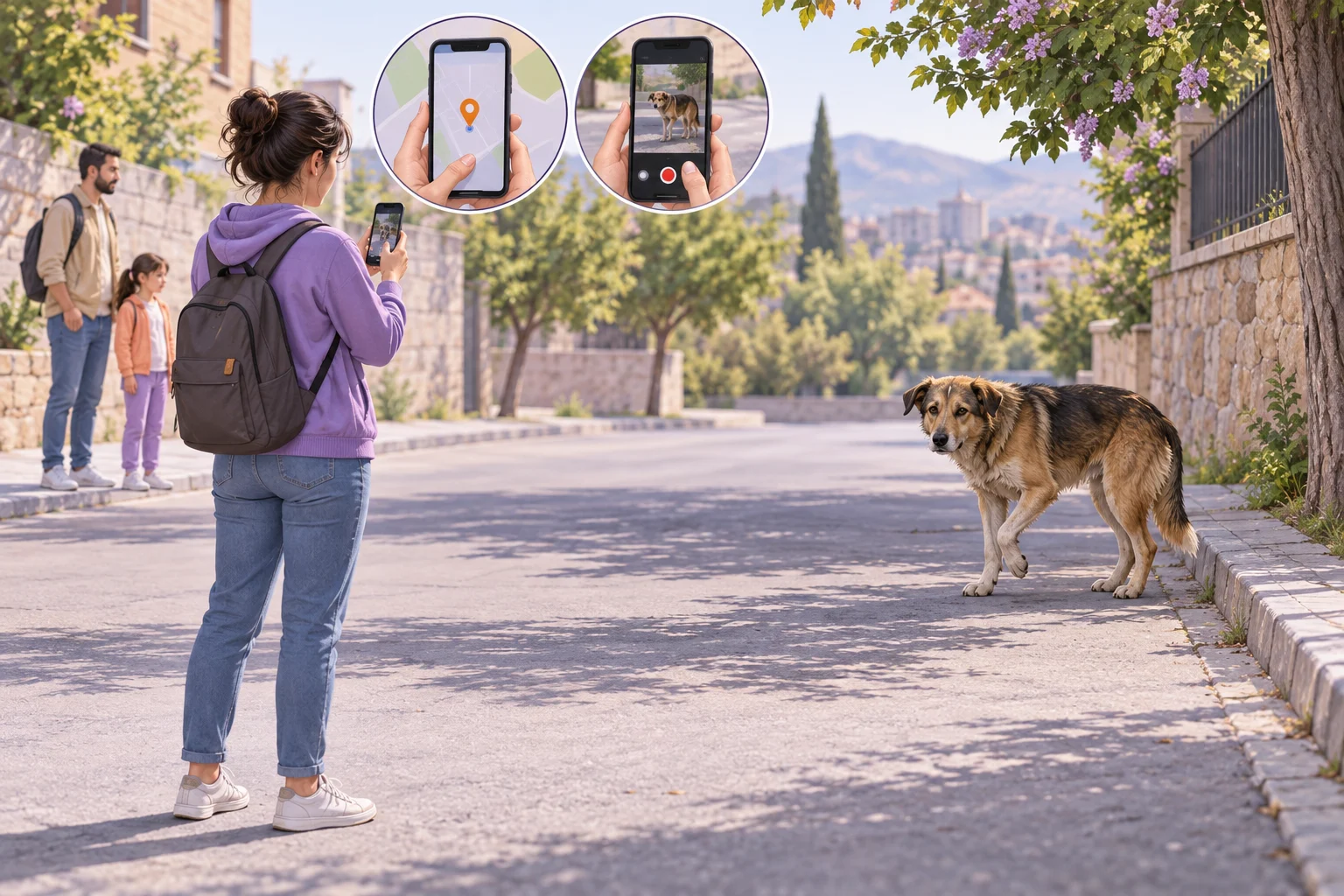
“Somewhere near a shop” makes other people search for the animal all over again. Give the street, a landmark, a map pin or a screenshot of the map. Add the time and the most important detail: is the animal still there, are you staying, or have you already left? If it is safe, record a calm 10–15 second video without moving closer or trying to make the animal walk.
- Describe what you can see: limping, inability to stand, blood, an open wound or visible deformity, severe weakness, or laboured breathing.
- If the animal was hit by a vehicle, say so even if they have stood up and appear better.
- Describe their response to people: allowing an approach, trying to leave, hiding, growling or lunging.
- Do not diagnose from a photograph. The first decision depends on visible signs and whether someone can reach the animal safely.
Say what you will take responsibility for
Help for homeless animals is built from small, specific actions. Our article about volunteers shows how many jobs have to be covered between the street, the clinic and recovery. You do not have to do everything alone. Stay as the contact person and say clearly what you can contribute. Choose at least two items if you can.
- Stay nearby for 30–60 minutes so the animal is not lost before help arrives.
- Drive to the clinic, or find a car, carrier and someone who can help lift the animal without sudden movements.
- Offer one night in a separate, secure space if this is safe for people and your own animals.
- Pay for all or part of the initial examination, X-rays or tests.
- Open a transparent fundraiser and publish treatment instructions, invoices, receipts and updates.
- Find one or two more people for transport, a carrier, foster care or communication with the clinic.
Ask for specific help
- A car is needed from point A to point B: give the district and time.
- A carrier, blanket, leash or suitable muzzle is needed: give the animal’s size and say what is already available.
- Foster care is needed for 3–7 days after treatment: give the likely dates and the care requirements once the vet has explained them.
- Money is needed: give the amount or the first clear stage, such as an examination and X-rays.
- A coordinator is needed: one person to speak with the clinic, answer people and publish updates.
A message template you can copy
Do not improvise with capture or transport
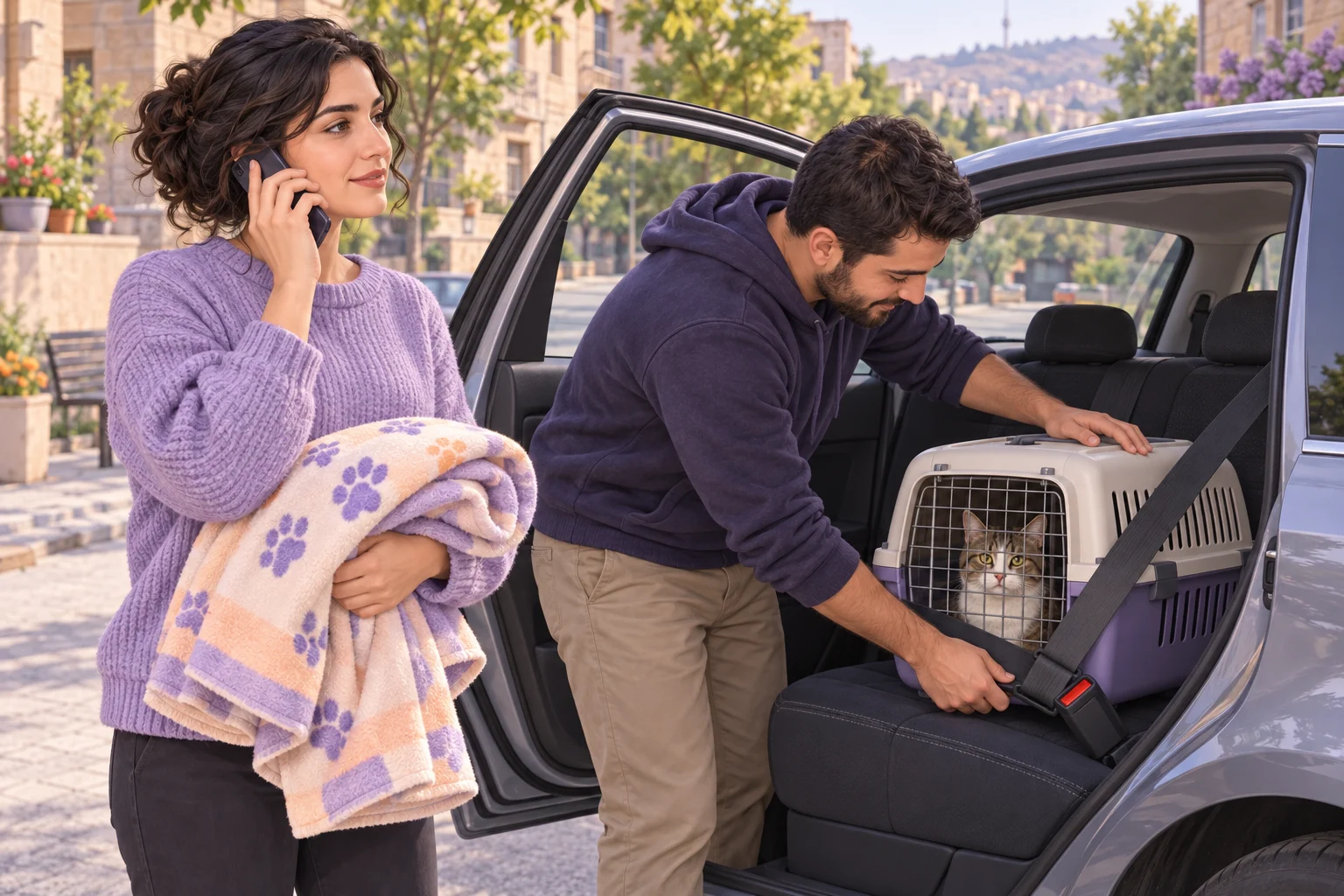
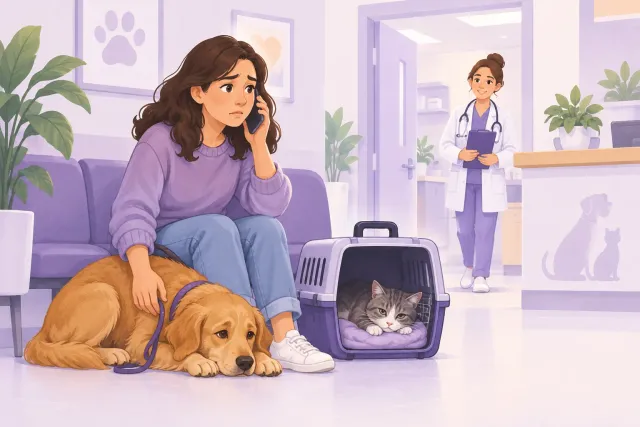
Call the clinic before leaving and describe the animal’s condition. Transport an injured cat in a closed carrier or a sturdy, ventilated box. Do not chase a dog, lift them by a leash or pull them with a homemade loop. If the dog is frightened, aggressive or unable to stand, first read how to choose a safe capture and transport method and involve someone experienced. Keep movement to a minimum if an injury to the head, neck or spine is possible. Secure the carrier inside the car and do not open it during the journey.
How the clinic can help
We can help you plan the first steps and the route to a vet. A message alone cannot arrange an evacuation, so someone on site must stay in contact and organise the next step. Treatment at the clinic is paid because veterinary work, medicines, supplies, premises and utilities all carry ongoing costs. If the bill needs to be raised, say so directly and give people a clear purpose. Shunn u Katun is at 7 Tumanyan Street in Vanadzor, opposite Milagro restaurant. Book through Telegram or call +374 55 895 495. We are open Tuesday to Saturday from 11:00 to 19:00.
This is part one of the series
The complete series is now assembled. After the first actions, continue with transparent fundraising, safe transport or helping a frightened animal. The interviews explain how to contact Dingo Team, Adel Foundation and Dilijan Care; the full route is in the series guide.
Comments
No comments yet.