
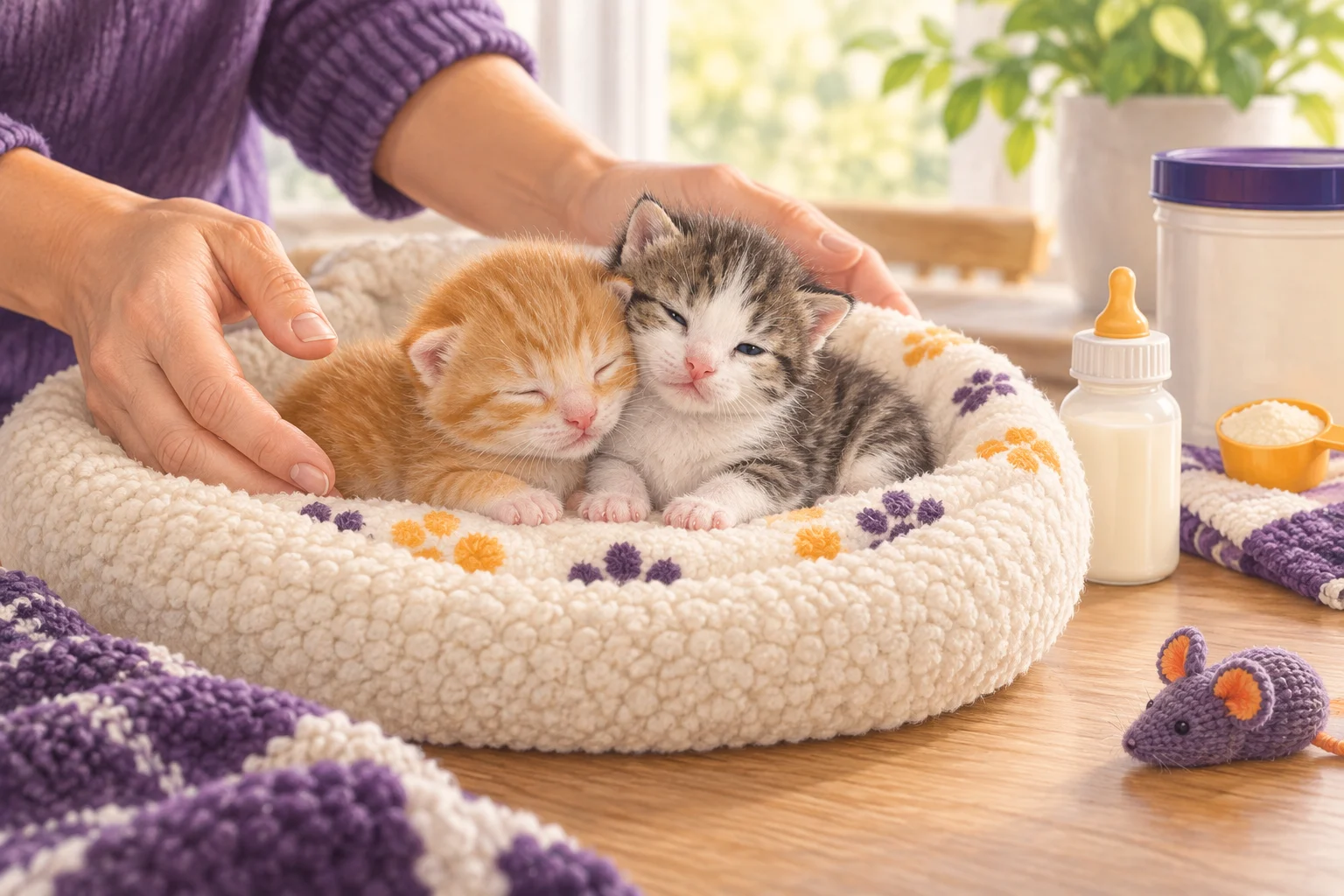
A newborn kitten without its mother needs warmth, suitable formula, and round-the-clock help from a person. The first hours can feel overwhelming. Keep the order simple: assess the kitten and warm it first, then prepare kitten milk replacer and feed in a safe position.
What to feed a kitten
When the mother cat is unavailable, the best option is a commercial milk replacer made for newborn kittens. Its calories, protein, fat, amino acids, vitamins, and minerals are formulated for growth. Choose a product with clear directions for mixing and for calculating the portion by the kitten's weight.
If commercial formula is unavailable for the next feeding
Pasteurized goat's milk can cover the next emergency feedings. Warm only the portion you need in a warm-water bath to 35–38°C. This is a short bridge until you obtain kitten milk replacer: goat's milk does not contain enough protein or fat to be a newborn kitten's regular diet.
Emergency homemade formula
- 240 ml whole cow's milk,
- 3 pasteurized egg yolks, with no whites,
- 15 ml corn oil,
- a very small pinch of salt.
- Blend all the ingredients in a clean container until completely uniform.
- Before feeding, pour out one portion and warm it in a warm-water bath to 35–38°C. Do not use a microwave.
- Refrigerate the rest immediately in a clean, covered container.
- Discard anything left from a warmed portion. Discard all unused formula 24 hours after mixing.
- Do not feed cow's milk by itself. It does not match the composition of cat's milk.
- Do not use human infant formula, sweetened condensed milk, or plant-based drinks.
- Do not add egg whites, honey, glucose, fish oil, or vitamins to the emergency mixture, and do not change the proportions.
Warm the kitten first
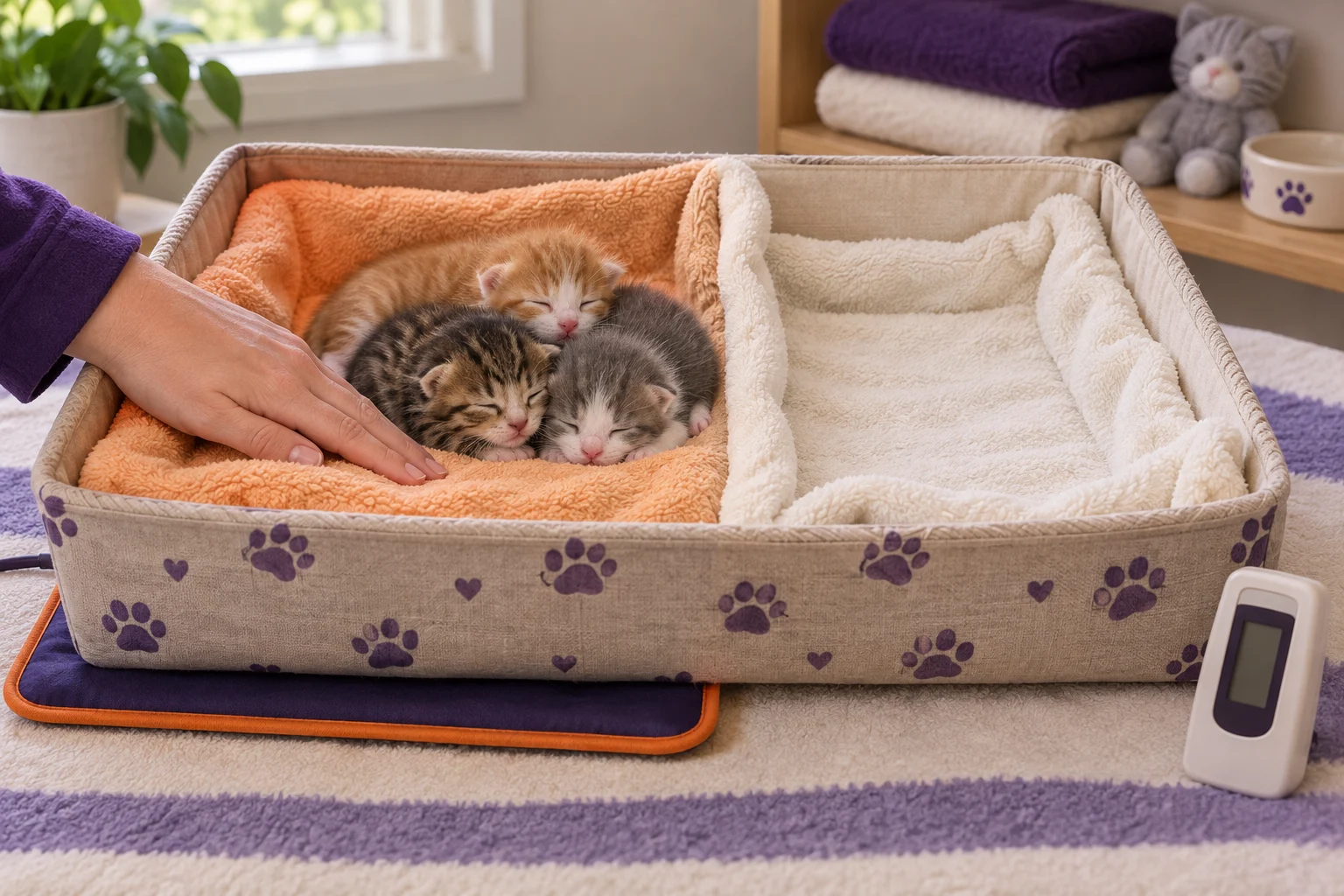
A tiny kitten cannot regulate body heat well and cannot digest food normally when chilled. Place a pet-safe heating pad under one half of the nest, with several layers of fabric between the pad and the kitten. Keep the other half cooler so the kitten can move away. Never place a kitten directly on the heat source or try to warm it quickly with very hot water.
How to prepare formula
- Wash your hands. Clean the bottle and nipple after every feeding and sterilize them regularly according to the manufacturer's directions.
- Mix the powder exactly as the label directs. Formula that is too concentrated or too diluted can harm a kitten.
- Warm one portion in a container of warm water to about 37-38°C. Test a few drops on the inside of your wrist. Do not use a microwave.
- Refrigerate prepared formula for no longer than the label allows. Discard any warmed formula left after a feeding.
A safe feeding position and pace
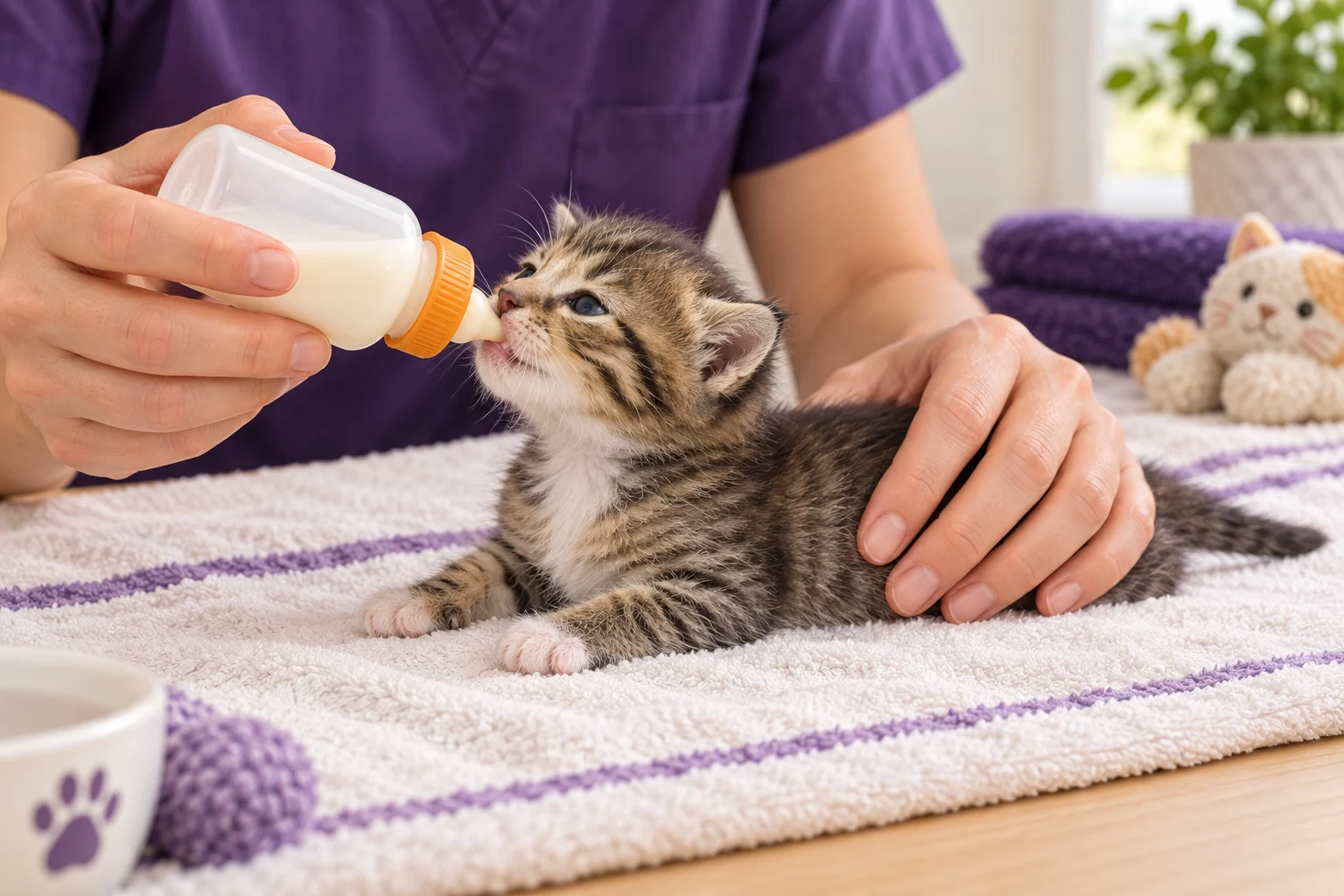
- Place the kitten on its belly, as it would nurse from its mother. Keep the head in a natural, slightly raised position. Never feed a kitten on its back.
- Check the nipple. Formula should come out one drop at a time, not in a stream.
- Let the kitten suck at its own pace. Do not squeeze the bottle or force formula into the mouth.
- If the kitten will not suck or cannot swallow, stop and contact a veterinarian. Syringe or tube feeding requires specific training.
How much and how often to feed
During the first week, kittens are usually fed every 2-4 hours, including overnight. Calculate each portion from the directions for that particular milk replacer and the kitten's current weight. Do not force the kitten to finish if the belly is already rounded or active sucking has stopped. The interval and volume change with age, so it is worth making a schedule with a veterinarian once. Yes, you will need to set an alarm at night too.
What to do after feeding
Hold the kitten gently on its belly and softly stroke its back. Then use a warm, damp cotton pad or soft cloth to massage the area under the tail until the kitten urinates. Until about 3 weeks of age, kittens often cannot empty their bladder and bowels fully without this stimulation. Dry the skin afterward.
Weight and a simple care log
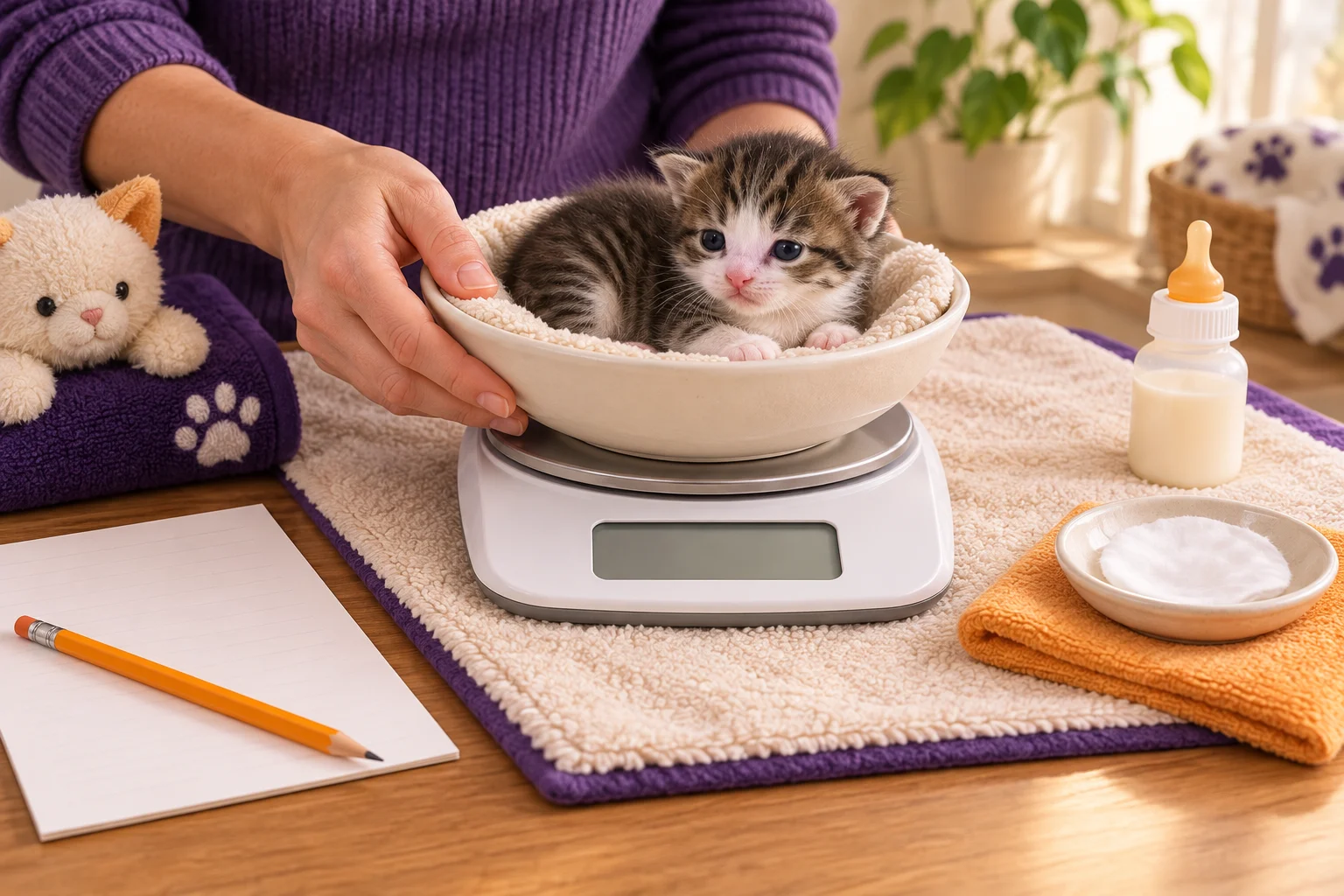
Weigh the kitten at the same time every day, preferably before feeding. Record the weight, formula intake, urination, stool, and activity. This short log can reveal a decline before it becomes obvious from appearance alone. Weight loss or failure to gain weight requires veterinary advice.
When a kitten needs urgent help
- the kitten is cold, very weak, limp, will not suck, or cannot swallow;
- formula comes from the nose, or there is coughing, wheezing, noisy breathing, or difficulty breathing;
- vomiting or watery stool repeats, or the abdomen suddenly becomes swollen or painful;
- the kitten does not urinate, fails to gain weight, or loses weight;
- the gums become very pale or bluish, or the kitten has a seizure or injury.
If you have found a newborn kitten and are worried about making a mistake, call us. Shunn u Katun Clinic: +374 55 895 495, 7 Tumanyan Street, Vanadzor. We are open Tuesday through Saturday from 11:00 to 19:00. If the kitten needs urgent help while we are closed or unavailable, go to the nearest open veterinary clinic.
Comments
No comments yet.